8 Long Hairstyles for Fine Hair Over 50 That Earn Their Length
Eight long hairstyles judged for fine hair over 50. Each one rated by whether the length earns its keep or costs more density than it adds silhouette.

Booking an appointment soon? Save this page. It is easier to skim in the chair than to remember.
At a glance
Works
- A blunt one-length line at chest level or just below the collarbone, because the unbroken perimeter holds every strand together and the edge reads as density
- A deep side part on any long cut, because shifting the part off-centre stacks more hair on one side and creates volume without removing a single strand
- Face-framing pieces cut to cheekbone length while the rest stays long and blunt, because the framing adds width at the face without layering through the body
Depends
- Long layers starting below the chin only if the hair still has enough mid-shaft density to keep the weight line intact, because on very thin hair the layers expose what is missing
- A soft V-shape at the back only if the sides still form a visible edge, because on sparse hair the tapered sides dissolve and the V reads as damage
- Long waves with a blunt hem only if you commit to daily heat styling, because fine hair rarely holds a wave for more than two hours on its own
Skip
- Heavy layering through the crown on fine hair that is already thinning at the top, because every layer removes coverage from the area where thinning shows first
- Razored or feathered ends on fine hair at any length, because the separated ends read as breakage rather than texture
- Keeping length past the point where the ends taper to nothing, because the see-through perimeter advertises the thinning rather than hiding it
Long hair is the hardest territory for fine hair. Short cuts gain volume from compression. Long hair earns its shape by density alone.
The question is whether your hair holds a clean line at length or dissolves. See very fine hair or medium cuts.
These eight are rated by who they hold for and who they cost.
1. The Collarbone Checkpoint Before You Grow It Long
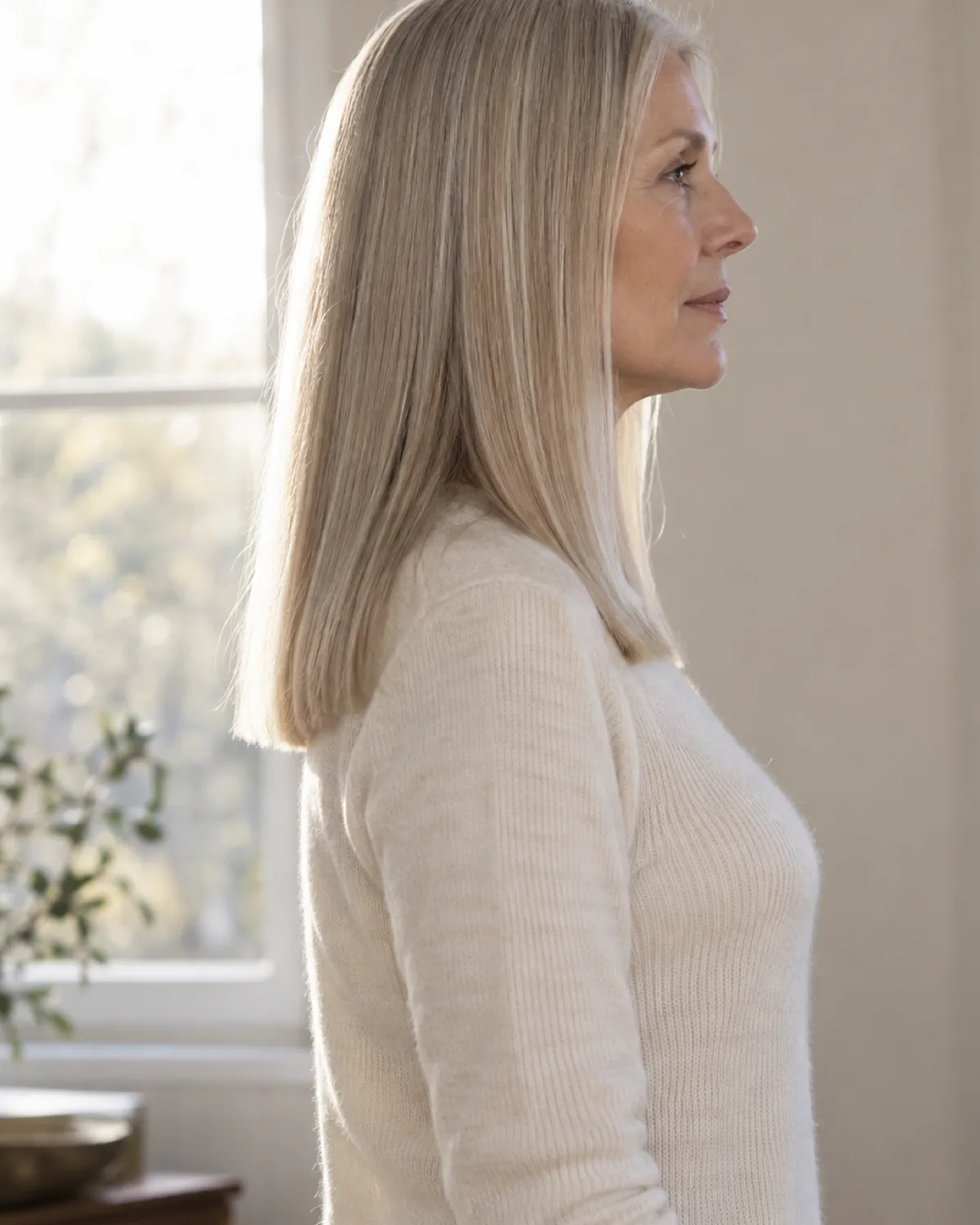
Before committing to hair past the shoulders, stop at the collarbone and look at the ends. Cut to one length with nothing taken out, fine hair either holds a solid edge at this point or it does not, and that answer predicts how long hair will look six months from now. Wispy ends here mean more length will only make them thinner.
- Fine hair has a smaller diameter per strand, so every strand that fails to reach the perimeter leaves a more visible gap than it would on medium or coarse hair
- A solid edge at this stage tells you the hair can carry length; a see-through edge tells you it cannot yet
- Treat this as a checkpoint, not a destination: decide on long hair after you have seen the ends here
- Ask your stylist whether the ends would still look full if you grew them another four inches
2. Long Layers Starting Below the Chin
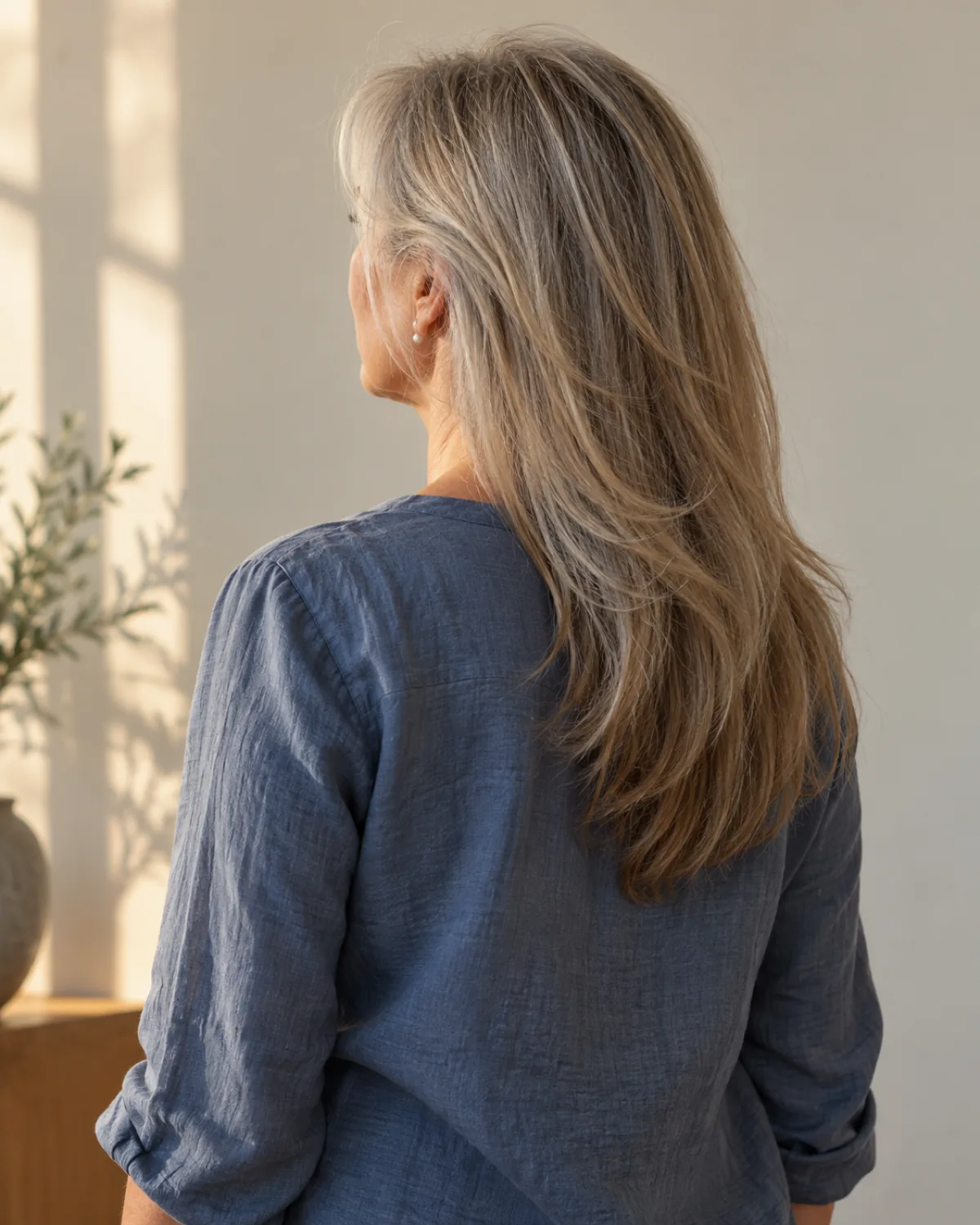
Layers that begin below the chin and graduate toward the mid-back. The upper section keeps its weight intact while the lower half gains movement. On fine hair the start point of the layers is everything. Too high and the mid-shaft loses coverage. Below the chin preserves the density where thinning shows first.
- Works when the hair still has enough mid-shaft density to support the weight line, because the layers remove bulk only from the lower half
- The graduated lengths create swing through the back without touching the crown or the sides where fine hair thins first
- On very thin hair the layers can expose the scalp through the mid-lengths rather than adding movement
- Ask your stylist where the shortest layer will fall when you sit down, not just when you stand
Where to start
Find your situation, skip ahead
Your fine hair still holds a clean line at the collarbone or just below
Start with the density baseline. It is the test for whether fine hair holds at length, and every other cut here is a variation of it.
01 The Collarbone Checkpoint Before You Grow It Long04 Long Bob at Collarbone to Mid-Chest05 Soft V-Shape at the Back
Your hair is fine and thinning at the crown but you want to keep length
A deep side part or curtain framing adds visual density without cutting. Try those before committing to layers.
06 Long Hair with a Deep Side Part03 Curtain-Framed Long Hair
Your ends are already thinning and separating at your current length
Read the strategic trim last. Two inches sometimes doubles the visual density at the perimeter.
08 The Strategic Trim: When Two Inches Changes Everything01 The Collarbone Checkpoint Before You Grow It Long
3. Curtain-Framed Long Hair

Two face-framing pieces cut to cheekbone length while the rest stays long and blunt. The shorter pieces add diagonal movement at the face and create the impression of width without layering through the body of the hair. A centre part lets the framing sit symmetrically.
- The framing adds width at the face without costing density anywhere else, because only two pieces are cut
- On a round face the diagonal line of the curtain pieces draws the eye vertically and lengthens the visual proportions
- Works best with a centre part because the framing falls symmetrically and the blunt body behind it reads as one solid mass
- On very fine hair where even two short pieces separate and look stringy, skip this and try a deep side part instead
4. Long Bob at Collarbone to Mid-Chest

A lob that sits between the collarbone and mid-chest. Still technically in long territory but the higher hemline concentrates more density at the perimeter than true long hair. The blunt edge forms a solid line where the ends meet rather than tapering to nothing.
- The higher hemline means more strands reach the perimeter together, so the edge reads as thickness even on fine hair
- On fine hair that fails the one-length density test at chest level, coming up to this length often solves the problem
- The concentrated weight at the hemline makes the ends hold their shape through the day without product
- Ask your stylist to cut the perimeter with shears only, no razor, because fine hair at this length needs every strand to end together
5. Soft V-Shape at the Back
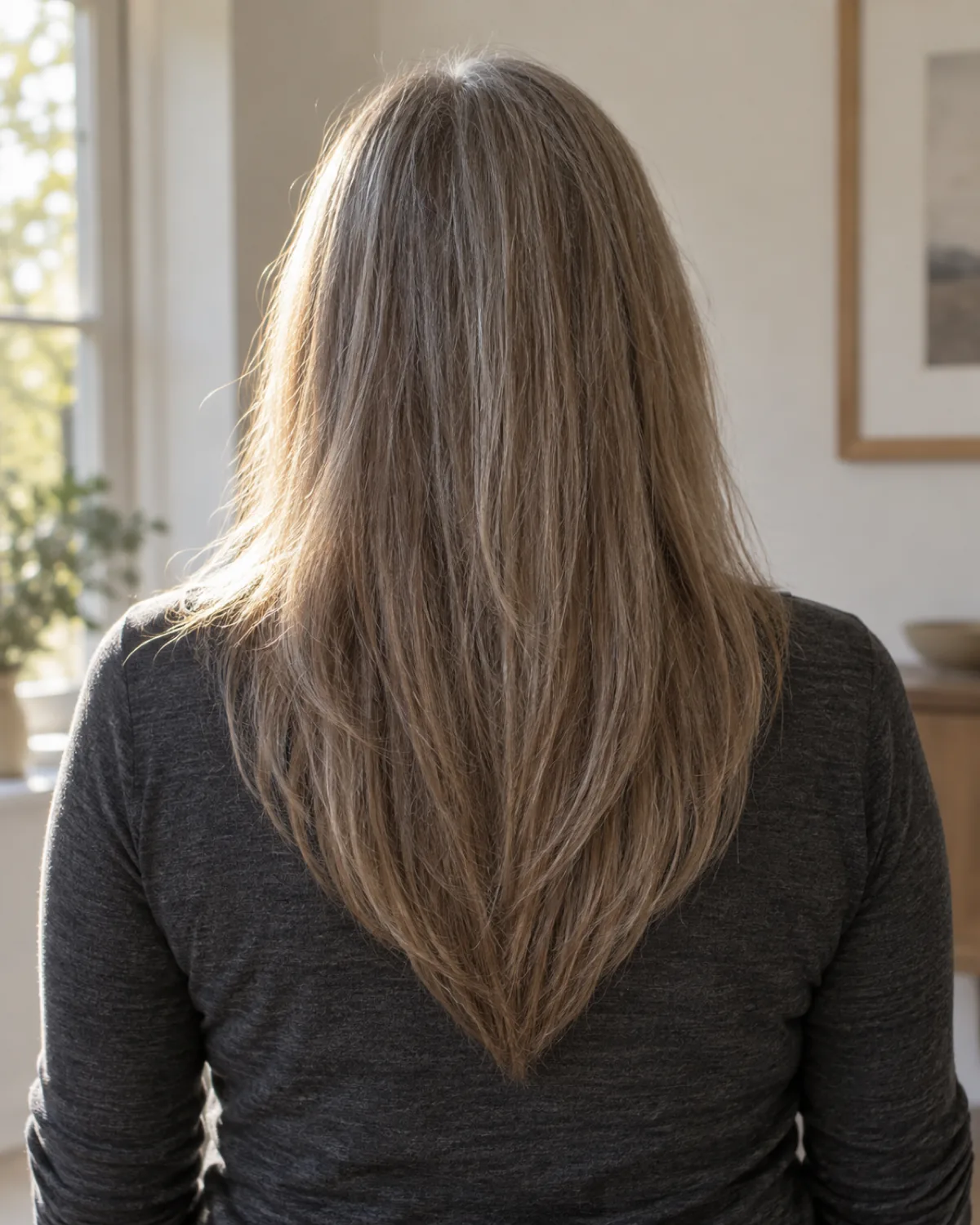
A subtle V cut at the back where the centre hair hangs two inches longer than the sides. The V creates the illusion of thickness at the centre because the longest point concentrates strands, while the shorter sides keep the overall silhouette from looking stringy at the edges.
- The V-shape adds visual weight at the centre back without adding layers or removing density from the perimeter
- Works when the hair has enough body at the sides to form a visible edge, because the tapered line only reads as a V when the sides hold their shape
- On hair where the sides are already sparse, the V dissolves into uneven wisps and reads as damage rather than a deliberate cut
- Ask your stylist to keep the angle subtle because a steep V on fine hair separates into two curtains rather than one shape
6. Long Hair with a Deep Side Part
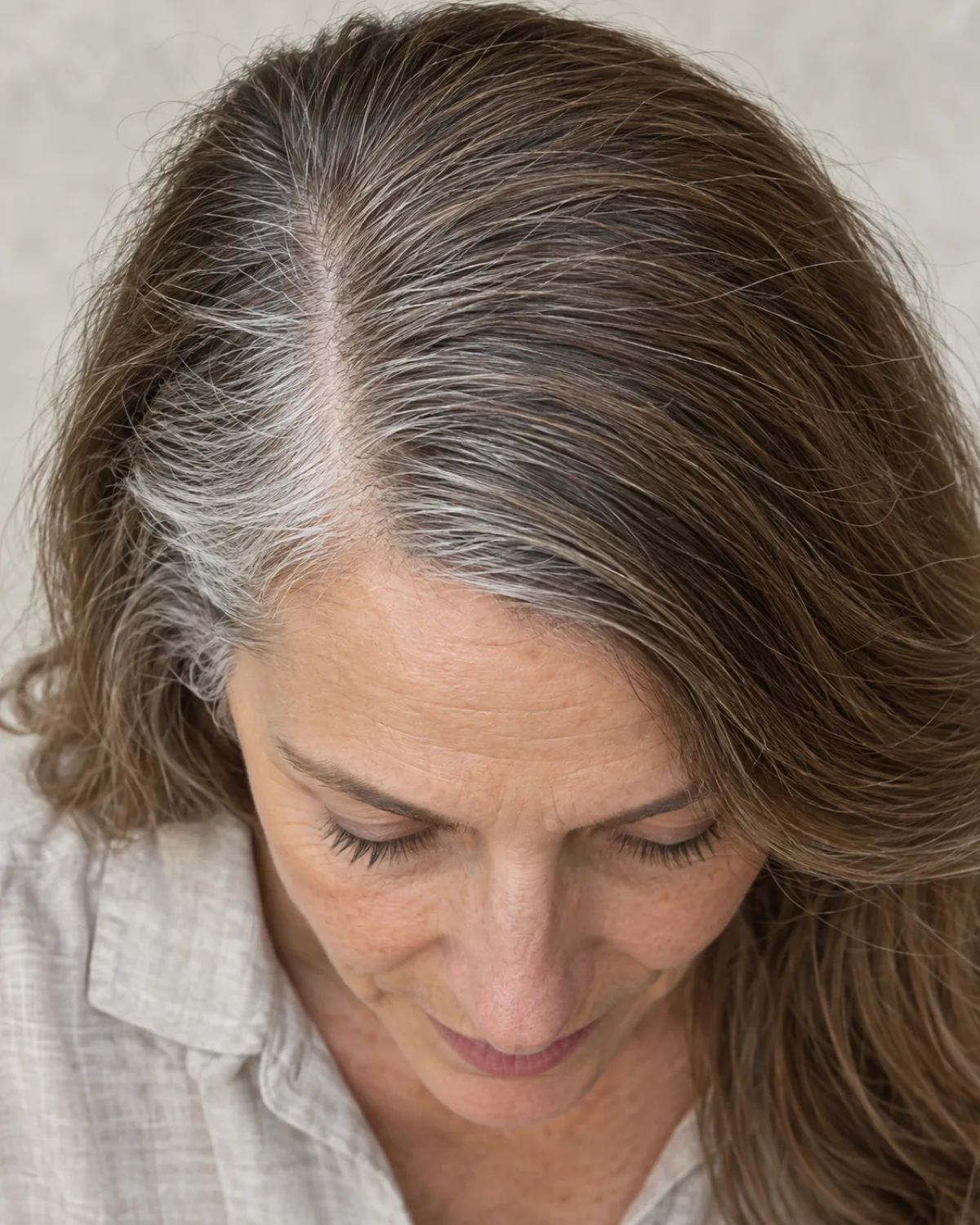
Shifting the part far to one side stacks more hair on the heavy side and creates asymmetric volume that reads as density from the front. No cutting required. The off-centre part redistributes the same hair into a fuller silhouette on the side that shows.
- Zero cutting or styling cost, pure geometry: more hair on one side reads as more hair overall
- The deep part lifts the root on the heavy side because the hair falls across the natural growth direction, adding volume at the crown
- On fine hair where the scalp shows through a centre part, moving the line two inches to one side can double the visible coverage
- Try it for one day before committing. Photograph the front view with a centre part and a deep side part. The difference in volume is the evidence
7. Long Waves with a Blunt Hem
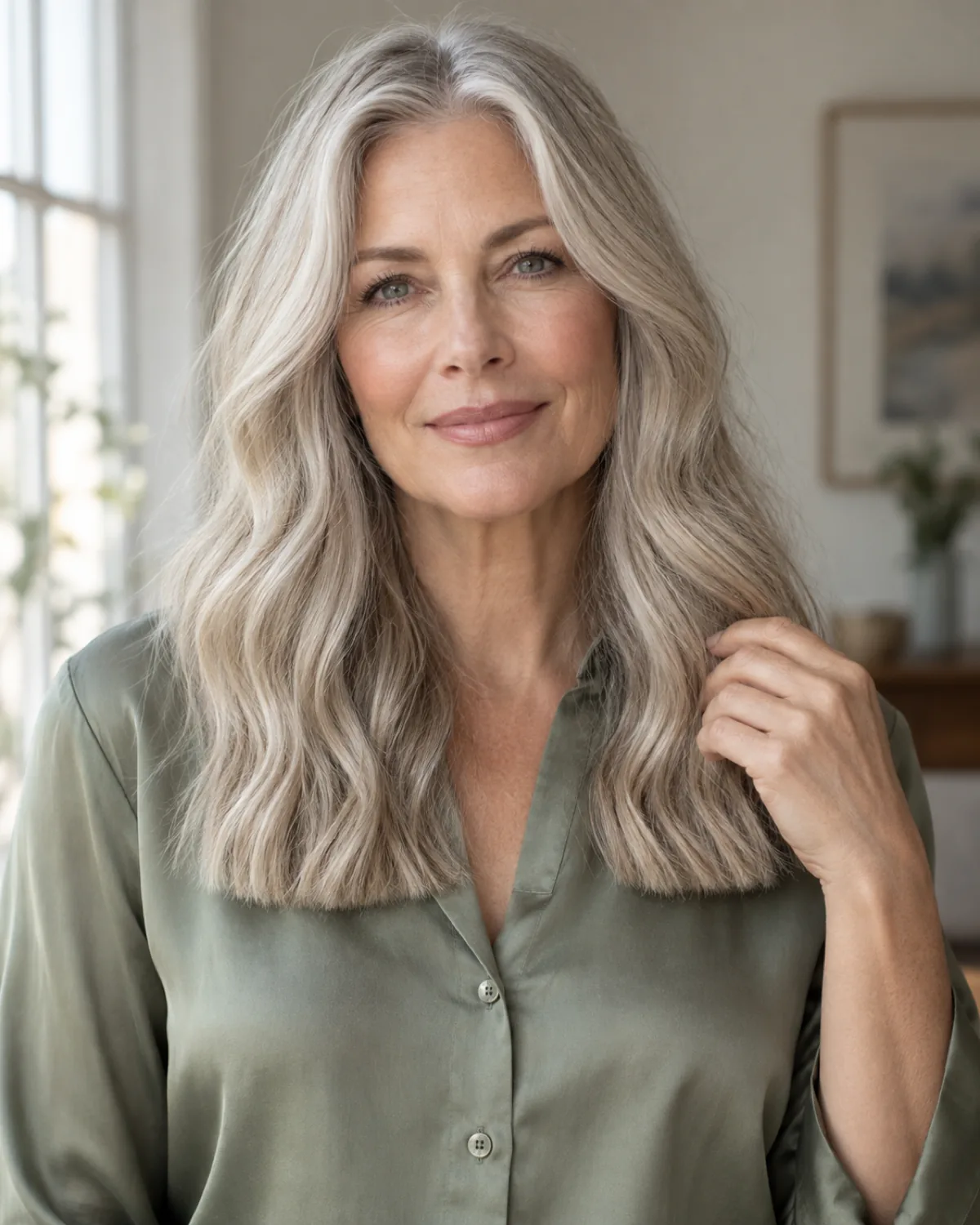
A blunt perimeter paired with loose waves through the mid-lengths. The waves add body and visual density through the middle of the hair while the unbroken ends hold the density line at the bottom. The combination reads as more hair than either element alone.
- The waves expand the silhouette horizontally so the hair reads fuller, while the blunt hem keeps the perimeter from thinning
- Depends entirely on willingness to style daily, because fine hair rarely holds a wave for more than two hours without heat
- On fine hair with natural wave or texture this works without daily effort, because the existing bend does the work
- Ask your stylist whether your hair has enough natural movement to hold a wave, or whether you will need to curl it every morning
8. The Strategic Trim: When Two Inches Changes Everything
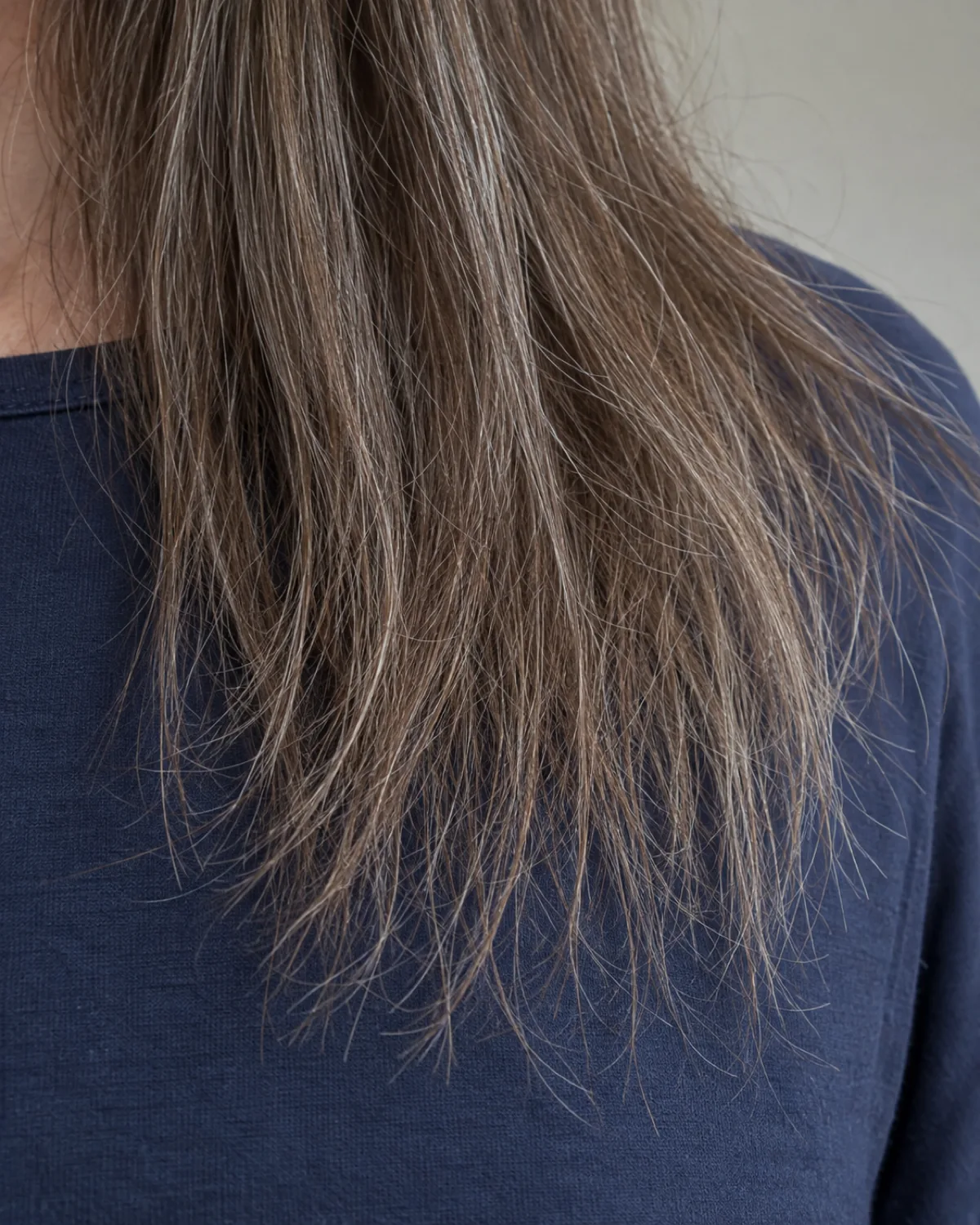
Not a new style but a verdict. When fine hair at chest length ends in wispy strands that separate and let the fabric show through, length is costing more density than it adds silhouette. Coming up two inches often doubles the visual thickness at the perimeter because more strands reach the new endpoint together.
- The test: gather your hair at the collarbone and look at the ends. If they form a clean line, keep the length. If they taper to nothing, the length is working against you
- Two inches is not a big cut but on fine hair it can be the difference between a perimeter that holds and one that dissolves
- This is not about whether long hair suits your face or your age. It is about whether your hair has the density to fill the silhouette at the length you want
- Ask your stylist to hold your hair at two inches shorter and show you in the mirror before cutting. The visual difference tells you the answer
A stylist who can see your hair in person outranks anything written here. Bring one image from this guide that matches your density and the question: can my hair hold this length. See low-maintenance fine hair cuts or thinning hair over 50 for the adjacent territory.
Where the checkable claims come from
- Fine Hair: Causes and How to Care for It — Philip Kingsley Trichological Clinic
- Understanding Graduation and Layering — Sam Villa / Redken Education
- Face Shapes and Hairstyles — Pivot Point International
Keep this one
Save it for the appointment
Pin the image above to the board you actually open before a salon visit. This guide is written to be re-read, not read once.
Tonight, before you close this tab
- Gather your hair at the collarbone and check whether the ends form a clean line or taper to wisps
- Part your hair at the centre and look at the mid-shaft from above to see whether the scalp shows through
- Try a deep side part for one day and photograph the difference in volume from the front
- Save one image from this guide that matches your density and bring it to your stylist with the question: can my hair hold this length