8 Hairstyles for Women Over 60 with Fine Hair That Actually Hold
Eight hairstyles judged for fine hair over 60. Each cut rated by whether it holds shape, adds density and works with what your hair does now, not what it used to do.

Booking an appointment soon? Save this page. It is easier to skim in the chair than to remember.
At a glance
Works
- A cropped pixie with weight at the crown because the tapered nape stays clean and the crown carries every strand you have
- A graduated bob with a stacked back because graduation creates mechanical volume without relying on density
- A one-length cut with a deep side part because no layers means no lost density and the asymmetry reads as fullness
Depends
- A chin-length layered bob only if the hair still holds a straight line at the jaw, because fine hair that splays at the ends makes the hemline disappear
- A textured crop with crown volume only if there is enough density at the crown to hold separation, because the point-cut pieces will expose scalp if the hair is too thin
- Feathered layers starting below the ear only if the mid-shaft still has body, because on very fine hair even low feathering makes the ends transparent
Skip
- Heavy layering through the crown on hair that is already thinning at the top, because every layer removes the density where it shows most
- A blunt lob without daily styling commitment, because fine straight hair at collarbone length separates under its own weight and reads as limp
Fine hair at 60 is not the same problem it was at 50. The follicle diameter is narrower, the growth phase is shorter, and the scalp shows through sooner at the crown and temples. What worked a decade ago may not hold now.
These eight cuts are judged for that stage. Each one rated by whether it creates density, holds its shape through a full day, and works with the hair you actually have.
A stylist who can see your hair in person outranks anything written here. Bring the image, ask where they would set the weight line, and listen to what they say about your specific density.
1. Cropped Pixie With Tapered Nape
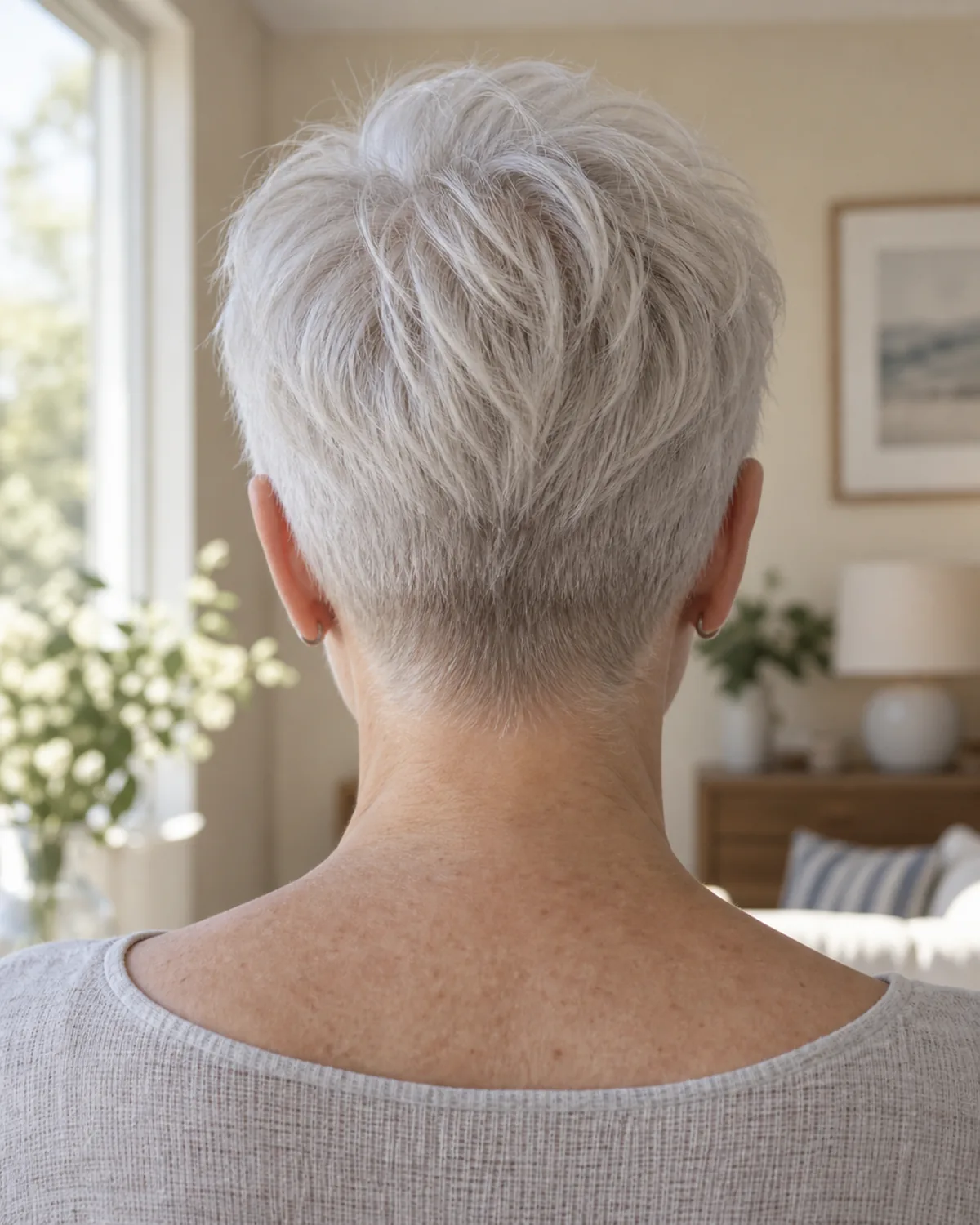
The cropped pixie is the most forgiving cut on this list for very fine hair at 60 and beyond. Weight stays at the crown where thinning shows first, and the tapered nape keeps the back clean without exposing the scalp. The graduation from longer crown to shorter nape is gradual, not abrupt, so there is no visible line where the cut changes.
- Works on almost every face shape because the silhouette is compact and the proportion is forehead-to-chin
- The tapered nape requires a trim every four to five weeks to stay clean
- Ask your stylist to keep the crown pieces long enough to have directional movement rather than lying flat
- Skip this if you want to be able to pull your hair back on warm days
2. Soft Layered Bob at Chin Length
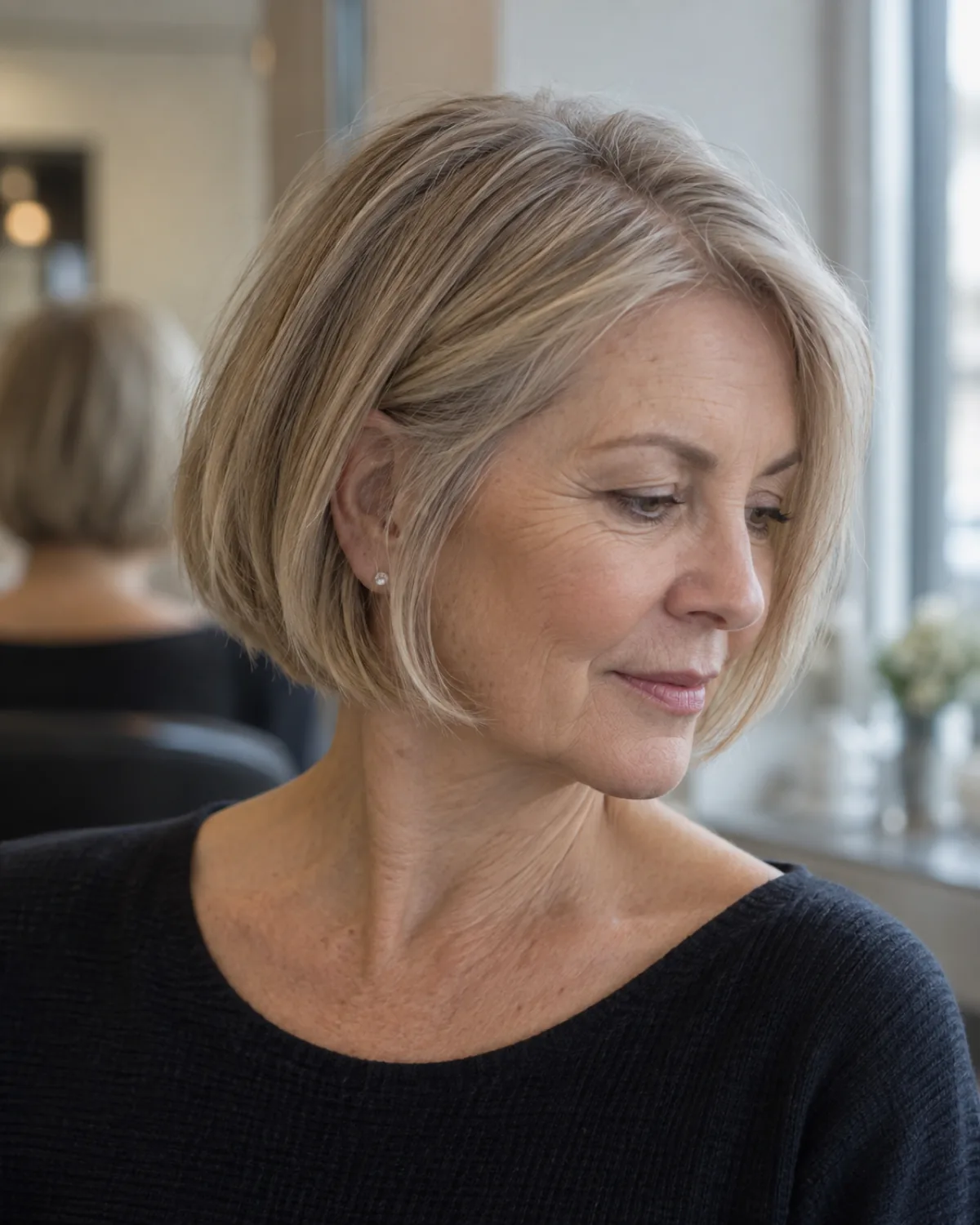
Chin length keeps every strand working. The layers start below the ear so the crown and mid-shaft stay heavy, and the hemline sits at the jaw where the cut is easiest to judge in a mirror. The chin-length line reads as intentional on fine hair because the perimeter is short enough to stay solid.
- Works best on hair that still holds a straight line at the jaw without splaying outward
- The layers below the ear add movement without removing weight from the crown
- If the ends splay instead of falling in a clean line, ask your stylist about graduation instead of layering
- A side part shifts the mass and adds asymmetry that reads as more hair
Where to start
Find your situation, skip ahead
Your fine hair has thinned noticeably at the crown and temples since your fifties
Start with the cropped pixie or graduated bob. Both create volume mechanically without needing density you no longer have.
01 Cropped Pixie With Tapered Nape04 Graduated Bob With Stacked Back
Your hair is fine but still has enough density to hold a clean hemline
A one-length cut or chin-length bob will make the most of what you have. The unbroken perimeter is your best tool.
02 Soft Layered Bob at Chin Length07 One-Length Cut With a Deep Part
You want to keep some length but your fine hair falls flat by midday
Side-swept bangs on a blunt lob or feathered layers below the ear add visual movement without costing bulk at the crown.
03 Side-Swept Bangs on a Blunt Lob06 Feathered Layers Starting Below the Ear
3. Side-Swept Bangs on a Blunt Lob
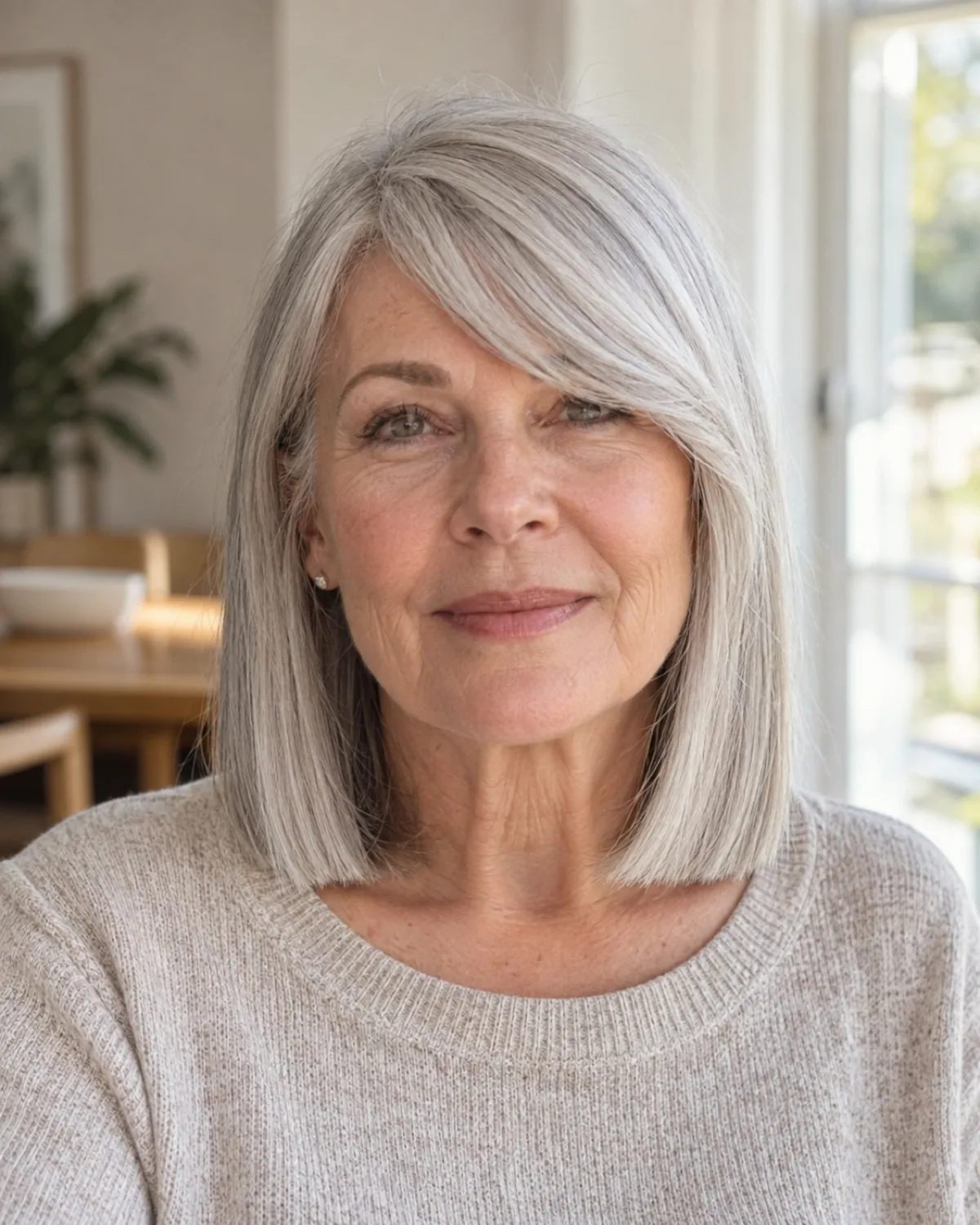
The bangs add diagonal movement across the forehead and the blunt hemline preserves every strand of density at the perimeter. The side-swept angle covers the temple area where fine hair often thins first, without looking like it is hiding anything.
- The blunt hemline is non-negotiable on fine hair: feathering or razoring the ends will make the perimeter disappear
- Works if the hairline at the temples is still intact enough to hold the bang section
- If the temples are thinning, the bangs will separate and expose the gap rather than covering it
- Ask your stylist to cut the bangs slightly longer than you think you want, because fine hair shrinks upward when it dries
- Requires styling the bang section each morning to keep the diagonal
4. Graduated Bob With Stacked Back
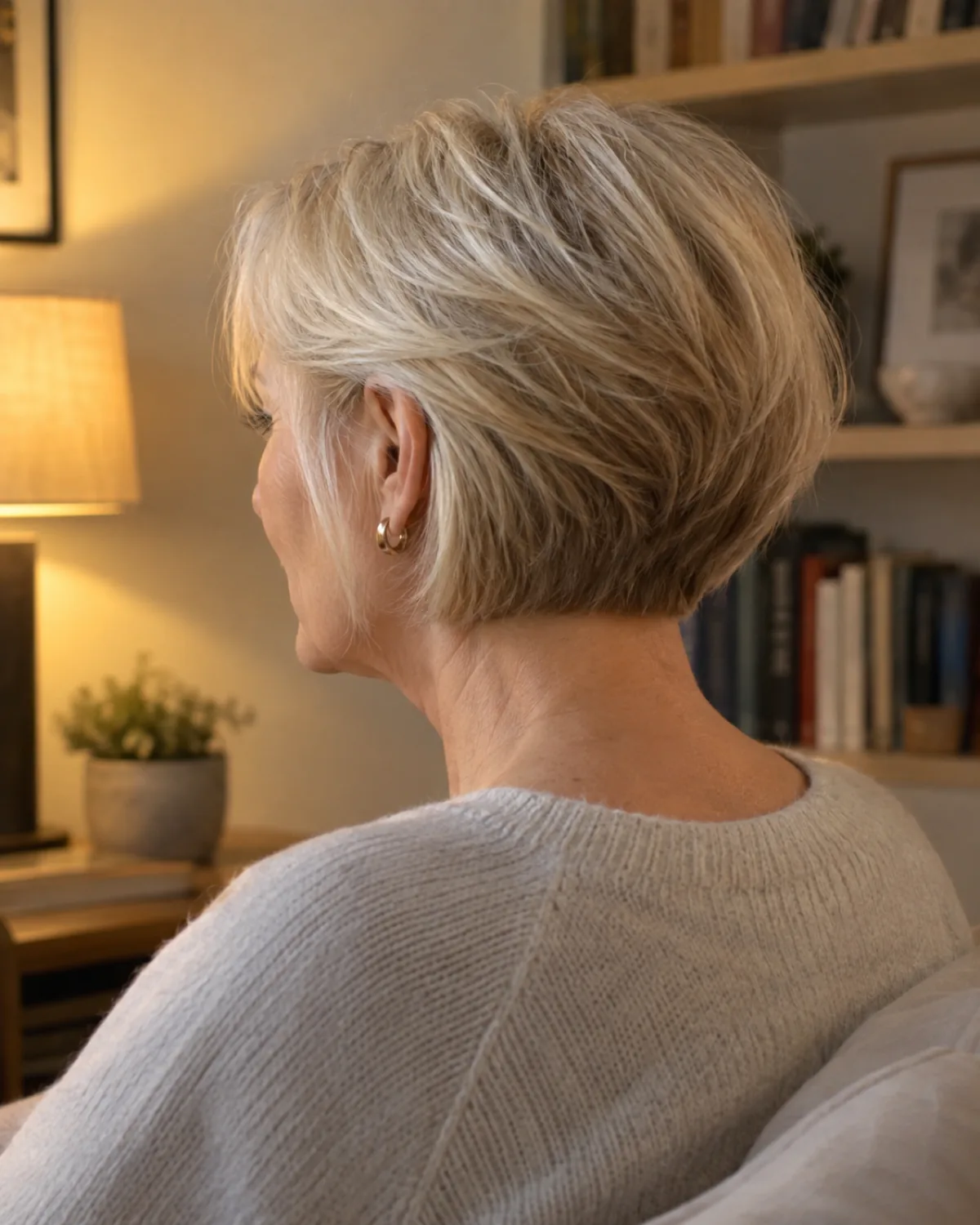
Graduation compresses layers at the nape so the hair fans outward mechanically. The stacked back creates volume that does not depend on the hair's own density. This is one of the few cuts that builds real body on very fine hair without product or heat.
- The wedge shape is created by the cut itself, not by blow-drying or product
- Works even on hair that has lost significant density because the volume is structural
- The front pieces can be left longer to frame the face while the back does the lifting
- Ask your stylist to keep the graduation smooth and deliberate, not choppy
- Needs a trim every four to six weeks to maintain the stacked shape
5. Textured Crop With Volume at the Crown
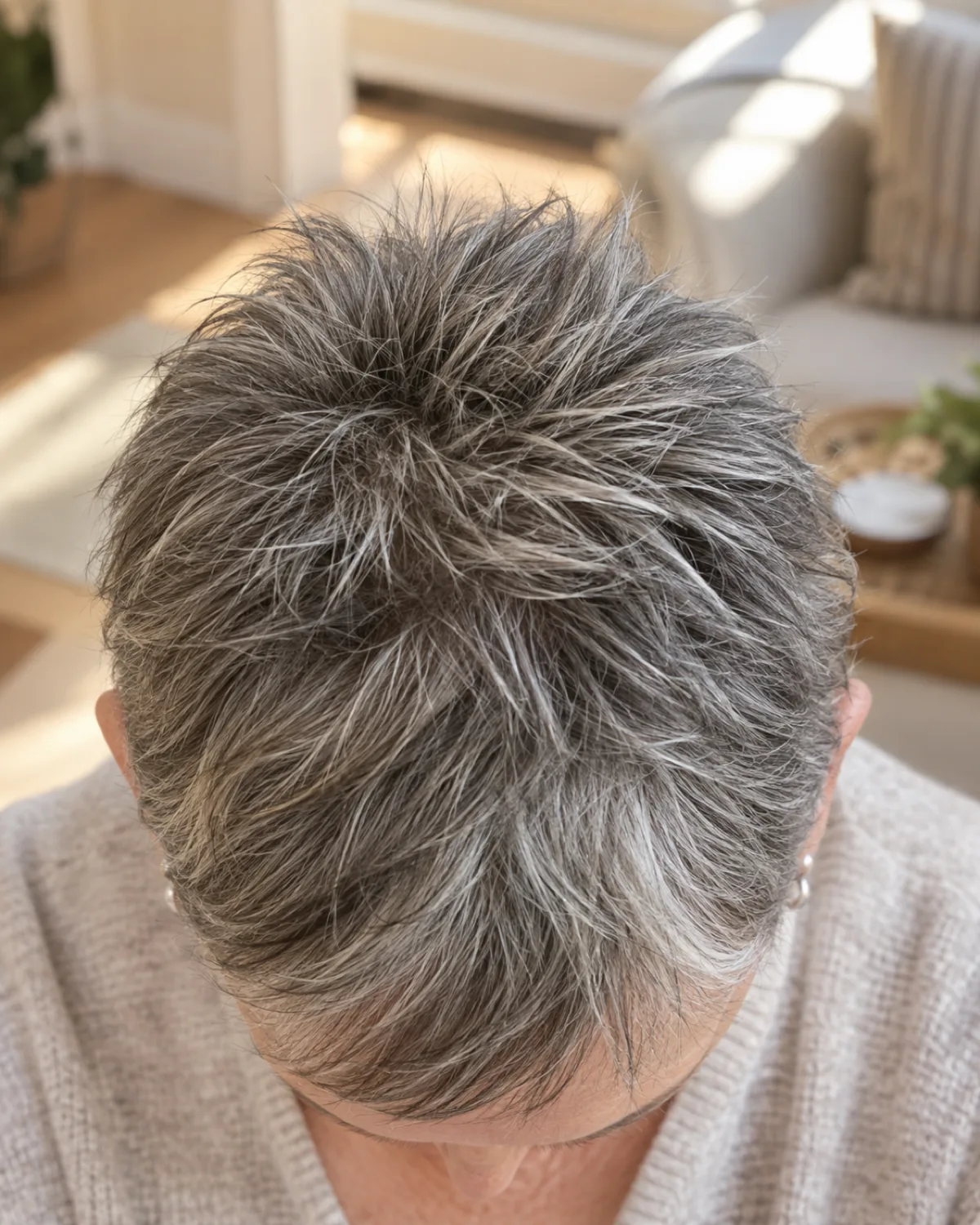
A crop cut shorter at the sides and back with point-cut texture at the crown for lift. The texture creates separation that reads as volume from above, where thinning shows most.
- Skip this if crown thinning is advanced enough that the scalp shows through the textured pieces
- The point-cut pieces need enough density to stand on their own rather than lying in parallel strips
- Works well on natural salt-and-pepper because the colour variation makes the texture more visible
- Ask your stylist how much crown density you have before committing to this texture level
6. Feathered Layers Starting Below the Ear
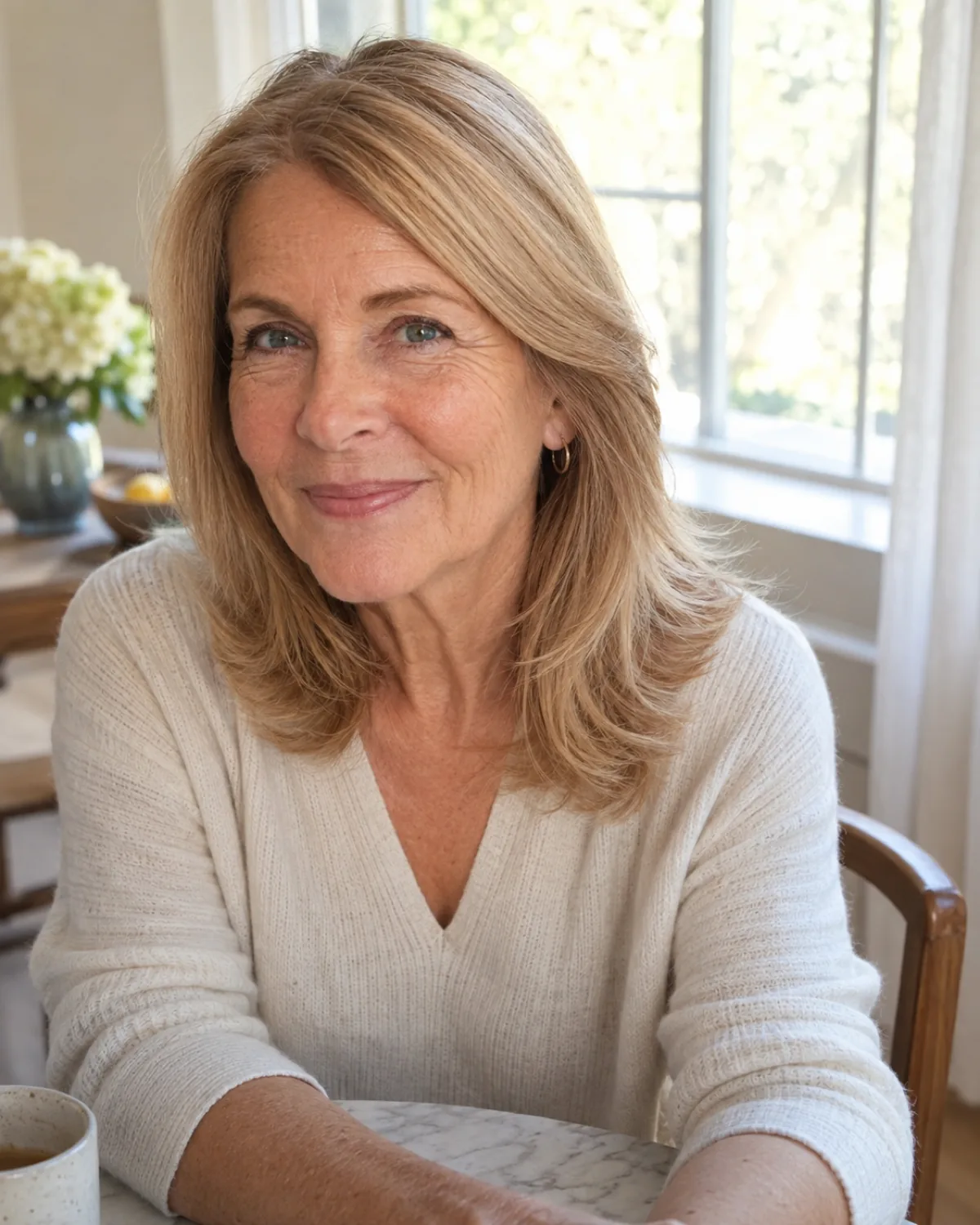
Feathering only the bottom half preserves the weight at the crown and mid-shaft. The contrast between the heavy top half and the feathered ends creates the illusion of more hair, because the reader's eye compares the two sections.
- The feathering must start below the ear, not at the ear or above it
- On fine hair that still has some mid-shaft body, this is one of the more natural-looking ways to add movement without losing density
- Skip if the hair is so fine that even low feathering makes the ends transparent
- This length requires daily brushing to keep the feathered section from tangling
7. One-Length Cut With a Deep Part
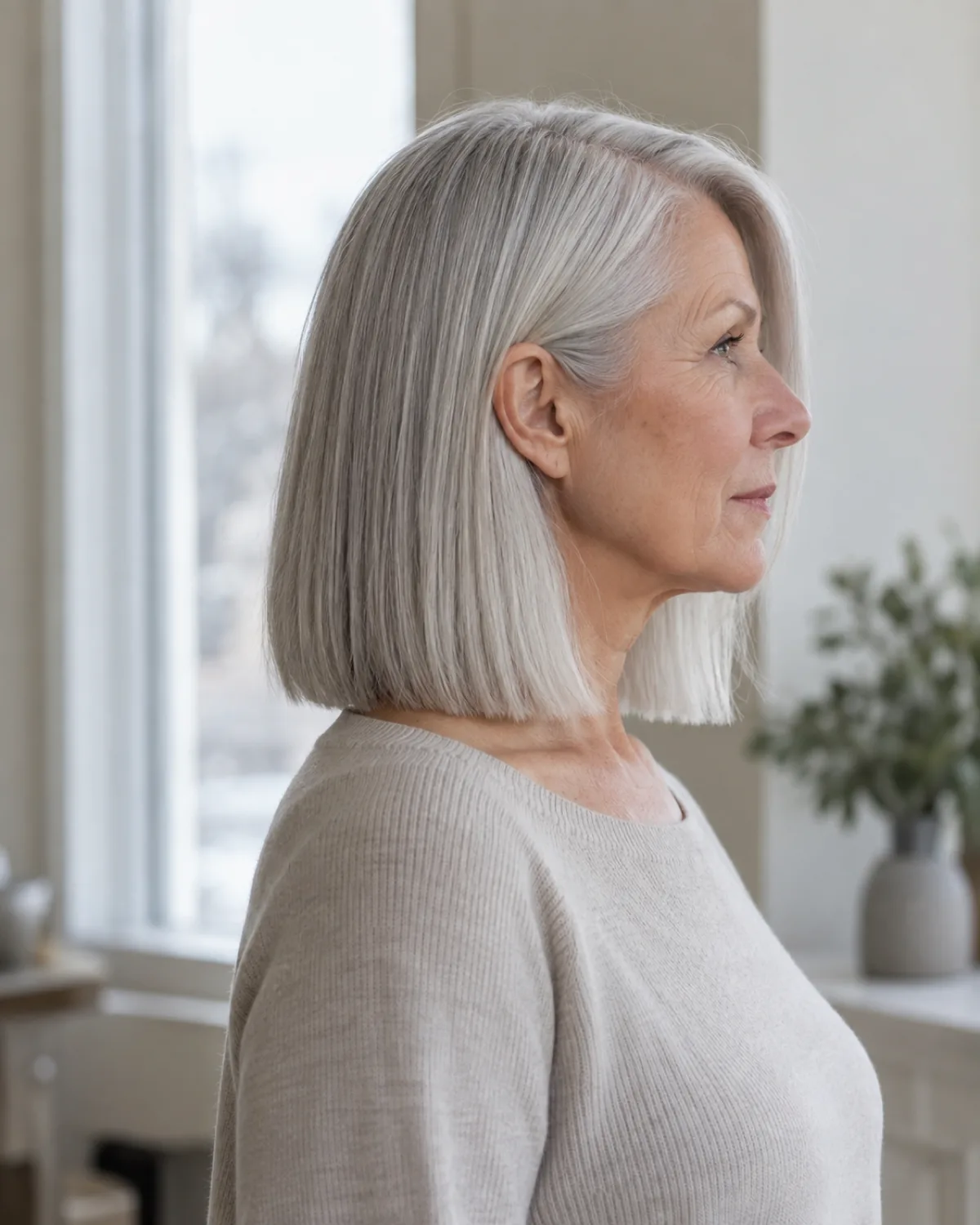
No layers, no texturing, no graduation. Every strand ends at the same point, creating a single clean line. The deep side part shifts the mass to one side and the asymmetry reads as fullness. This is the simplest option on the list and the one that costs the least density.
- The deep part does the work: it concentrates the hair on one side so that side looks twice as full
- Works on fine hair that can still reach the jaw or beyond without thinning out to wisps at the ends
- The blunt hemline must stay blunt: any feathering or razoring will undo the density illusion
- Ask your stylist to check the ends with the hair hanging naturally, not pulled taut, because fine hair looks different under tension
8. Wispy Pixie With Longer Top
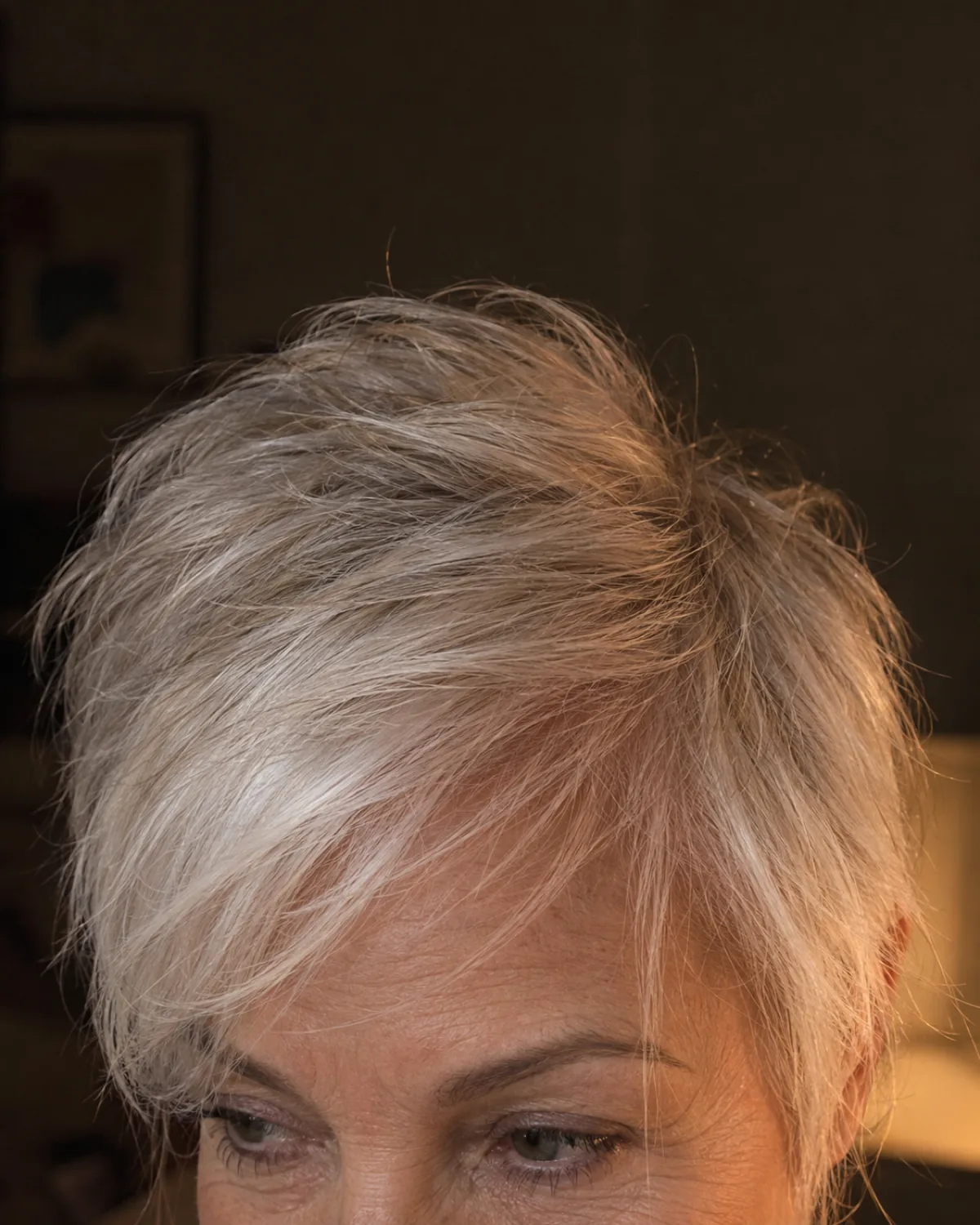
Slightly longer through the top and fringe than a classic pixie, with wispy pieces at the temples. The longer top gives directional movement that a standard pixie lacks, and the wispy temples soften the frame without requiring density.
- Works best on faces that benefit from softness at the temples rather than a clean architectural line
- The wispy pieces at the temples are individual fine strands, not a solid curtain
- Round faces may prefer idea 1 (the cropped pixie with a cleaner line) over this softer version
- The fringe can be swept to either side depending on where you want the visual weight
- Ask your stylist to point-cut the top pieces rather than blunt-cutting them so they fall with a natural taper
The cut that works at 60 is the one that works with the density you have now, not the density you remember. Bring one of these images to your next appointment, point to the weight line, and ask your stylist whether your hair can hold that shape for a full day. Their answer will tell you more than any list.
Where the checkable claims come from
- Fine Hair: Causes and How to Care for It — Philip Kingsley Trichological Clinic
- Understanding Graduation and Layering — Sam Villa / Redken Education
- Face Shapes and Hairstyles — Pivot Point International
- Hair Loss: Who Gets and Causes — American Academy of Dermatology Association
Keep this one
Save it for the appointment
Pin the image above to the board you actually open before a salon visit. This guide is written to be re-read, not read once.
Tonight, before you close this tab
- Part your hair at the centre and look down at the crown in a mirror to see whether the scalp shows through the top layer
- Gather all your hair at the jawline and check whether the gathered ends make a solid line or taper to wisps
- Time how long your current style holds its shape from morning to the end of the day without restyling
- Save one image from this guide that matches your current density and bring it to your stylist with one question: where would you set the weight line?