17 Wedding Guest Hairstyles Over 50 That Last Through the Reception
Seventeen wedding guest hairstyles for women over 50, each judged on one question: will it still look right by the time the cake is cut?
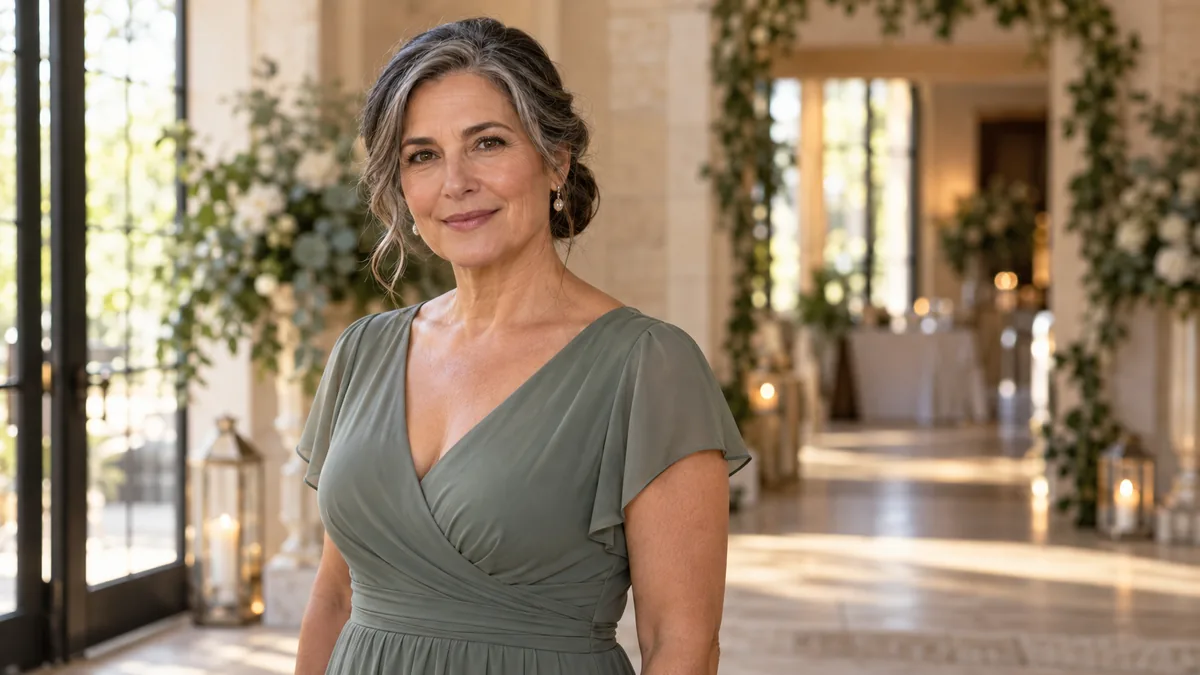
Booking an appointment soon? Save this page. It is easier to skim in the chair than to remember.
At a glance
Works
- A low chignon with a side part on shoulder-length or longer hair because the weight sits below the occipital bone and holds for hours without checking
- A textured bob left alone on medium to thick hair because the existing cut is the style and nothing needs to hold
- A volume blowout with ends turned under on medium-density hair because a round-brush set is the most reliable hold-all-day shape
Depends
- A French twist only if your hair has enough density to fill the roll — fine hair collapses the twist within an hour unless you build volume inside first
- A braided crown only if your hair is long enough and thick enough to make an even braid that sits flat across the top — thin braids read unfinished
- Loose waves with a statement clip only if you place the clip at the right height — behind the ear reads casual, at the temple reads dressy, at the crown reads dated
Skip
- A sleek centre-part low bun on a round face because the flat centre part and exposed temples widen rather than lengthen
- Side-swept waves pinned behind one ear on fine straight hair because the pins lose their grip within an hour and the sweep falls flat
- A braided crown on fine hair because the braid comes out thin and uneven and does not sit flush against the scalp
A wedding guest over 50 has a different brief than the bridal party. You are not colour-coordinating. You are not in every photo. You need a hairstyle that holds through the ceremony, the reception, and does not upstage anyone.
The question is not what is trending. The question is what will still look deliberate five hours later.
These seventeen styles answer that. Each one is judged on who it suits, what makes it fail, and whether it survives a full day without a mirror.
1. Low Chignon With a Side Part
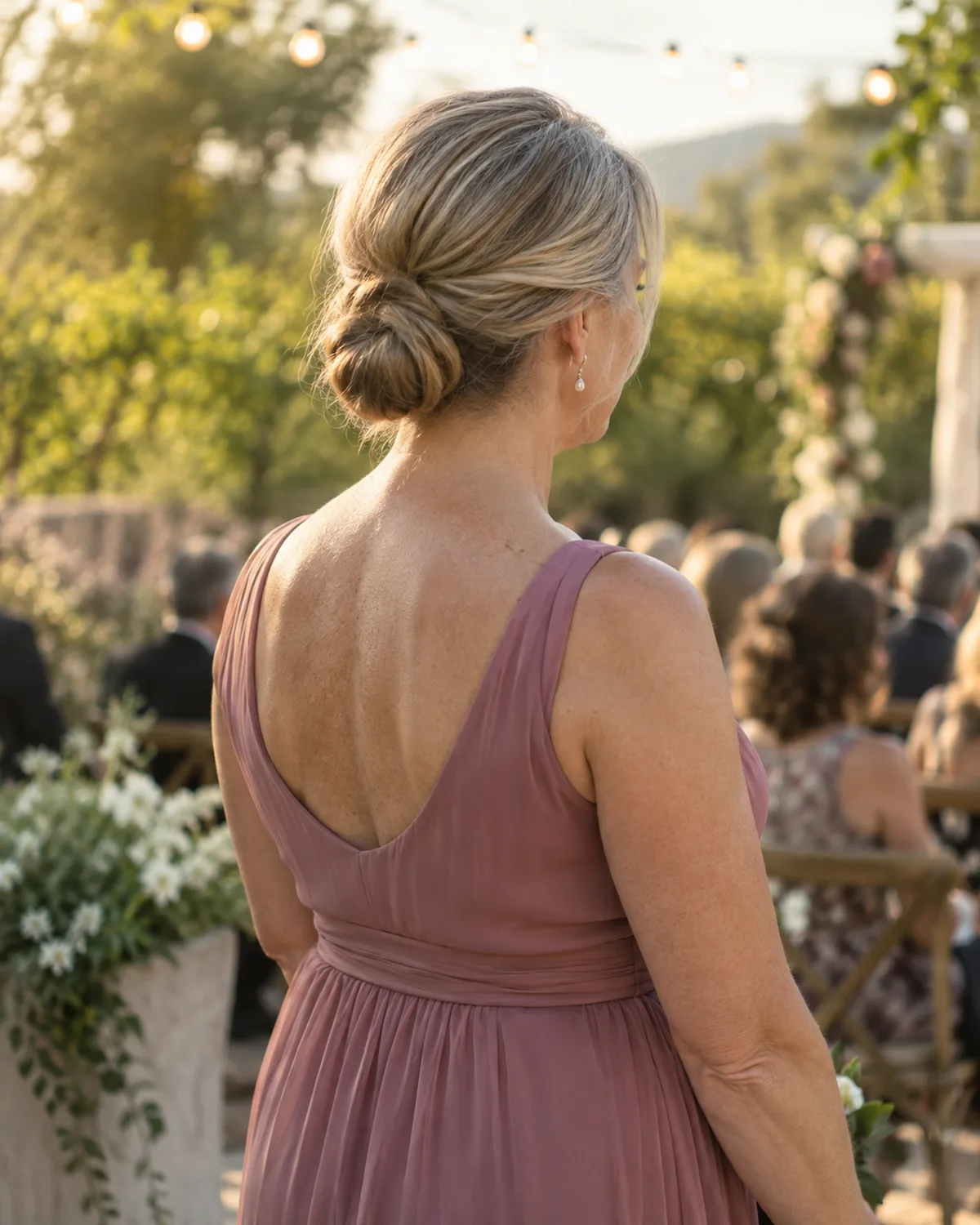
The chignon sits below the occipital bone, which means gravity works for it instead of against it. A side part gives the front section direction without adding volume where you do not need it. This is the most reliable hold in the entire list because the weight of the bun keeps itself in place.
- Works on most face shapes because the side part softens asymmetrically
- Needs at least shoulder-length hair to roll without stubby ends poking out
- A few pins and a light hold spray are enough — skip the cement-grade product
- Ask your stylist to keep the roll loose enough that individual strands are still visible
- If your hair is fine, backcomb the underside of the roll before pinning for density
2. Soft Half-Up Twist
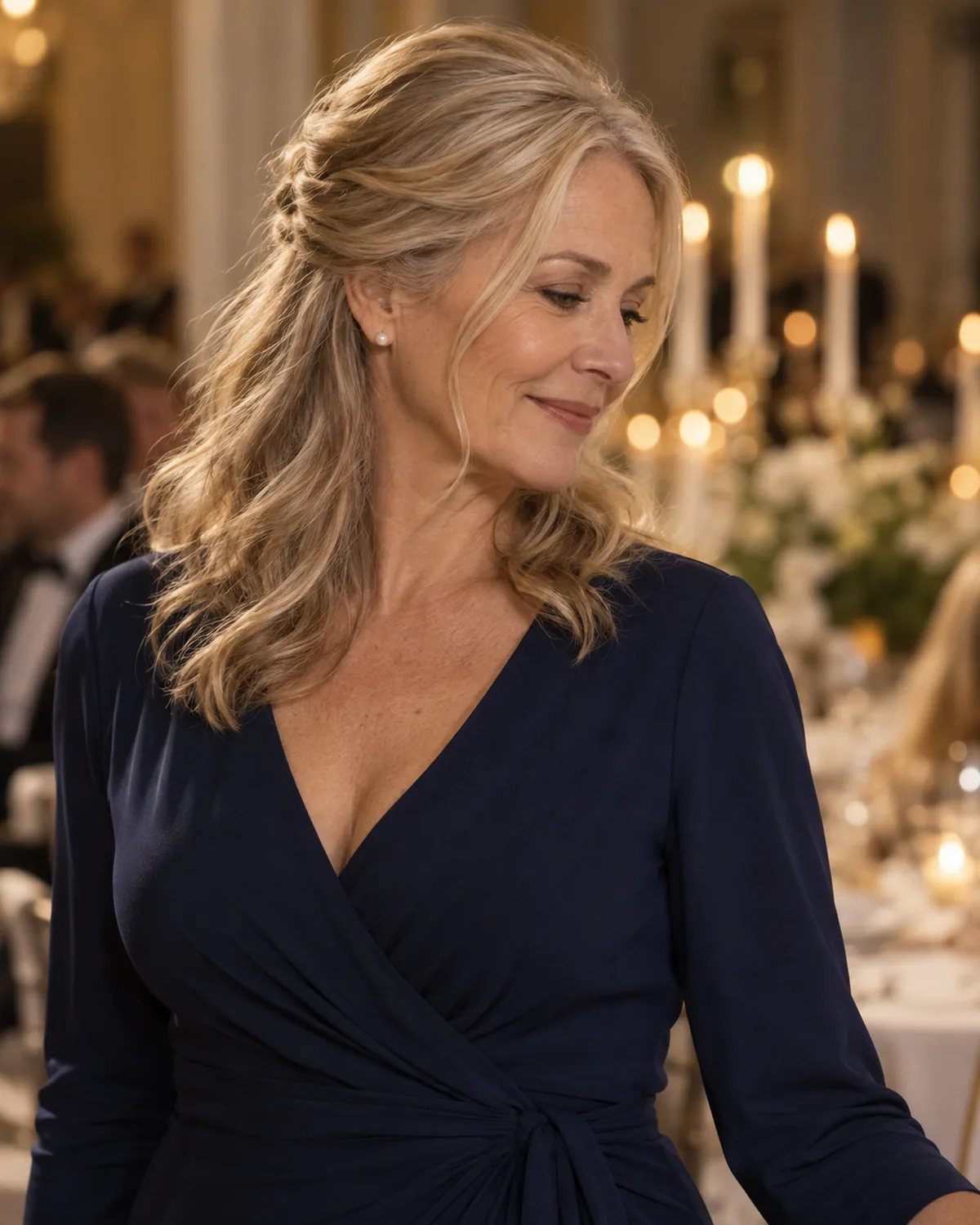
The top section twists back and pins at the mid-crown while the rest falls in loose waves. It gives structure to the top without the commitment of a full updo, and the waves below keep things relaxed enough for a guest.
- Works on medium to long hair with some natural body
- Fine hair benefits from a light backcomb at the crown before twisting to avoid a flat twist that reads limp
- The twist itself should be visible as a twisted section, not pulled so tight it becomes a flat band
- Pin at the crown, not lower — pinning too low makes it read like a half-finished ponytail
3. Textured Bob, Air-Dried and Left Alone

If you already have a good bob, the cut is the style. Set waves the night before on damp hair, shake them out in the morning, and go. No pins, no product beyond a texturising mist.
- Works best on thick to medium bob-length hair that holds a wave pattern
- Very fine bobs can go flat by cocktail hour without a root-lift product at the crown
- The key judgment call is whether your bob's texture reads intentional or just unwashed — test it before the day
- Skip this if your bob needs a round brush to look finished
4. French Twist With Loose Face-Framing Pieces
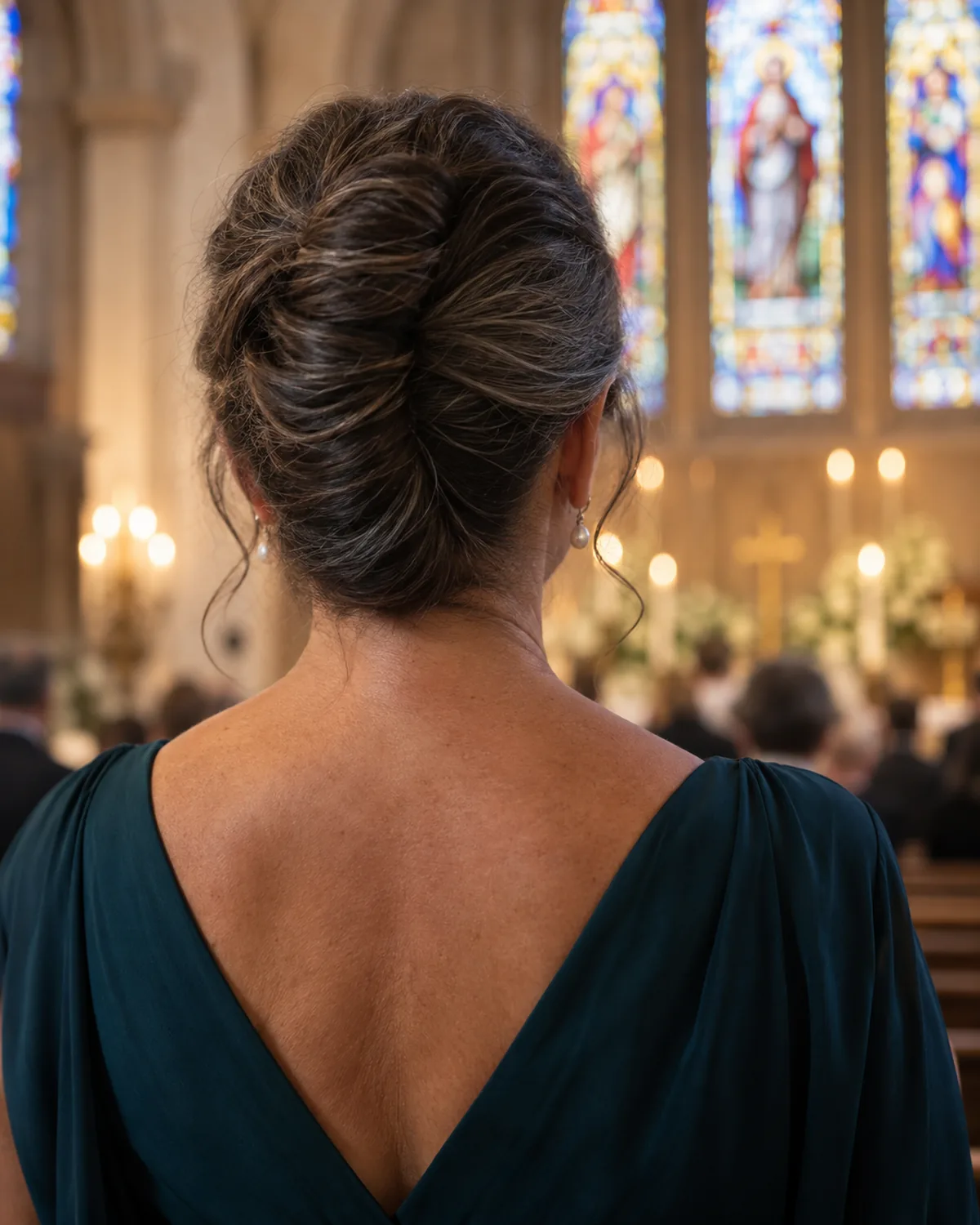
A vertical roll running from nape to crown, pinned smoothly, with two soft tendrils left out at the temples. The French twist photographs cleanly from every angle, which matters when the photographer catches you from behind during the ceremony.
- Suits medium to long hair with enough density to fill the roll
- Fine hair needs a volumising spray inside the twist or it collapses within the first hour
- The tendrils at the temples are deliberate, not accidental — leave exactly two, and make sure they are long enough to frame the jawline
- Practice this one twice before the day because the roll direction needs to feel natural or it unwinds
Where to start
Find your situation, skip ahead
Your hair is shoulder-length or longer and you want something that holds without checking it
A low chignon or a French twist — both sit at the nape, hold their own weight, and photograph cleanly from every angle.
01 Low Chignon With a Side Part04 French Twist With Loose Face-Framing Pieces
Your hair is short and you want to look dressed up without a single pin
A sculptured pixie side sweep or a slicked-back ear-length crop — pomade or light gel is all you need and you are done in two minutes.
09 Pixie With a Sculptural Side Sweep15 Smoothed-Back Ear-Length Cut
You want your hair down but need it to read wedding, not weekend
A volume blowout with ends turned under or loose waves with a single statement clip — the shape or the accessory does the elevation.
12 Volume Blowout, Ends Turned Under10 Loose Waves With a Statement Clip
5. Low Ponytail Wrapped at the Elastic
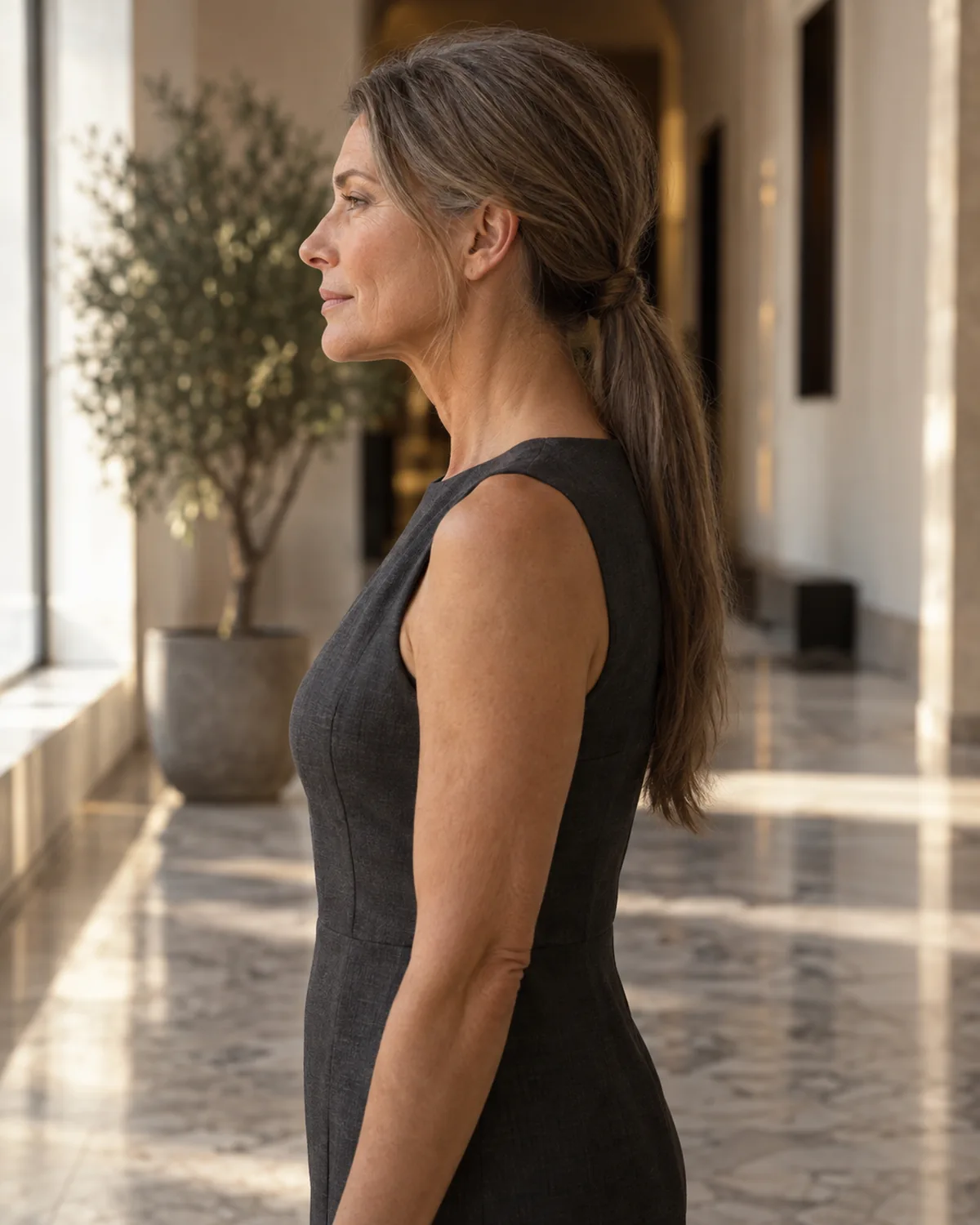
A ponytail at the nape with a strand wound around the elastic to hide it. Simple and modern. The wrapped strand is what makes it read as intentional rather than rushed.
- Works on straight to wavy hair past the shoulders
- Curly hair tends to spring up and shorten the tail, so set the placement lower than you think it needs to be
- The wrap should go around at least three times and pin underneath with a single bobby pin
- Skip hairspray on the tail itself — the ponytail should move, and stiff ends look brittle in photos
6. Side-Swept Waves Pinned Behind One Ear
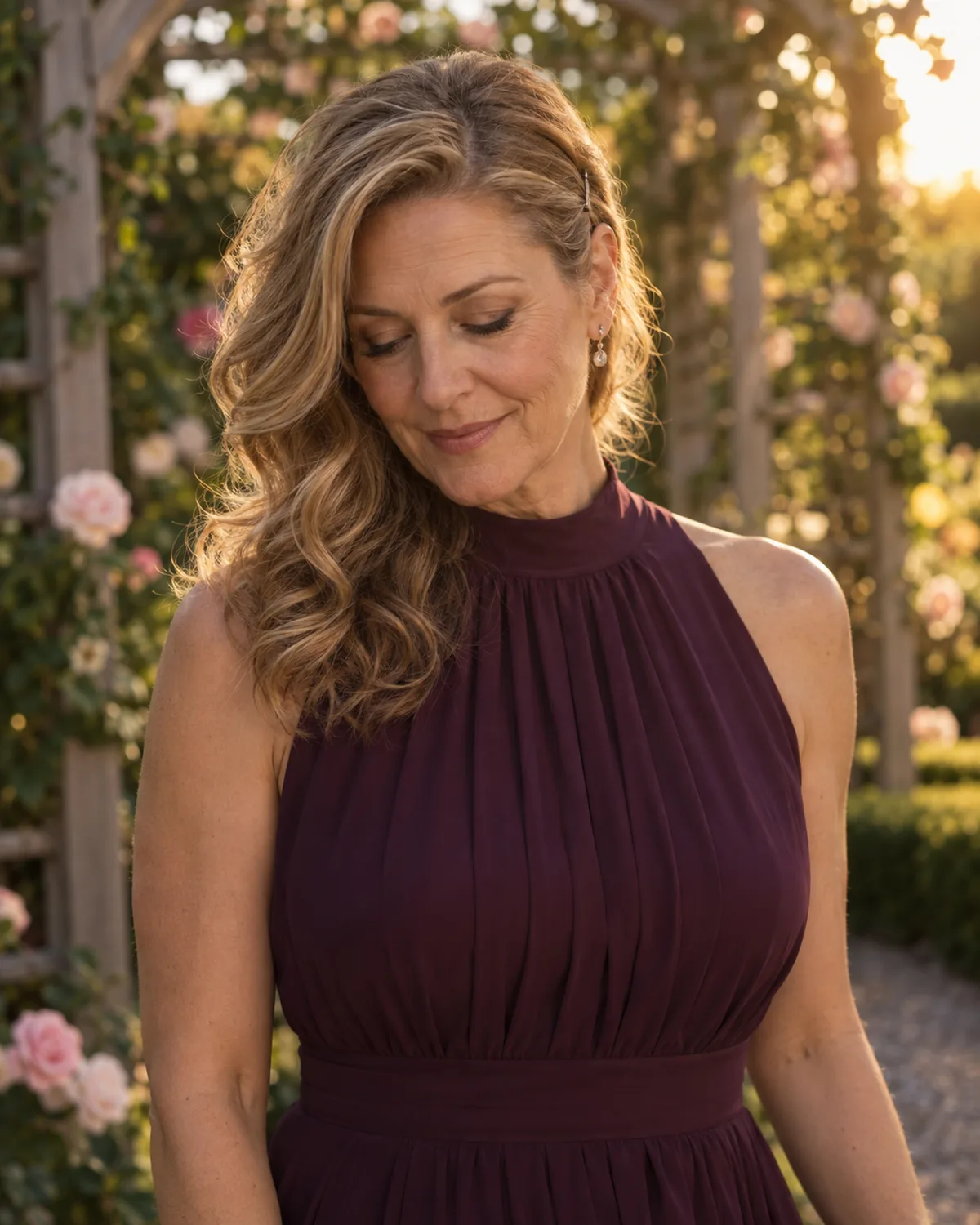
All the hair swept to one side in loose waves, with one or two pins holding it behind the opposite ear. Asymmetric and photogenic. The exposed ear reads clean and the swept side reads full.
- Works best on medium to thick hair with a natural wave that holds
- Fine straight hair slides out of the pins within an hour unless you use a texturising spray first
- Place the pins behind the ear, not above it — above the ear reads like a child's clip
- The swept side should fall forward past the collarbone, not stop at the shoulder
7. Braided Crown for Longer Hair
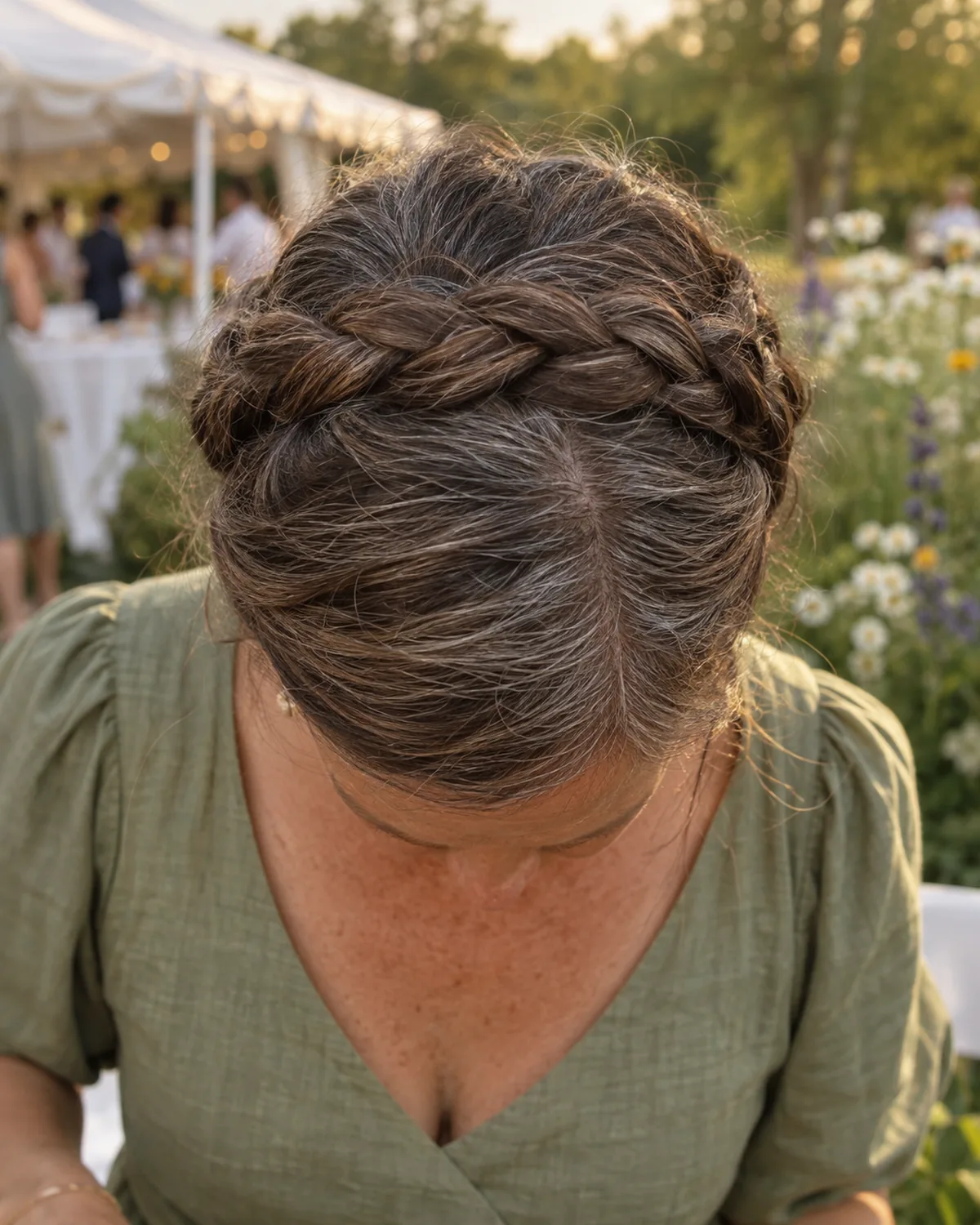
Two sections braided from behind each ear and crossed over the top of the head, pinned in place. It keeps hair completely off the neck, which matters at outdoor summer weddings.
- Suits medium to thick hair long enough to wrap — each braid needs at least twelve inches to cross over and pin
- Fine hair makes a thin, uneven braid that does not sit flat — skip this one
- The braids should sit flush against the scalp, not perch on top like a headband
- Pin where the two braids cross with flat pins, not bulky clips
8. Sleek Low Bun With a Centre Part
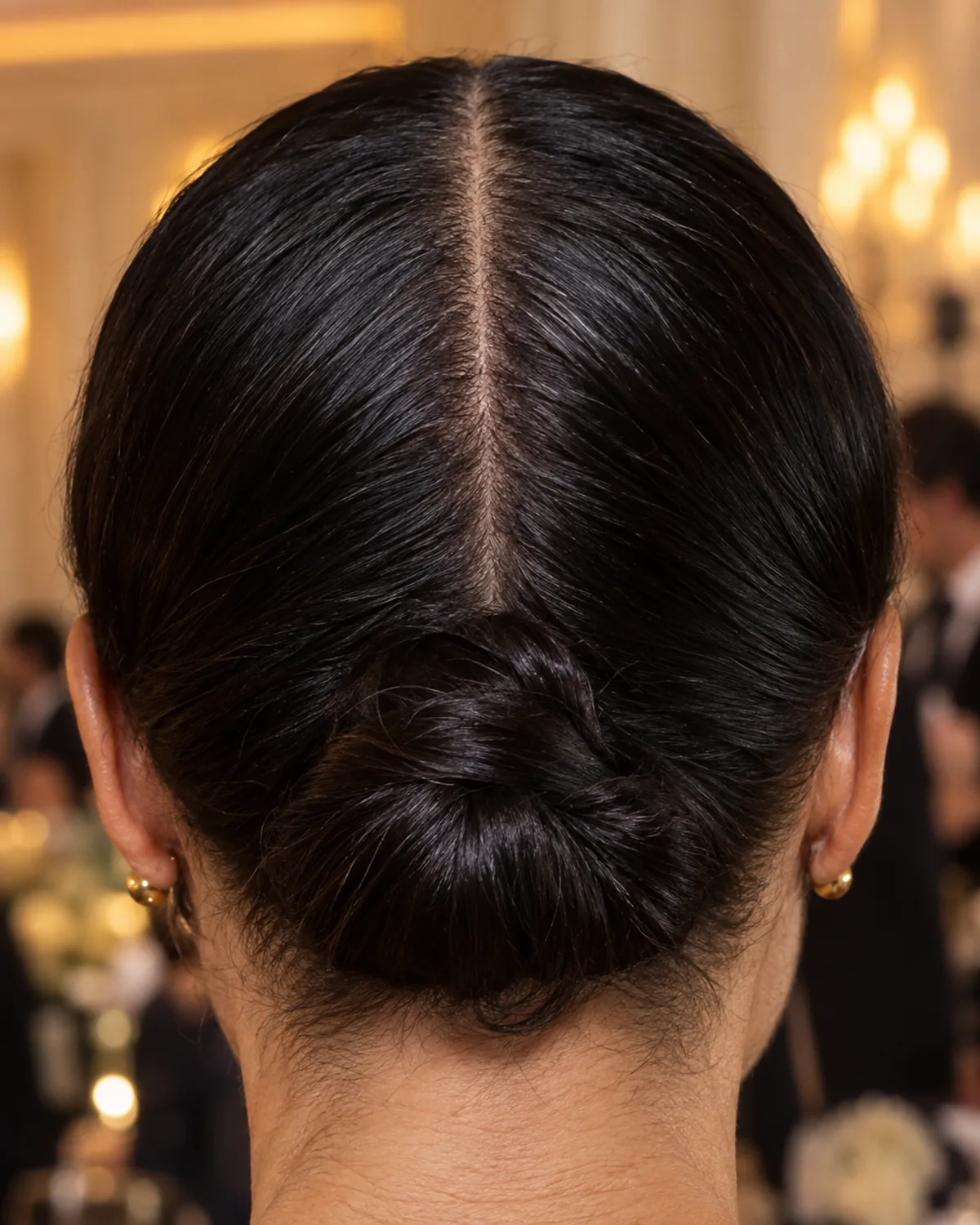
Hair parted dead centre, smoothed back, and knotted into a tight low bun. Minimalist and sharp. This is the most controlled option on the list.
- Suits oval and heart-shaped faces where the symmetry of the centre part frames evenly
- Round faces may read wider with a centre part pulling everything flat against the temples — a face-shape guide helps with that judgment
- The bun should be a visible knot, not a smooth dome — tucked ends should show a bit of structure
- No flyaways means no flyaways — use a fine-tooth comb and a light gel along the hairline
9. Pixie With a Sculptural Side Sweep
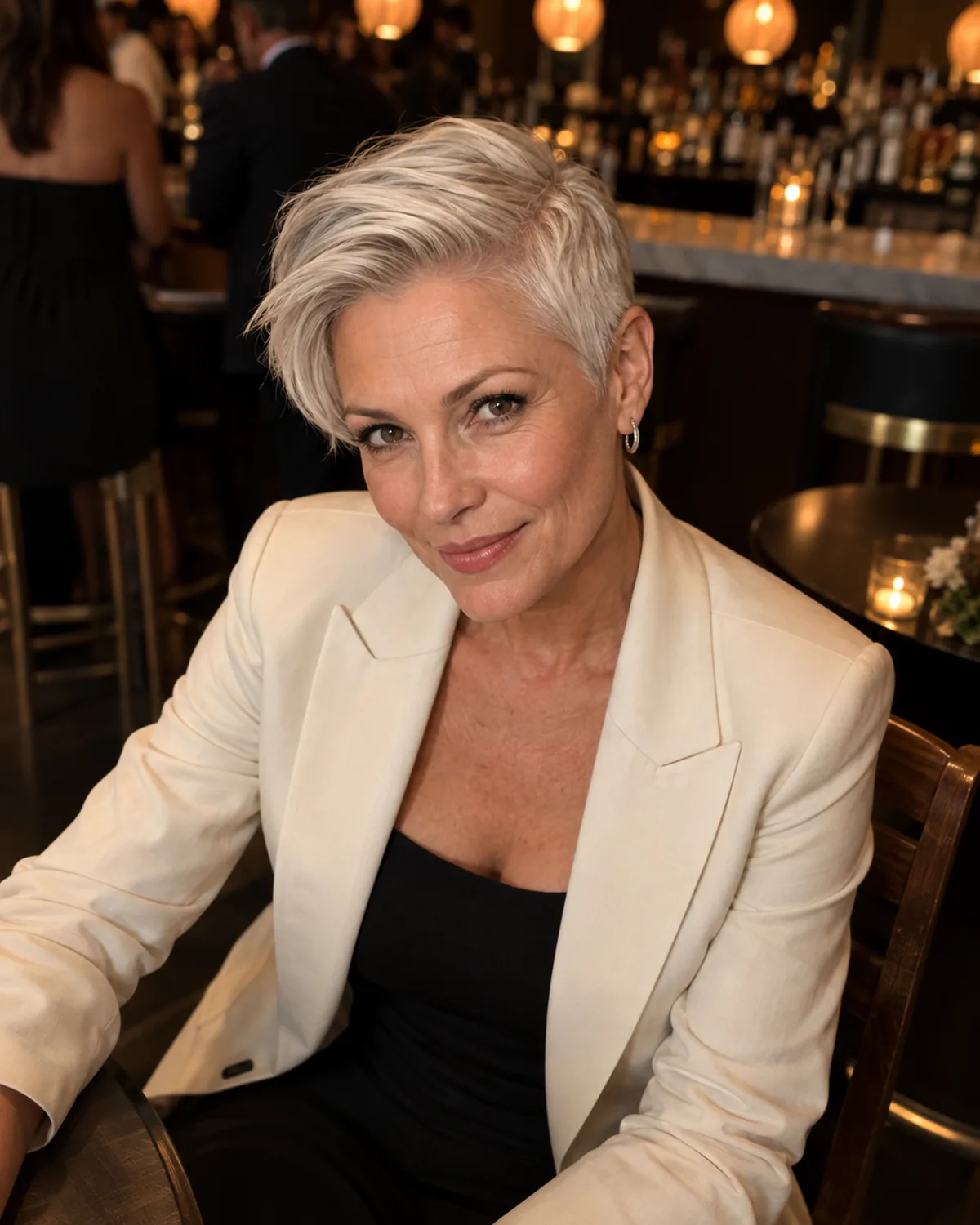
A short pixie with the longer top section slicked to one side with a matte pomade. Wedding-ready in two minutes. The pomade gives it a sculptural quality that reads deliberate.
- Suits angular and oval faces where the bone structure carries the cropped sides
- Round faces can benefit from building extra height on top rather than sweeping flat to the side
- Use a matte pomade, not a shiny gel — shine on a pixie reads wet, not dressed up
- This is the lowest-maintenance option in the list and holds indefinitely
10. Loose Waves With a Statement Clip
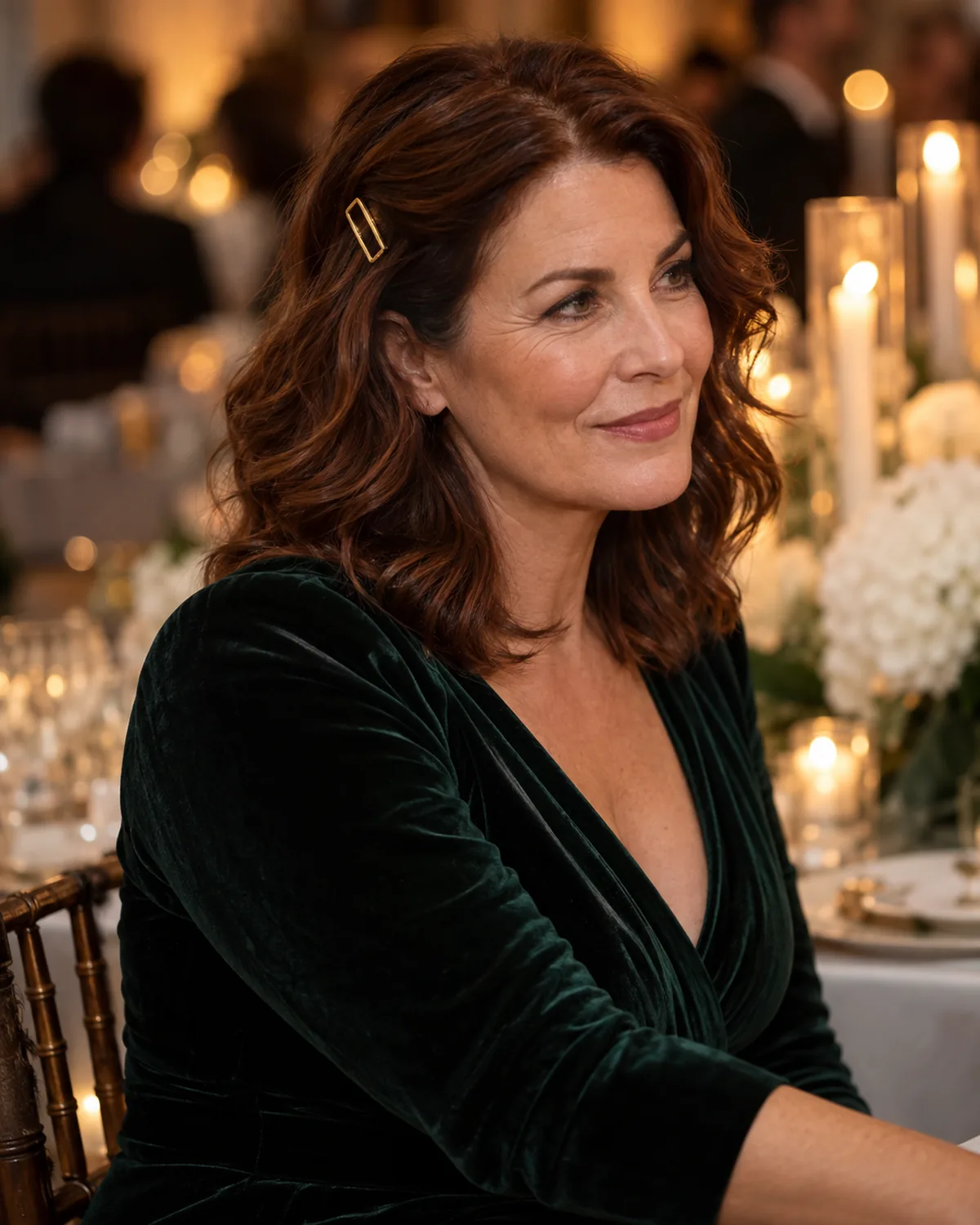
Shoulder-length or longer hair curled into loose S-waves with a single decorative clip holding one side back. The clip does the dressing up. The waves just need to behave.
- The clip placement is the judgment call — behind the ear reads casual, at the temple reads dressy, at the crown reads dated
- Use an unbranded geometric or tortoiseshell clip, not a rhinestone butterfly
- Curl the waves away from the face so they open outward rather than falling into the eyes
- This works on most textures but drops fastest on fine straight hair without a texturising product
11. Tucked Bob With Pearl Pins
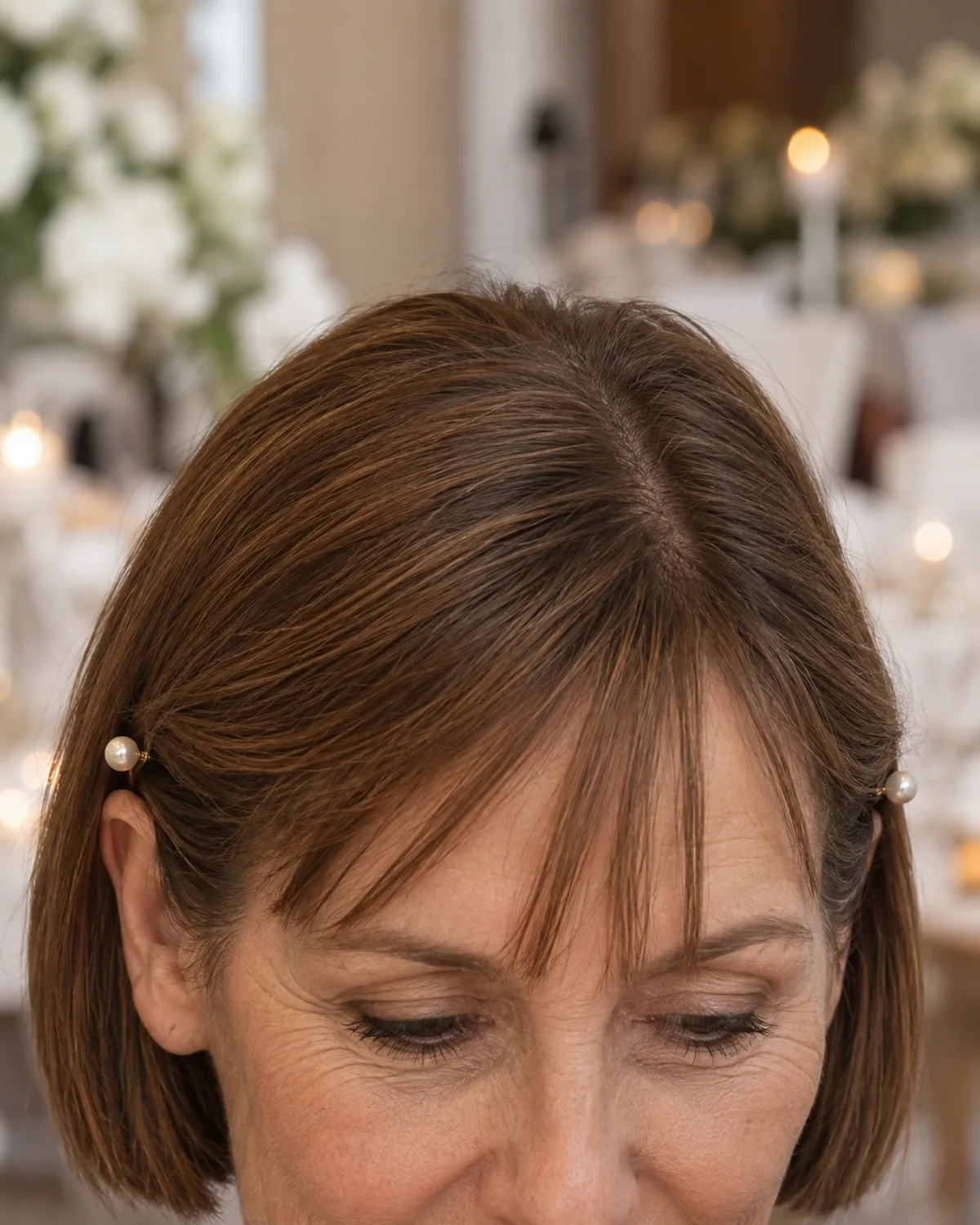
A chin-length bob with the front sections tucked behind the ears, each secured with a small pearl pin. Neat without fuss. The pins are the only accessory and they should be small enough that they register as detail, not statement.
- Works on straight to wavy bobs that hold a tuck
- Very curly bobs spring the tuck loose within an hour — skip this one
- The blunt ends of the bob should be visible below the jawline to keep the shape
- One pin per side is enough — more than that reads like you are holding something together
12. Volume Blowout, Ends Turned Under
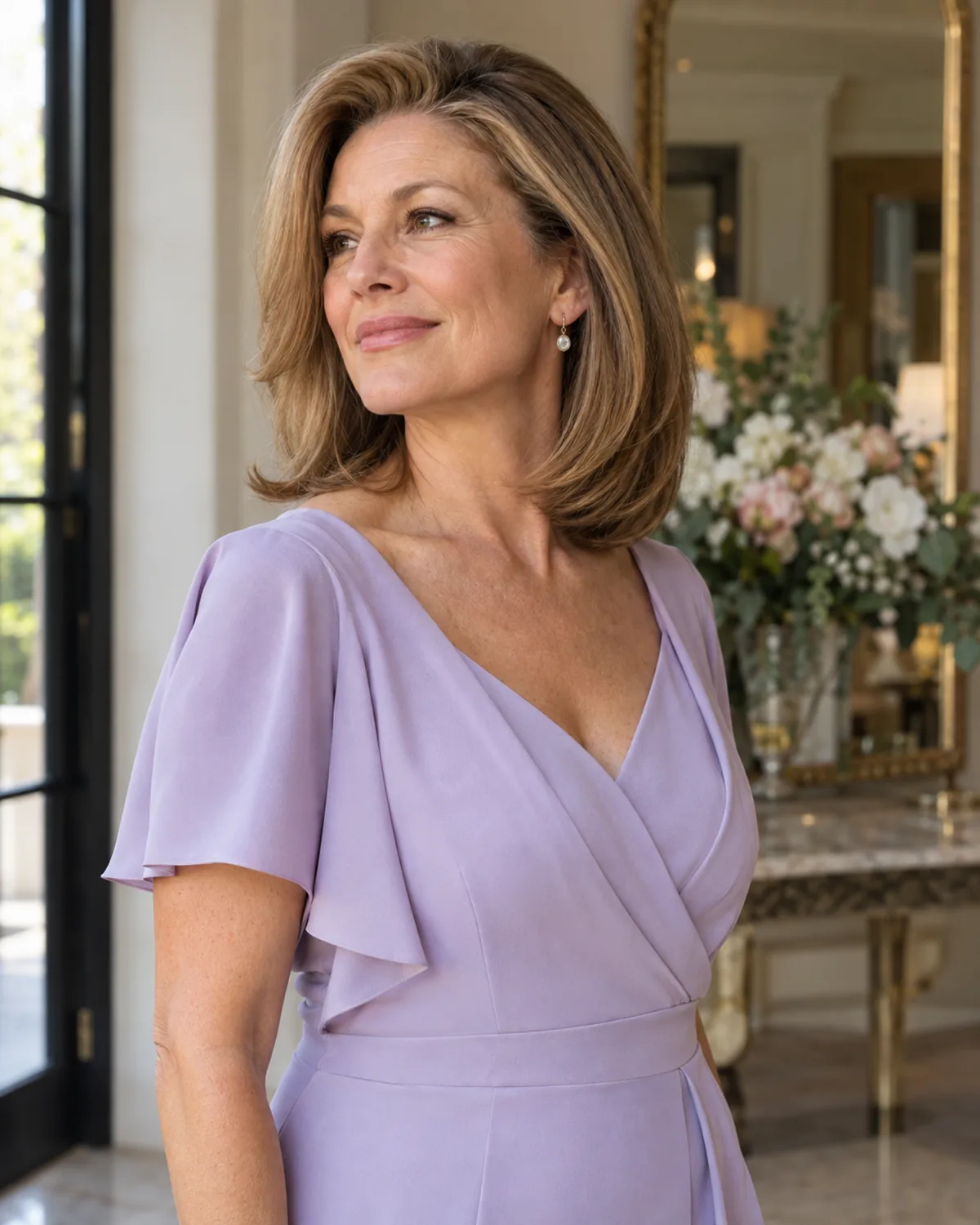
A round-brush blowout with ends curving inward at the collarbone. Classic and reliable. If evening hairstyles need drama, a wedding guest blowout needs endurance.
- Suits most lengths from jaw to collarbone and works best on medium-density hair that holds a set
- Fine limp hair drops the curl by the second hour — a velcro roller set while you do makeup extends the hold
- Very thick hair fights the under-turn and needs a light serum to keep the ends smooth
- The volume should be at the crown, not at the sides — side volume reads unfinished
13. Messy-on-Purpose Updo With a Low Bun
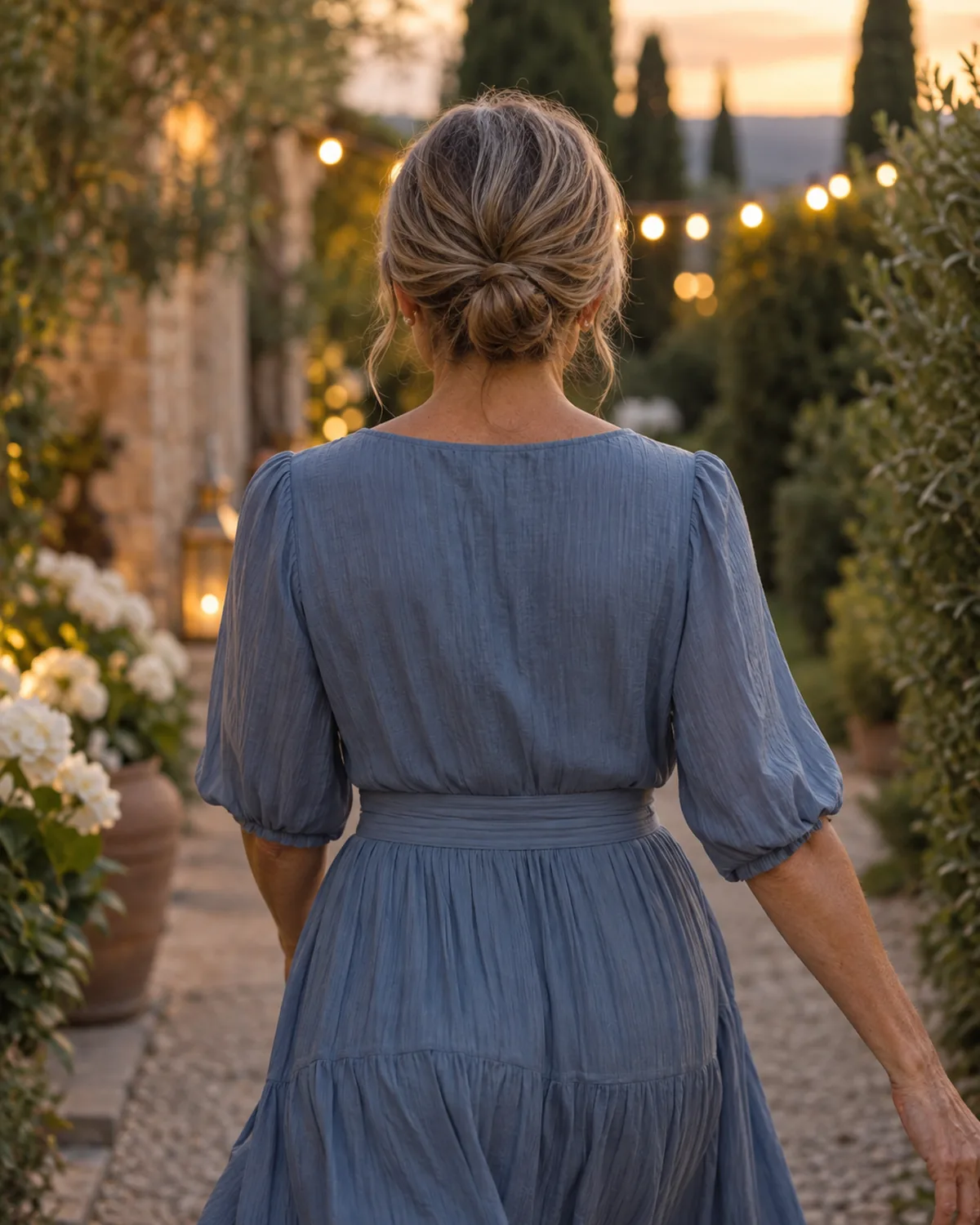
Hair gathered loosely at the nape with pieces pulled out deliberately around the face and temples. The opposite of the sleek bun. This is the updo that does not take itself too seriously.
- Works on almost every texture because the looseness is the point
- The risk is pulling out too much and looking like you forgot to finish — three pieces out maximum
- Each pulled piece should be long enough to frame something — a cheekbone, a jawline, the nape below the bun
- Pin the bun loosely but pin it — unpinned messy buns come undone on the dance floor
14. Half-Up With a Velvet Ribbon
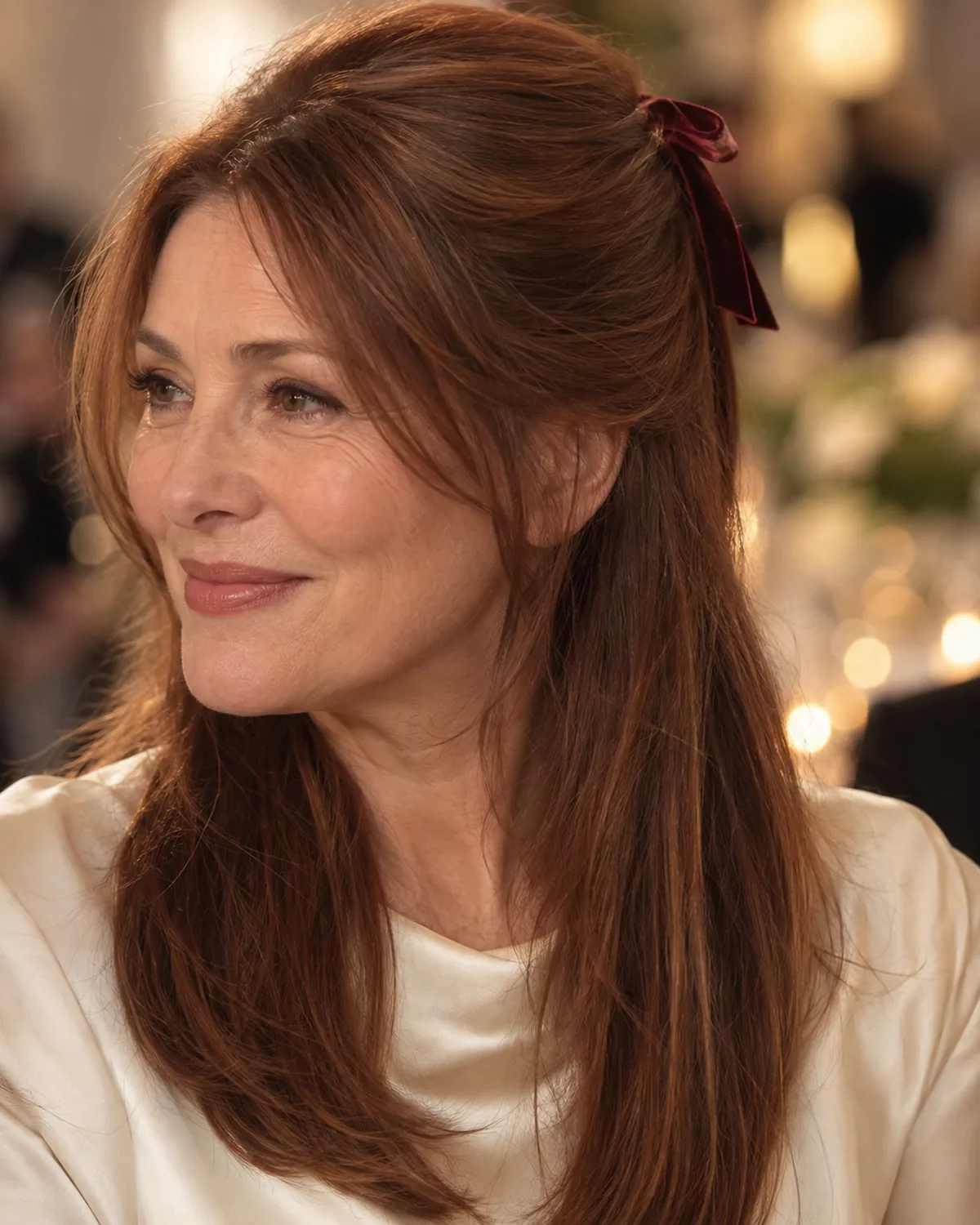
The top half pulled back and tied with a narrow velvet ribbon at the crown, the rest down. A single accent that reads intentional without reading bridal.
- Suits medium to long hair where the free bottom section has enough weight to hang straight
- The ribbon width should match the hair density — too thin on thick hair disappears, too wide on fine hair overwhelms
- Dark colours read best — burgundy, navy, forest green — bright ribbons read costume
- The bow should be small and neat, not a gift-wrap flourish
15. Smoothed-Back Ear-Length Cut
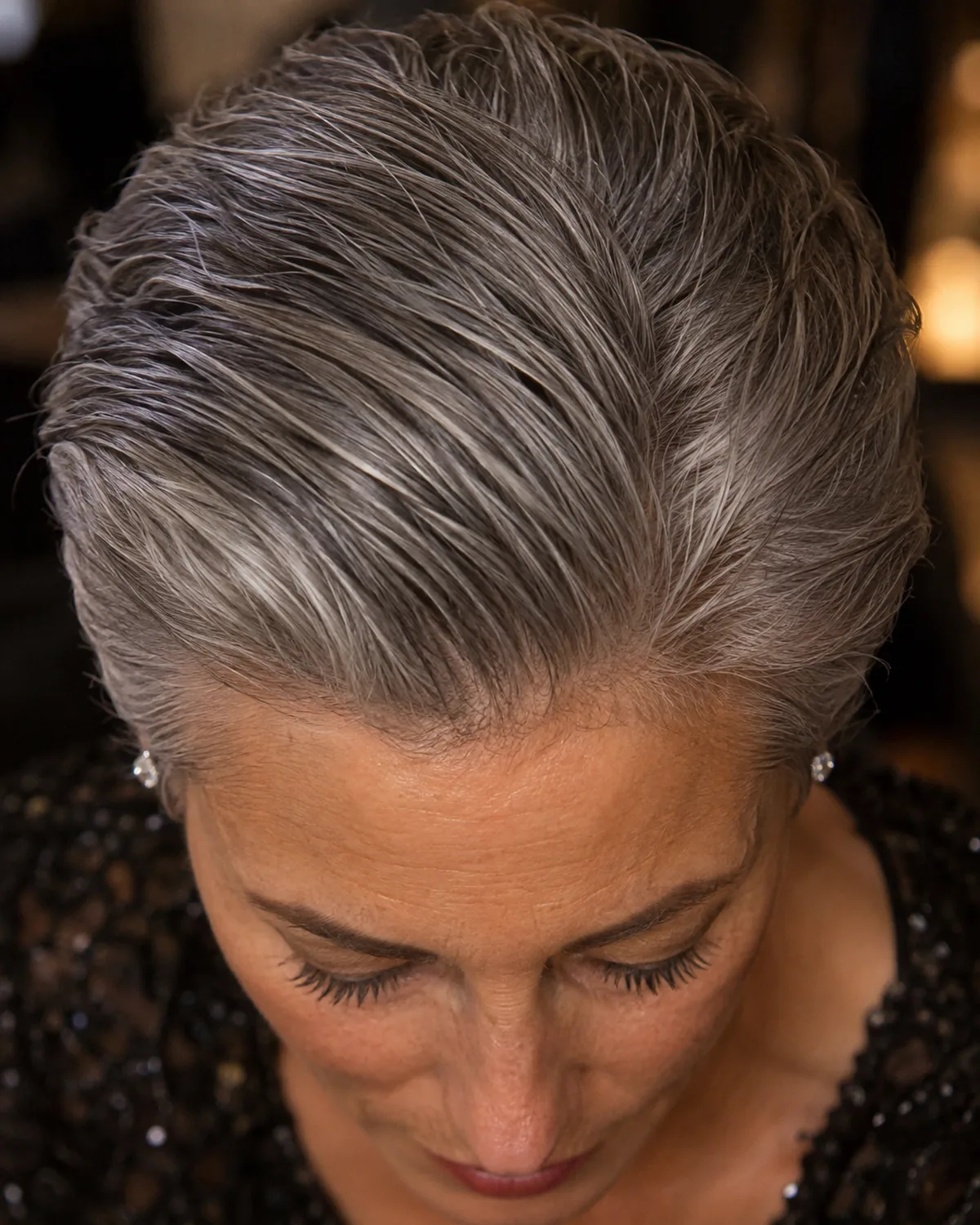
A cropped cut slicked back from the face with a light gel. Reads sharp and deliberate. The skull contours become part of the shape, which is why this works best on defined bone structure.
- Suits strong jawlines and defined cheekbones where the slicked-back silhouette follows the bones
- Softer faces may want a few wisps left at the temples to break the severity
- Use a light gel with a matte finish — a wet-look gel on a short crop reads gym, not wedding
- This holds indefinitely and requires zero maintenance during the event
16. Rolled Half-Up With Bobby Pins
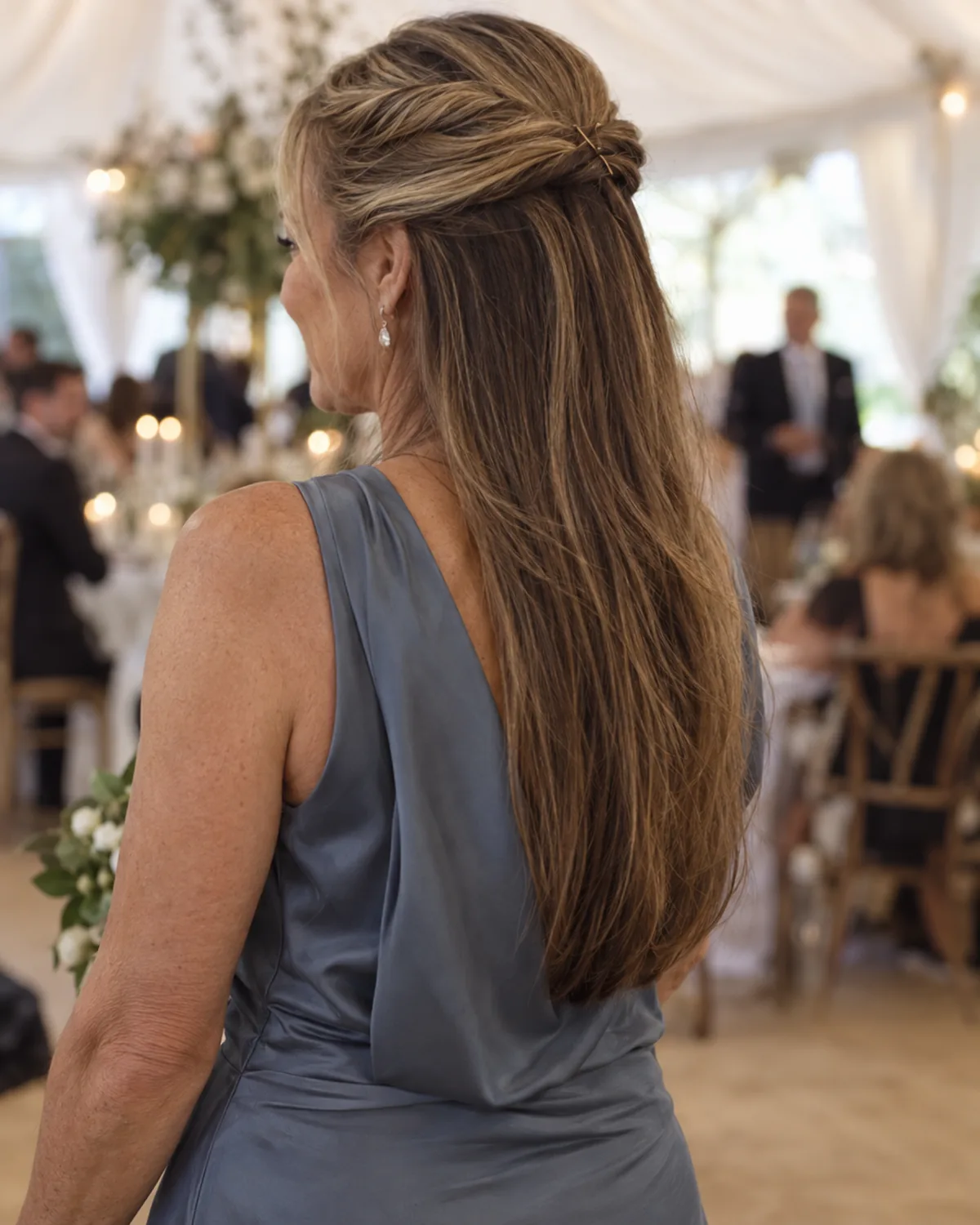
Two rolled sections from each temple meeting at the back of the crown, pinned. A structured alternative to the simple twist that gives more visual interest from behind.
- Works on straight and wavy hair at least past the shoulders
- Each roll needs at least four inches of length to form — shorter bangs will not tuck in and will spring out
- The rolls should converge neatly, not overlap — pin them side by side where they meet
- The rest of the hair hangs below the rolls and should be smooth, not competing with the structure above
17. Natural Curls Defined and Left Down
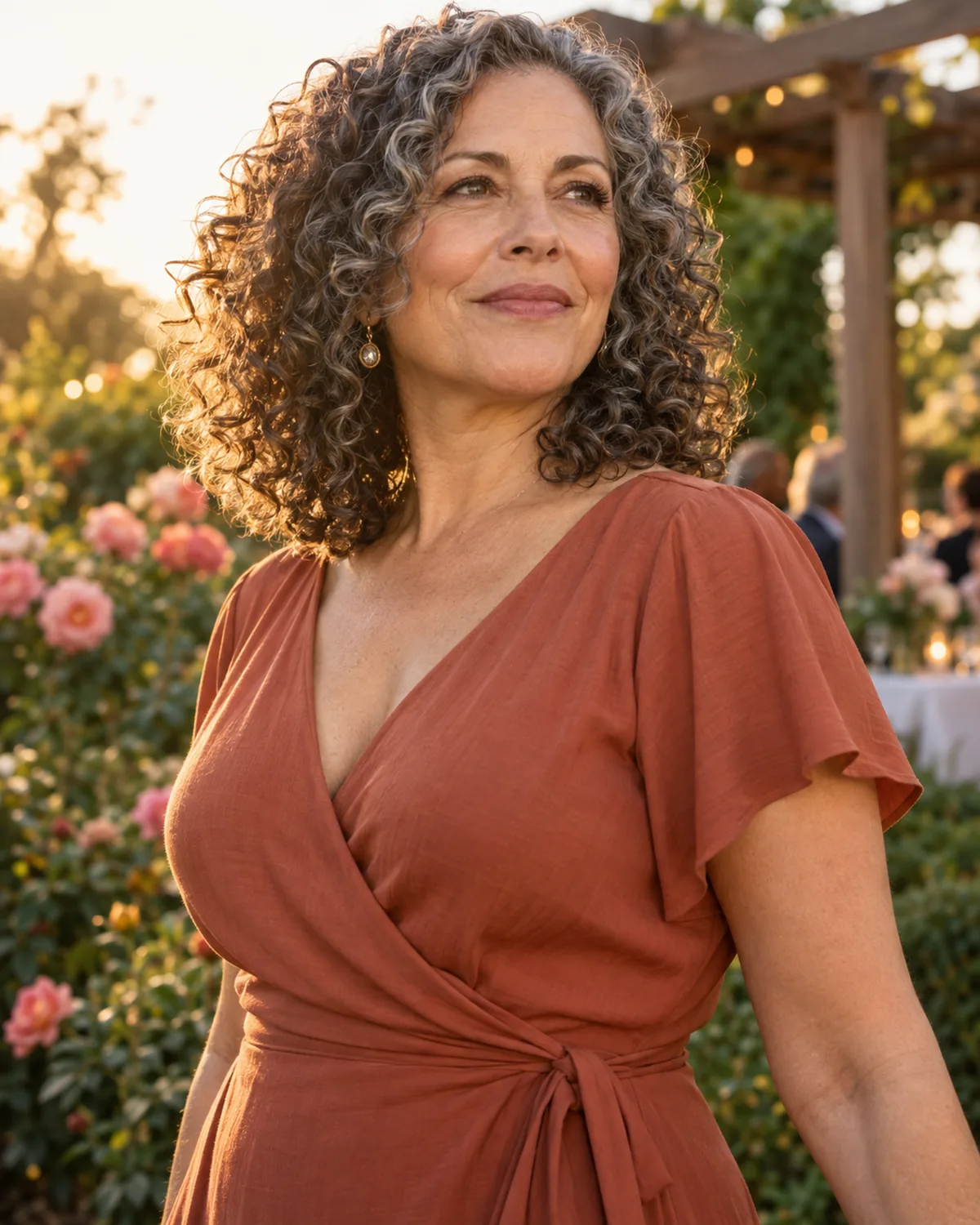
Wash-and-go curls with a defining cream, no diffuser. The easiest option for curly-haired guests. The curls are the style and the defining cream keeps them separated rather than frizzing into a cloud.
- Suits all face shapes when curls have volume and definition
- The judgment call is whether your curls hold definition for five-plus hours without frizzing — test on a humid day first
- Skip the diffuser for this look — diffused curls get more volume but less definition, and definition is what makes this read dressed up
- A single small earring is enough accessory — the curls are doing the work
Where the checkable claims come from
- How to Choose the Best Hairstyle for Your Face Shape — American Academy of Dermatology
- Understanding Hair Layering Techniques — Pivot Point International
- The Science of Hair Aging — International Journal of Trichology
Keep this one
Save it for the appointment
Pin the image above to the board you actually open before a salon visit. This guide is written to be re-read, not read once.
Tonight, before you close this tab
- Try the hairstyle on a regular day and check it after five hours — if it has moved or flattened, it will do the same at the wedding
- Check the dress neckline against the hair placement — a high neckline with a low bun competes for the same space, and one of them will look cramped
- Bring two photos of the finished style to your stylist if you are getting it done the morning of — one front view and one from the angle the photographer will shoot
- Write down whether the venue is indoor or outdoor — humidity changes which styles survive and which ones do not