18 Hairstyles for Jowls Over 50 That Shift the Eye to the Cut
Eighteen hairstyles judged for women over 50 with jowling. Each cut rated by whether it redirects the eye upward, outward, or past the jaw.

Booking an appointment soon? Save this page. It is easier to skim in the chair than to remember.
At a glance
Works
- A layered bob with volume at the crown because the bulk above the ears shifts the visual weight away from the jawline
- Long side-swept bangs because the diagonal line across the upper face pulls attention above the jaw entirely
- A textured shag at jaw-to-shoulder length because the broken texture interrupts the eye before it reaches the jowl line
Depends
- A chin-length blunt bob only if hair density holds a clean edge at the jaw — fine ends thin out and expose the jaw instead of framing it
- Curtain bangs with a collarbone lob only if temple hair is thick enough to form a visible curtain — sparse temples cancel the narrowing effect
- A graduated bob with stacked nape only if nape hair lies flat — coarse nape hair sticks out and defeats the stacking
Skip
- Feathered jaw-length layers on very curly hair because the curls push outward and add width right at the jaw
- A voluminous blowout as a permanent solution because the root lift collapses by day two on most hair types
- A textured crop on heavier jowling with a short neck because removing all hair can make the jaw the dominant feature
Jowling is not a double chin and not a round face. It is the jawline itself softening and dropping below the bone. The distinction matters because what flatters a round face can highlight jowls.
After 50 the jaw shifts, and the question is which cuts redirect attention from the lower jaw to the shape of the hair.
These eighteen styles answer that question: does this structure draw the eye upward, outward, or along the hair, or does it frame the jaw?
1. Chin-Length Blunt Bob

A one-length bob ending exactly at the chin. The horizontal line sits right at the jawbone, drawing the eye to the cut's sharpest edge rather than to the tissue below it.
- Works when hair density is medium-to-thick and holds a clean edge all the way across
- Skip on fine hair because the ends thin out and expose the jaw instead of framing it
- Ask the stylist to cut dry so the hemline lands where you actually see it, not where wet hair promises
- The blunt edge reads as a deliberate line; that intentionality is what keeps the eye on the cut
2. Layered Bob With Volume at the Crown

A bob with layers concentrated above the ears and crown lift built in. Moving the bulk upward shifts the visual weight away from the jaw.
- The strongest single move for moderate jowling because it creates a proportion contrast: fullness above, narrower below
- Depends on whether the hair still holds root lift without daily effort
- Ask your stylist how much internal layering the hair needs to hold shape at the crown without collapsing by afternoon
- If the roots go flat by noon, this cut reads like a deflated version of what you paid for
3. Long Side-Swept Bangs

Deep side-parted bangs sweeping past the cheekbone. They introduce a diagonal across the upper face, which pulls attention above the jawline entirely.
- Works on nearly every face shape with jowling because the diagonal is so dominant it overrides the horizontal of the jaw
- Depends on forehead height: very short foreheads feel crowded under heavy side bangs
- The bangs need enough weight to hold the sweep; wispy side bangs split apart and lose the diagonal
- Pair with shoulder-length or longer hair so the bangs do not read as the entire hairstyle
4. Textured Shag at Jaw-to-Shoulder Length

A shag with the shortest layers at the cheekbone and choppy movement from jaw down to shoulder. The broken texture around the jaw interrupts the eye before it reaches the jowl line.
- One of the most forgiving cuts for jowls because the texture creates visual noise exactly where you want it
- Skip if you need a polished, corporate look; the shag reads informal even at its tidiest
- The layers should start at or above the cheekbone, not below the jaw, or they frame the jowl instead of breaking the line
- Ask the stylist to point-cut the ends for a rougher texture rather than blunt-cutting them
5. Soft A-Line Bob

A slightly shorter back angling to a longer front that passes the chin. The forward angle draws the eye down along the hair rather than across the jaw.
- Good for mild-to-moderate jowling because the longer front pieces create a curtain past the jawline
- Skip if you want symmetry; the A-line commits to an angle and reads differently left to right
- The graduation at the nape should be soft enough to lie flat; steep graduation on thick hair can push outward
- Ask your stylist whether the angle should end at the chin or past it, based on where your jowling starts
Where to start
Find your situation, skip ahead
Your jowling is mild and you want a low-maintenance cut that redirects attention without daily styling
A layered bob with crown volume or a textured shag both shift the eye away from the jaw and need minimal daily effort.
02 Layered Bob With Volume at the Crown04 Textured Shag at Jaw-to-Shoulder Length
Your jowling is noticeable and you prefer to keep jaw-length or shorter hair
A chin-length blunt bob with density or a graduated bob with a stacked nape frames the jaw with a deliberate line.
01 Chin-Length Blunt Bob10 Graduated Bob With Stacked Nape08 Short Pixie With Sideburn Length at the Ears
You want to keep medium-to-long hair and avoid drawing attention to the lower face
Long layers starting at the collarbone with curtain bangs pull the eye downward and upward, skipping the jaw.
17 Long Layers Starting at the Collarbone07 Curtain Bangs With a Collarbone Lob15 Side-Parted Lob With Tucked Ear
6. Feathered Layers Starting Below the Ears

Layers that begin below the earlobes and graduate softly to the shoulders. The feathering creates soft edges around the jaw zone without exposing it.
- Works on straight-to-wavy hair because the feathered tips lie softly against the neck and shoulders
- Very curly hair may push the feathered ends outward and add width at the jaw, which is the opposite of the intent
- The feathering diffuses light across the strands; on gray or silver hair this makes the texture look dimensional
- Ask the stylist to start the layers below the ear, not at the ear; starting too high creates bulk at the jawline
7. Curtain Bangs With a Collarbone Lob

Centre-parted face-framing pieces paired with a collarbone-length lob. The two vertical lines of hair flanking the face create a narrowing corridor that draws the eye inward at the cheekbones.
- One of the few bang styles that complement jowl-prone faces because they frame the cheekbones, not the jaw
- Depends on how thick the hair is at the temples; thin temple hair makes curtain bangs look sparse and cancel the effect
- The bangs should blend into the rest of the length so there is no hard line where they end
- Ask the stylist to cut them long enough to tuck behind the ears on days when you want them out of the way
8. Short Pixie With Sideburn Length at the Ears
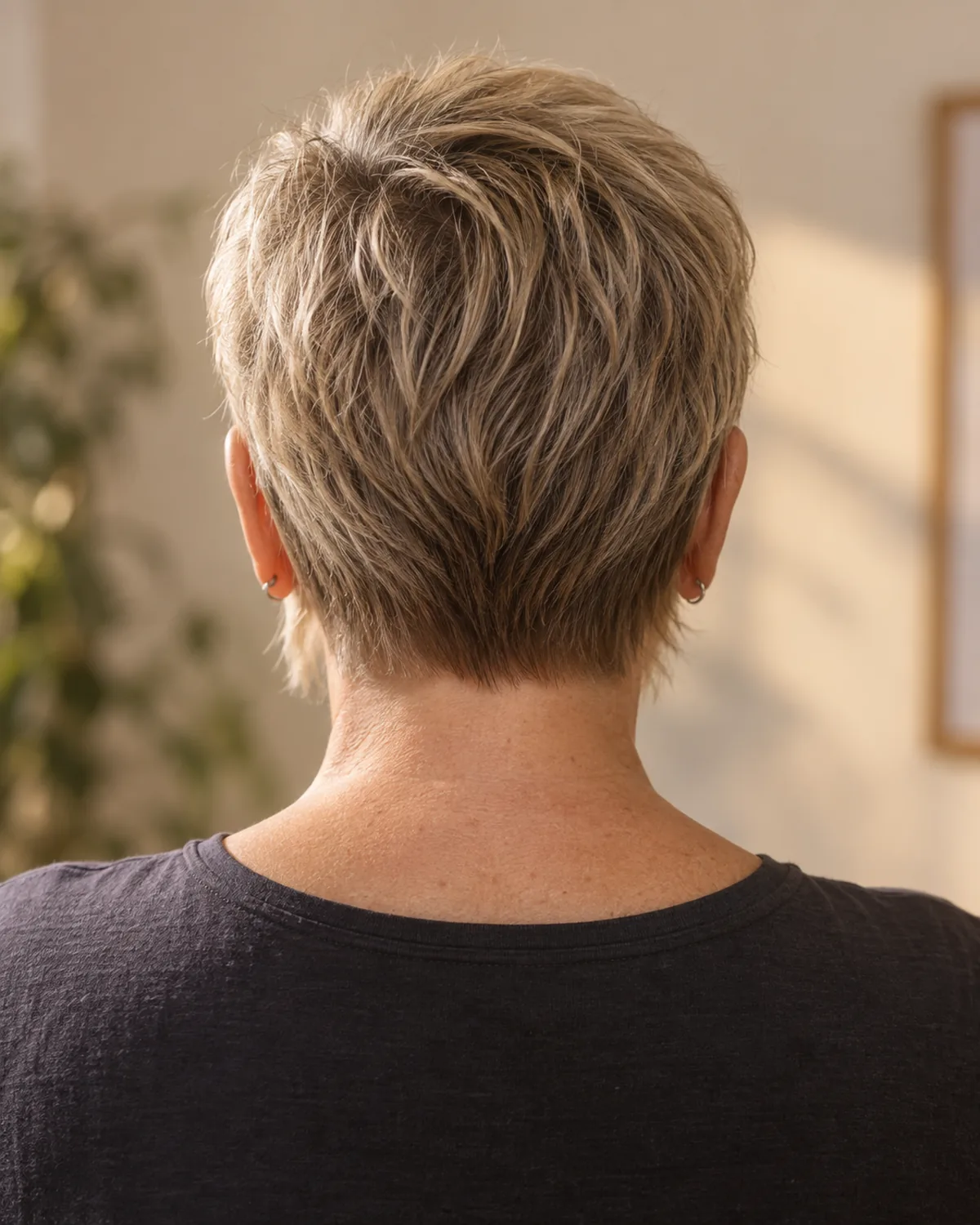
A cropped pixie with slightly longer sideburn-area hair tapering past the earlobes. By removing all hair from the jaw zone entirely, the pixie takes jawline softening out of the conversation.
- The sideburn taper adds a whisper of softness without framing the jowl
- Works best on women comfortable with very short hair and with a well-defined neck
- Skip if the neck is short or the jowling is heavy; without any hair, the jaw becomes the dominant feature by default
- Ask the stylist to leave the sideburn area slightly longer than the nape to soften the transition from hair to skin
9. Voluminous Blowout on a Medium Cut

A shoulder-length cut styled with root lift and outward movement at the mid-lengths. The volume at mid-face draws attention to the cheekbone zone rather than the jaw.
- Effective but maintenance-dependent: the lift collapses by day two on most hair types
- Ask your stylist about velcro rollers at the root for a longer hold between washes
- The movement should sit at the cheekbones, not at the jaw; outward volume at the jaw widens the lower face
- This is a styling solution, not a structural one; the cut underneath matters as much as the blowout on top
10. Graduated Bob With Stacked Nape
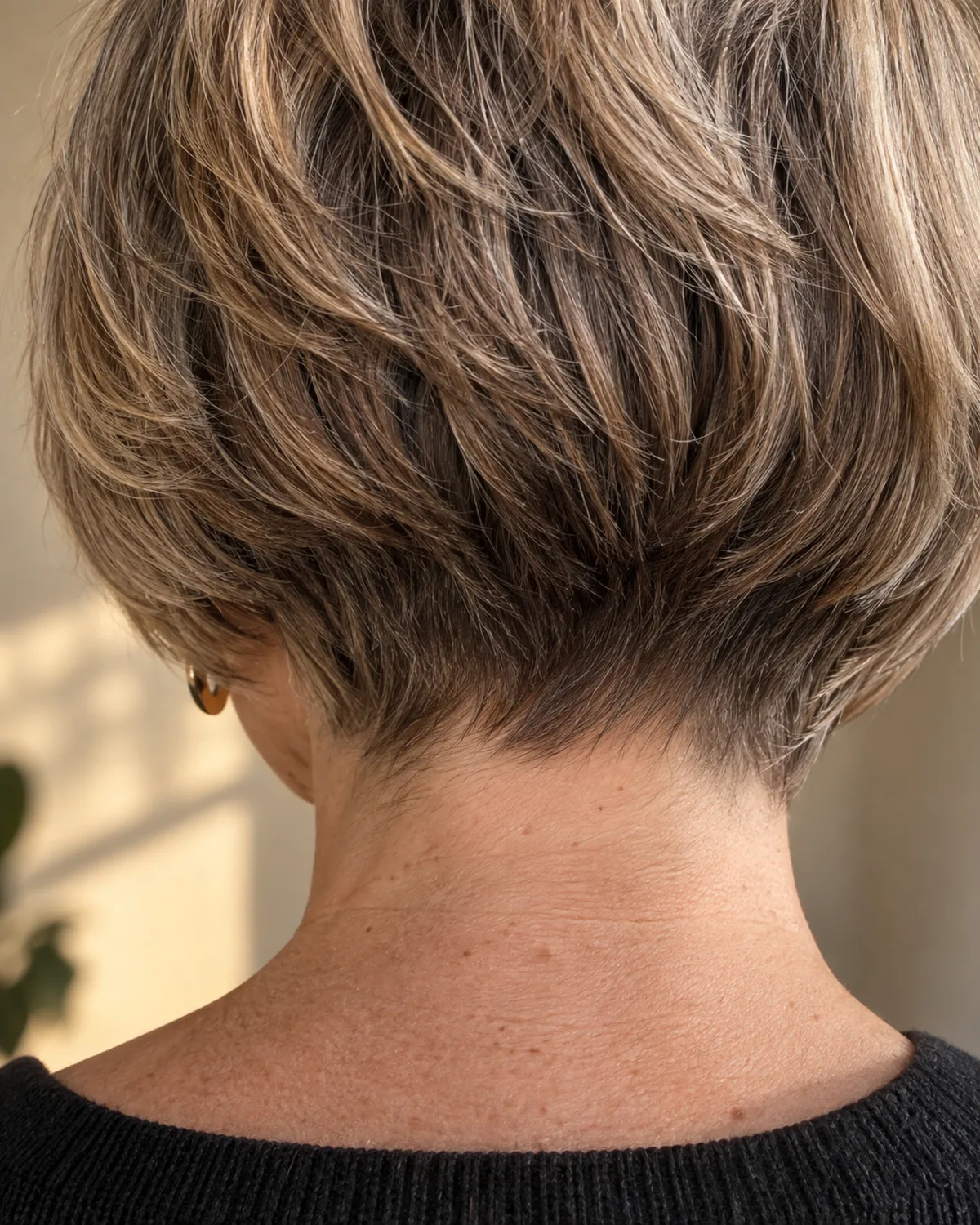
A bob that is shorter at the back nape and gradually lengthens toward the front jaw line. The stacking pushes the back profile outward and upward, balancing the lower-face softening.
- The strongest bob variant for prominent jowling because it shortens the visual distance between crown and jawline at the back
- Depends on nape hair texture: very coarse nape hair resists stacking and may stick out instead of lying flat
- The graduation should be soft enough that the back sits naturally without daily smoothing
- Ask the stylist how tight the stacking needs to be and whether your nape cowlick will fight the shape
11. Chin-Length Waves With a Deep Side Part

A chin-length cut with loose waves and a deep side part. The waves add volume at the widest point of the face, and the off-centre part introduces asymmetry that distracts from jaw symmetry.
- The waves create visual texture that interrupts the eye at the jaw zone
- Skip if your hair goes truly straight; without natural or styled bend, this reads flat
- The deep side part is the key: it shifts the hair's weight to one side, which breaks the horizontal line of the jaw
- Ask the stylist whether your natural wave pattern will hold at this length or whether it needs encouragement
12. Face-Framing Highlights on a Jaw-Length Cut

Not a hairstyle but a placement strategy: two to three lighter pieces framing the face on a jaw-length base. The colour contrast draws the eye to the lighter strands and away from the jaw contour beneath them.
- A stylist decision, not a DIY move; ask about toning rather than lifting
- Works best when the highlights sit at the cheekbone, not at the jaw itself
- The lighter pieces catch light first, which pulls the viewer's eye upward before it reaches the lower face
- Ask how the highlights will grow out and whether they need refreshing every visit or every other
13. Wispy Layers Around the Jawline

Short, wispy pieces cut to sit at and just below the jaw, rather than structured layers. The soft edges soften the jaw contour rather than drawing a clean line along it.
- Good for women who want jaw-length hair but find blunt bobs too exposing
- Depends on hair density: very thick hair may need thinning to achieve the wispy effect without looking bulky at the jaw
- The wispy tips should move when you move; if they sit rigid, the effect reads as a bad haircut rather than intentional texture
- Ask the stylist to razor-cut or point-cut the ends for a softer edge than scissors alone produce
14. Shoulder-Length Cut With Flipped Ends
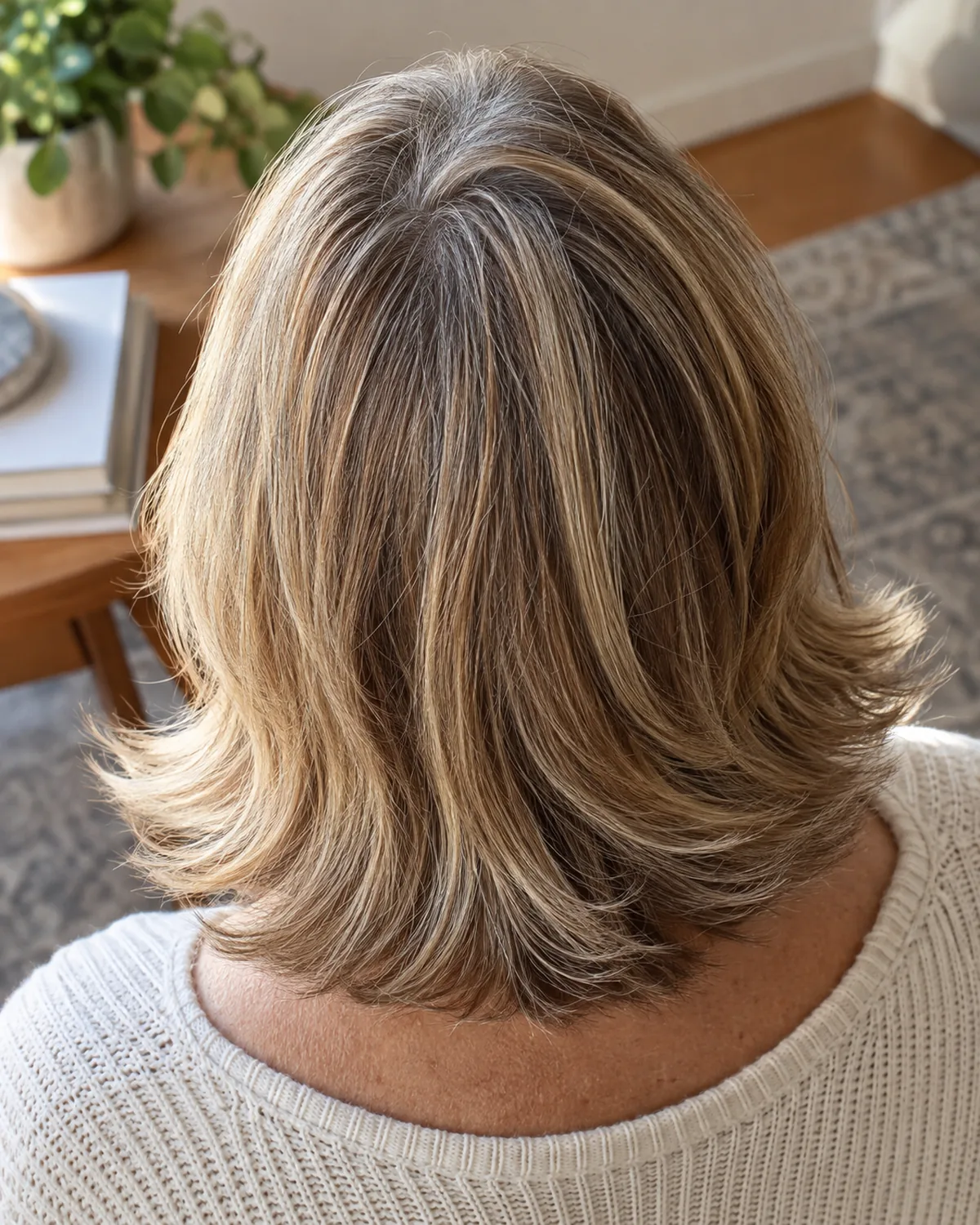
A shoulder-length cut with ends that turn outward rather than curving under. The outward flip widens the silhouette at the shoulders, creating a broader base that makes the jaw look narrower by contrast.
- A styling trick more than a cut: the structure needs to support the flip
- Ask your stylist about a rounded internal layer that encourages the ends outward naturally
- The flip should sit at the shoulders, not at the jaw; if the hair is too short the flip lands at the wrong height
- Skip if you air-dry and your hair naturally curves under; you will fight the flip every morning
15. Side-Parted Lob With Tucked Ear

A lob with a deep side part where one side is tucked behind the ear. The tuck on one side exposes the cheekbone and narrows the visual width at the jaw on that side.
- Asymmetry is one of the simplest tools for redirecting attention from the lower face
- Works on most hair types; depends on ear placement and whether you feel comfortable with one ear exposed
- The tucked side draws the eye to the cheekbone; the untucked side creates a curtain that glides past the jaw
- No special cut required: any shoulder-length or longer hair with a side part can do this today
16. Textured Crop With Soft Fringe
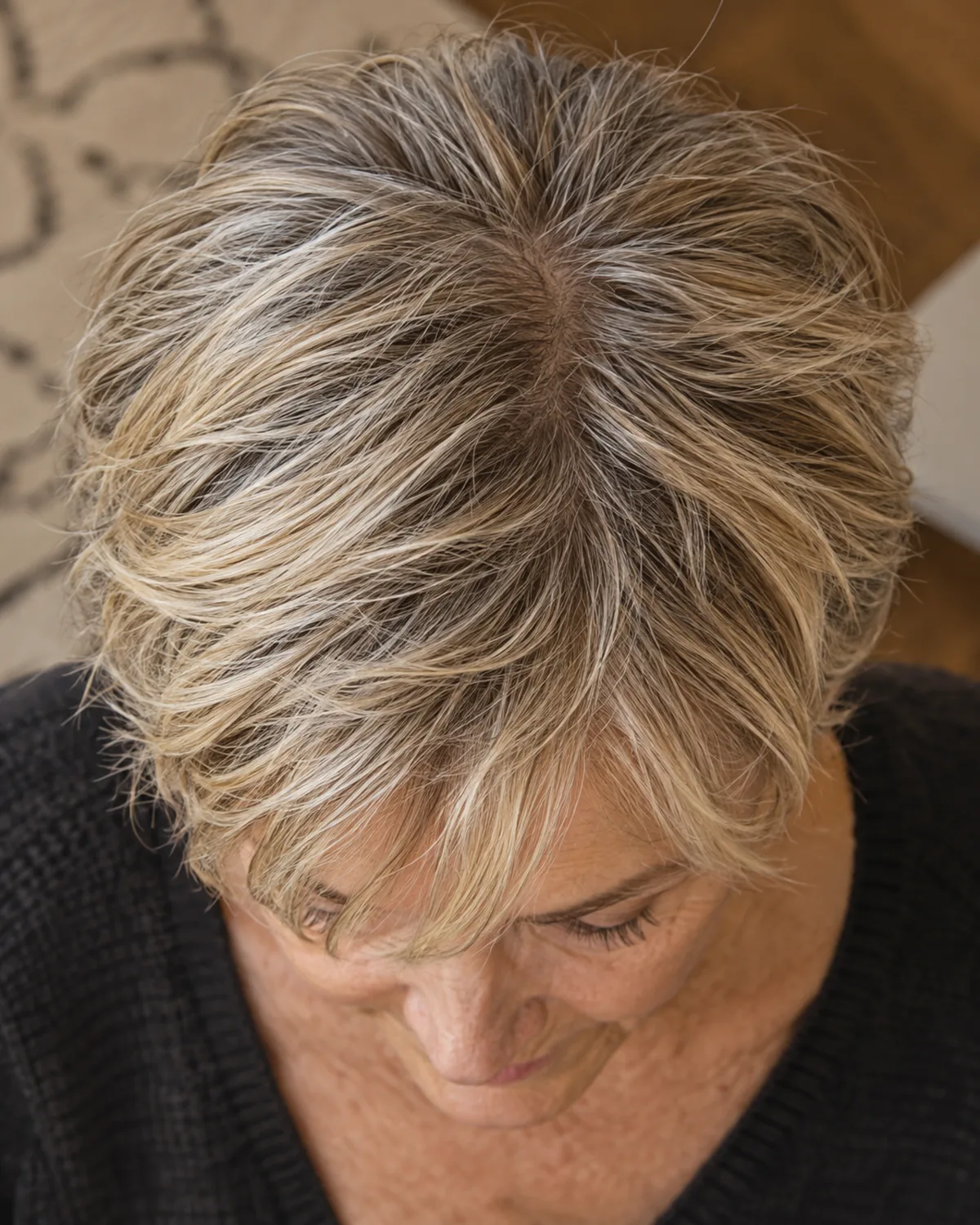
A short crop with a soft, slightly longer fringe at the forehead. All the visual weight is above the brow line, which removes the jaw from the composition.
- Works on women whose neck and chin are well-defined and whose jowling is mild
- On heavier jowling with a shorter neck, removing all hair can make the jaw the dominant feature; know your proportions first
- The soft fringe adds enough length at the front to keep the face framed without covering the brow
- Ask the stylist to keep the fringe piece-y rather than blunt so it reads as texture, not a helmet
17. Long Layers Starting at the Collarbone

Layers that begin at the collarbone and extend downward, leaving the hair around the face one-length. The unbroken curtain of hair at the jawline glides past the jowl zone, and the layers add movement lower, pulling the eye downward.
- Works when you want to keep length and not draw attention to the jaw
- Skip if the hair is fine: the one-length front can look flat and limp without internal texture
- The layers below the collarbone are what keep the ends from looking blunt and heavy
- Ask the stylist to leave the face-framing pieces one-length so they create an unbroken line past the jaw
18. Undone Bun or Low Chignon With Face-Framing Pieces
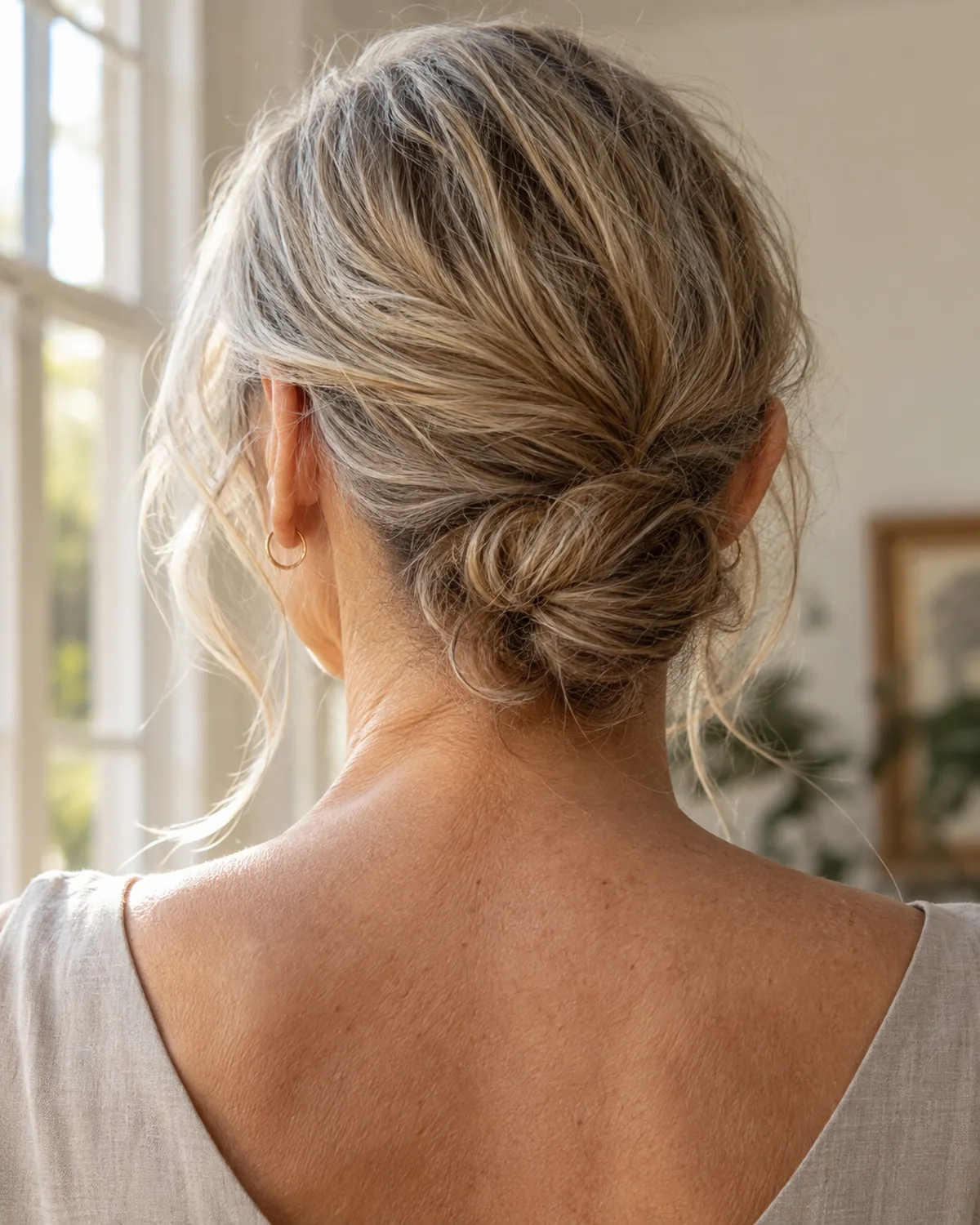
Hair pulled back into a low, relaxed bun at the nape, with two soft strands left out at the temples. The pulled-back structure lifts the visual line upward, and the face-framing pieces soften the temples without covering the jaw.
- The only updo on this list, and it works for events or days when the hair itself is not cooperating
- Depends on length: you need at least shoulder-length hair to form the bun
- Ask your stylist about pins rather than elastics for a softer hold that does not crease the hair
- The face-framing pieces should be long enough to reach the cheekbone but not so long they fall to the jaw
A stylist who can see your jawline in person outranks anything written here. Bring two photos from this list and one honest question — where does my jowling start? — and let that conversation decide the cut.
Where the checkable claims come from
- How to Choose the Best Hairstyle for Your Face Shape — American Academy of Dermatology
- Understanding Hair Layering Techniques — Pivot Point International
- The Difference Between a Graduated Bob, an A-Line Bob, and an Inverted Bob — Sam Villa
- Curtain Bangs Suit Every Face Shape — Here's Proof — Refinery29
Keep this one
Save it for the appointment
Pin the image above to the board you actually open before a salon visit. This guide is written to be re-read, not read once.
Tonight, before you close this tab
- Stand in front of a mirror and trace your jawline with one finger to note where the softening starts relative to your ear
- Pull your hair back into a ponytail and study the jaw from the front and side — this is the baseline every cut modifies
- Find two photos of your hair at its best and two at its worst and bring all four to the stylist so they see the gap
- Write down whether your hair holds root lift past noon — if it does not, cross off every volume-dependent idea and start with the structure ones
- Ask your stylist this question: at what length does my hair start to pull flat against my jaw?