13 Very Short Haircuts for Women Over 50 Worth the Commitment
Thirteen very short haircuts judged for women over 50. Each cut rated by crown density, nape texture, and skull shape — not by what is trending.
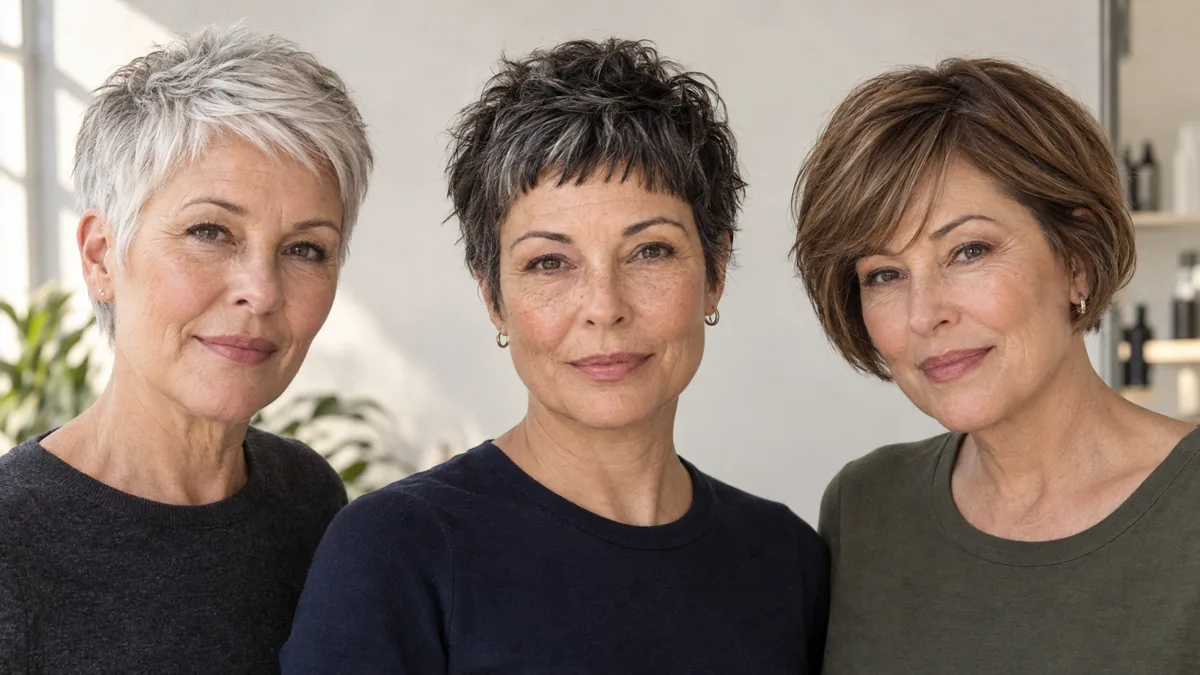
Booking an appointment soon? Save this page. It is easier to skim in the chair than to remember.
At a glance
Works
- A classic pixie with tapered sides when crown density is solid because the close silhouette reads as deliberate shape rather than thinning
- A textured crop with micro fringe on fine hair because the choppy texture creates the illusion of density where a smooth cut would expose it
- A layered pixie with crown volume on round or square faces because the vertical lift shifts the proportions upward
Depends
- A side-swept pixie only if the hair holds a sweep to one side — very straight fine hair falls flat and loses the diagonal that elongates the face
- A pixie-bob hybrid only if the face is not very round — the extra side length at ear-to-jaw can add width rather than framing it
- An asymmetric pixie only if you commit to trims every four to five weeks — the asymmetry grows out unevenly and loses its shape fast
Skip
- A buzz-adjacent crop on a skull with flat spots or bumps because the shape becomes the entire silhouette and every irregularity shows
- A choppy piece-y pixie on very straight fine hair because the separated pieces lie flat and read sparse rather than textured
- A very short curly crop when the curl loosens at the crown because the top goes flat while the sides stay full
Very short means the longest piece sits above the chin. Pixies, crops, micro bobs, tapered cuts.
The commitment is real because there is no styling your way out of a shape that does not suit your head. These thirteen cuts answer one question: will this work with your crown, your nape, and your skull?
1. Classic Pixie With Tapered Sides
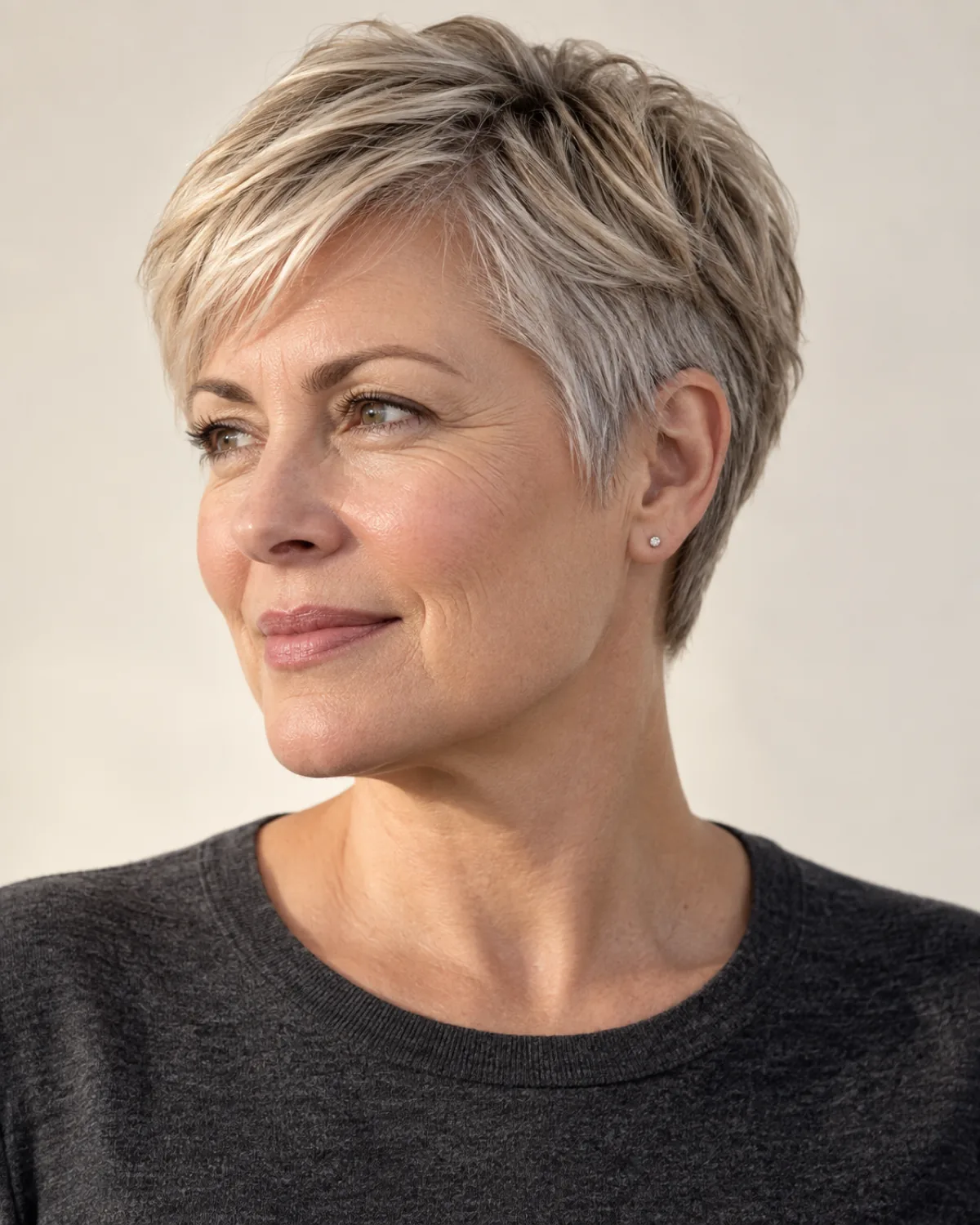
Cropped sides and back with slightly longer top pieces that finger-style forward or to one side. The tapered sides blend the short length into the top. What makes or breaks this cut is crown density: enough hair to cover the scalp and it reads sharp. Too thin at the crown and the short sides amplify the contrast.
- Ask your stylist to check your crown density in bright overhead light before committing
- Bring a photo that shows the taper you want at the temples
- If your hair is fine but dense, this works; fine and thin at the crown, consider idea 2
- Plan for trims every four to six weeks to keep the taper clean
2. Textured Crop With Micro Fringe
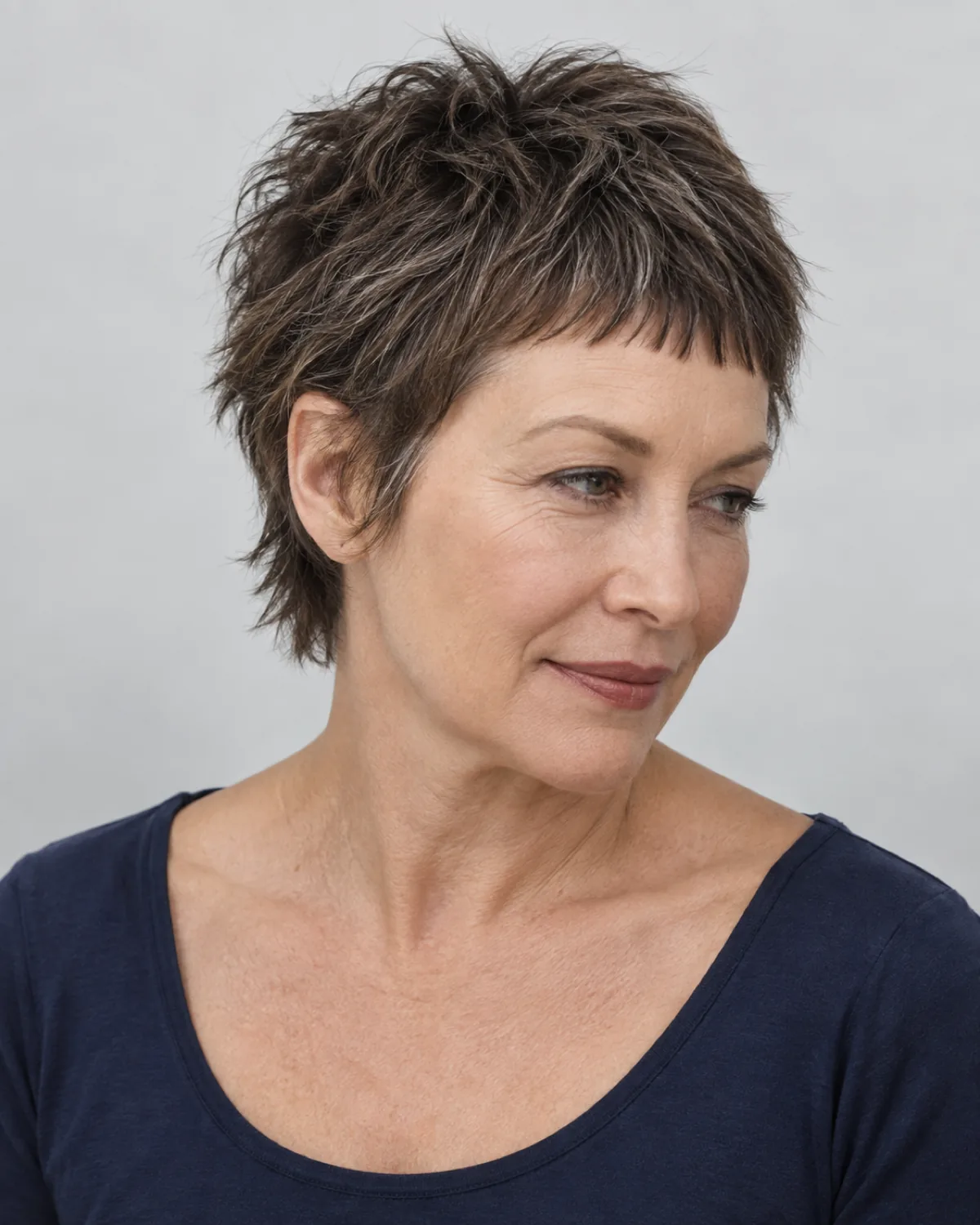
Choppy texture throughout and a fringe that sits above the brow. One of the most forgiving very-short cuts for fine hair because the texture creates the illusion of density where a smooth cut would expose every gap. The micro fringe depends on forehead height: a short fringe on a short forehead reads crowded.
- Three or more finger-widths between brows and hairline gives the fringe room
- Ask for point-cutting or razor-texturing rather than blunt scissors
- A matte texturizing spray keeps the pieces separated longer
- Style by pushing hair forward and to one side, not backward
3. Side-Swept Pixie With Length at the Crown
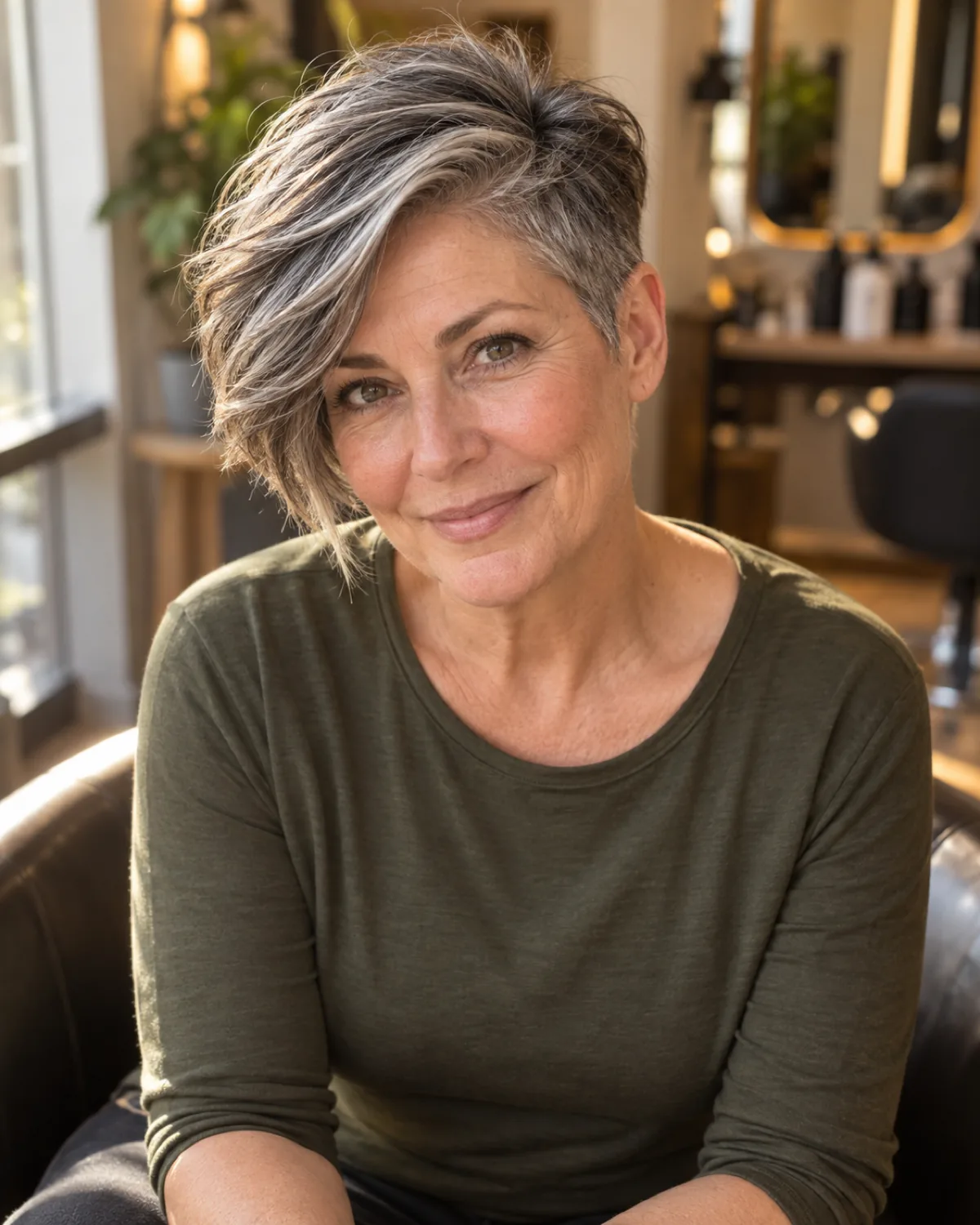
The top is left longer and swept to one side while the opposite side is closely tapered. The diagonal sweep elongates the face, making this the strongest very-short option for round faces. Very straight, fine hair tends to fall flat without product, losing the diagonal.
- Ask which side your natural growth pattern favours; the sweep should go with the grain
- A light volumizing mousse at the root helps hold the swept shape on straight hair
- The tapered side needs more frequent trims than the long side
- Avoid tucking the long side behind your ear; it defeats the diagonal
Where to start
Find your situation, skip ahead
Your hair is fine or thinning and you want very short without showing scalp
A textured crop with micro fringe or a layered pixie with crown volume both create the illusion of density at the lengths where fine hair is most exposed.
02 Textured Crop With Micro Fringe07 Layered Pixie With Volume at the Crown
You want to go very short for the first time and are not sure it will suit you
Start with a pixie-bob hybrid — short enough to test the silhouette but long enough to style differently if the shape does not work.
09 Pixie-Bob Hybrid03 Side-Swept Pixie With Length at the Crown
You are growing out your colour and want to accelerate the grey transition
A very short cut removes the most old colour in one sitting, and natural silver reads most deliberate on a close crop or pixie.
13 Silver or White Pixie04 Buzz-Adjacent Crop01 Classic Pixie With Tapered Sides
4. Buzz-Adjacent Crop
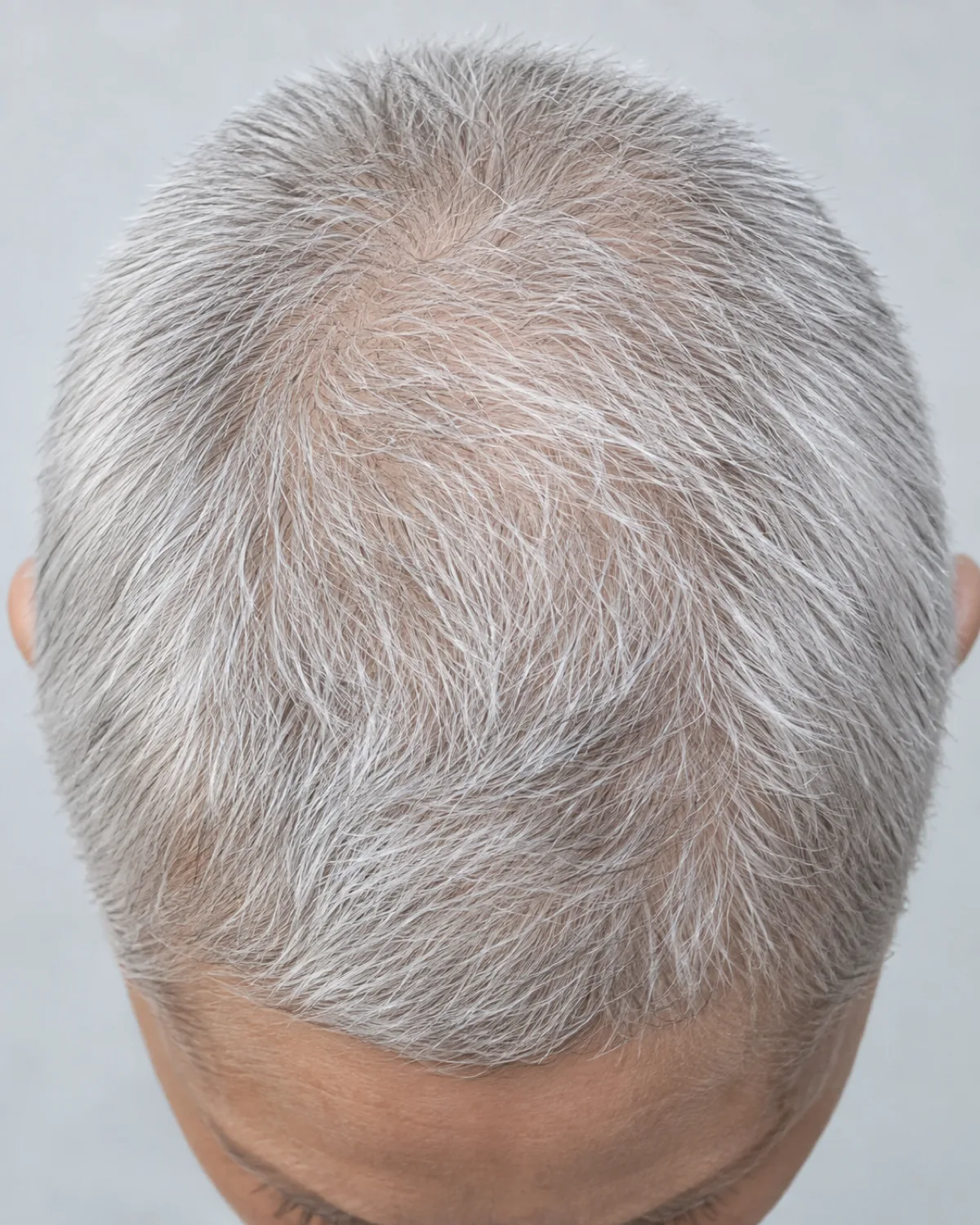
Half an inch or less all over, sometimes with a slightly longer top for texture. The most committed cut on the list. This is a skull-shape cut: it reads exceptional on well-proportioned skulls and harsh on those with flat spots, bumps, or asymmetries that disappear under longer hair.
- Run your hand slowly over your entire skull and note what you feel
- Ask your stylist to do a dry consultation; they can assess skull shape better on dry hair
- If you are growing out grey, this length removes the most old colour in one sitting
- Budget for trims every two to three weeks to stay sharp
5. Disconnected Undercut Pixie
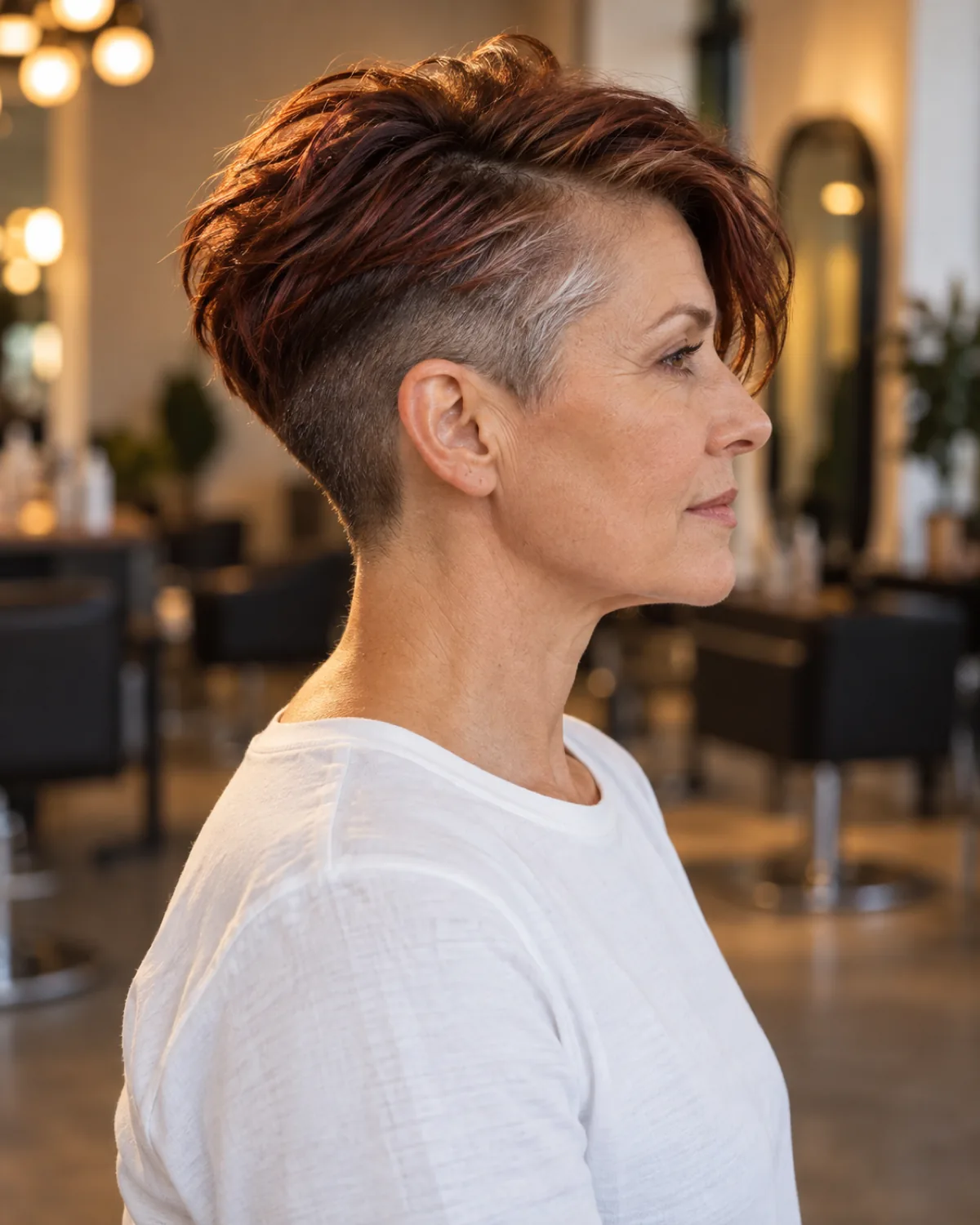
Shaved or short sides with noticeably longer top sections creating a deliberate contrast. The disconnect is the design. It works on every hair texture because the top operates independently of the sides. The visible contrast marks this as a style choice, which reads differently in conservative workplaces.
- Ask to see the disconnect line before they blend; the contrast should be visible, not subtle
- Trims every three to four weeks keep the disconnect clean
- If you have thick hair, this removes bulk from the sides without thinning the top
- The longer top can be styled forward, swept, or left textured for versatility
6. Soft Rounded Crop
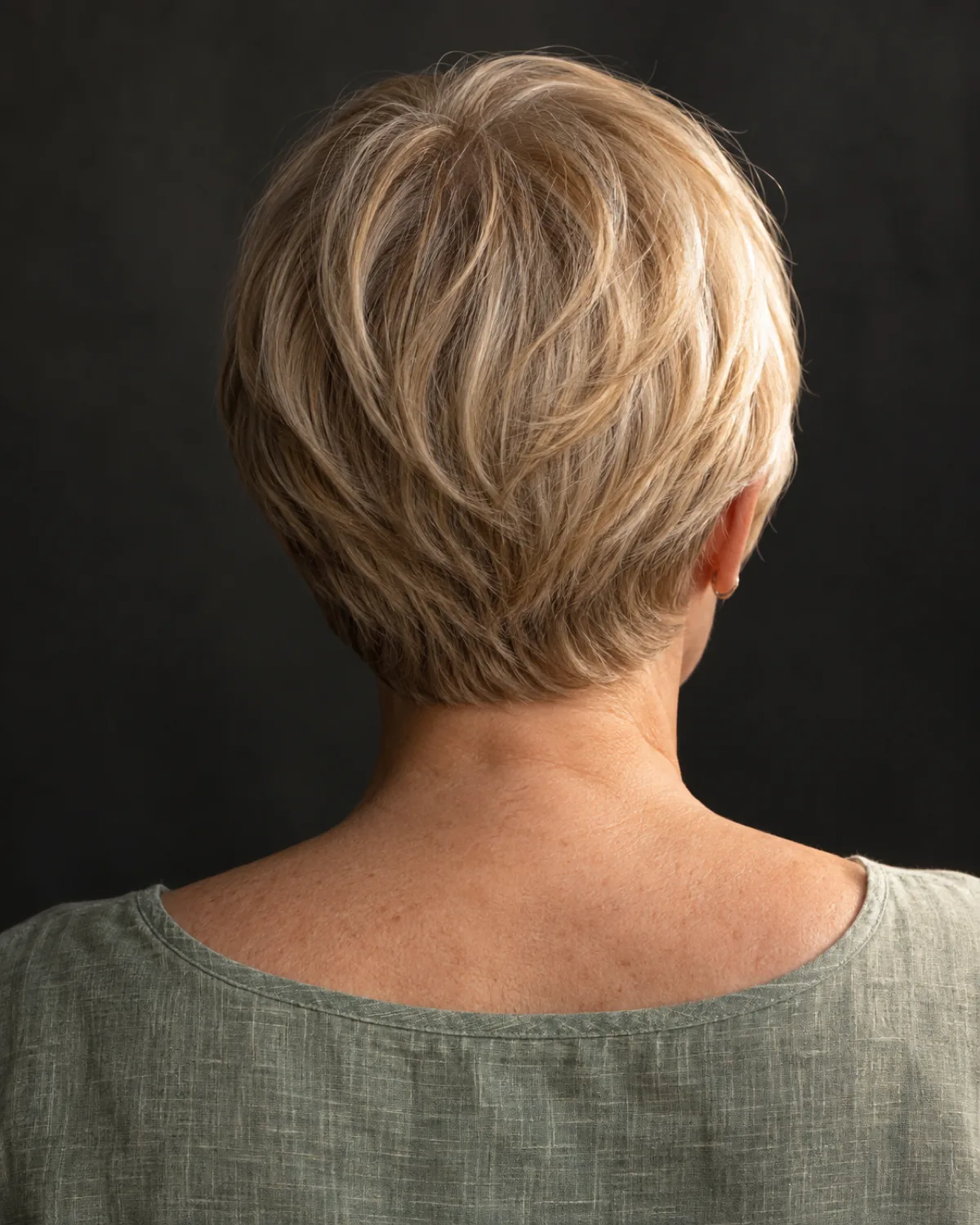
Rounded edges rather than choppy texture, following the head shape with no hard lines. The best very-short option for women who want short without reading bold. Thick, coarse hair may resist the rounded shape and push outward at the temples, breaking the smooth line the cut relies on.
- Ask for a round graduation rather than a layered cut; the technique is different
- Internal texturizing reduces bulk without losing the rounded silhouette on thick hair
- This cut reads polished without product, making it lower-maintenance than most pixies
- The nape finish matters: soft rounded looks intentional, blunt looks unfinished
7. Layered Pixie With Volume at the Crown
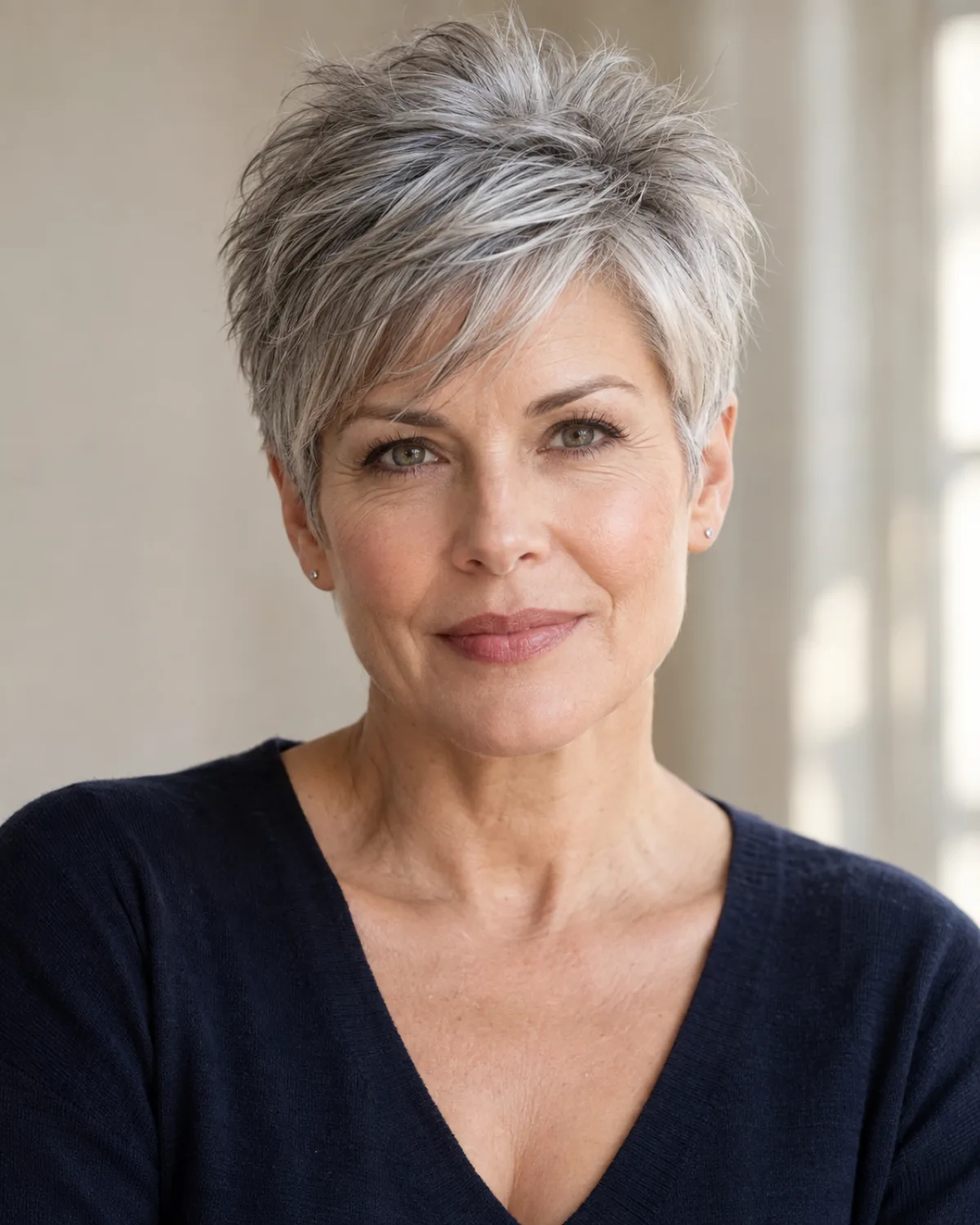
Internal layers build height at the crown while the sides and nape stay close. The strongest move for round or square faces going very short because crown height shifts proportions. Fine, flat hair may need velcro rollers or root spray to maintain the shape past morning.
- Ask for internal layers, not visible surface layers; surface layers look choppy at this length
- Velcro rollers at the crown for ten minutes after blow-drying add lift that lasts the day
- If your hair collapses by noon, this cut will not hold; consider a textured crop instead
- Keep the sides close so the crown contrast stays obvious
8. Tapered Nape With Ear-Length Sides
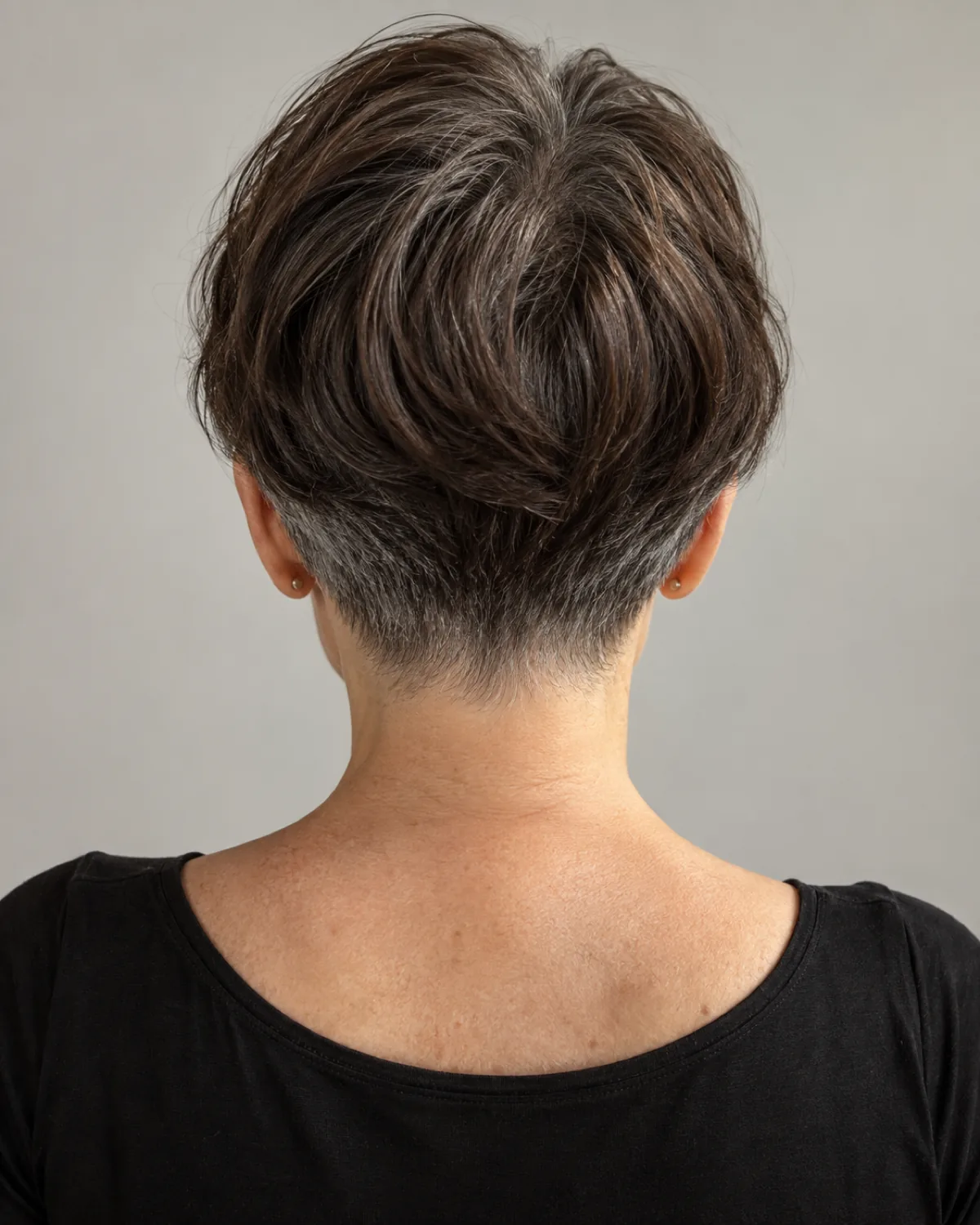
Very short at the nape, gradually lengthening to ear level at the sides. One of the most professional-reading very-short cuts because the gradual taper avoids harsh lines. If your nape hair grows in multiple directions or whorls, it fights the taper and requires trims every three weeks.
- Look at your nape in a hand mirror before your appointment; whorls and cowlicks are common
- Ask your stylist to cut the nape dry so they can see the natural growth direction
- The graduation from nape to ear should be smooth enough that no line is visible
- This cut reads well from behind, which matters; colleagues see the back more than the front
9. Pixie-Bob Hybrid
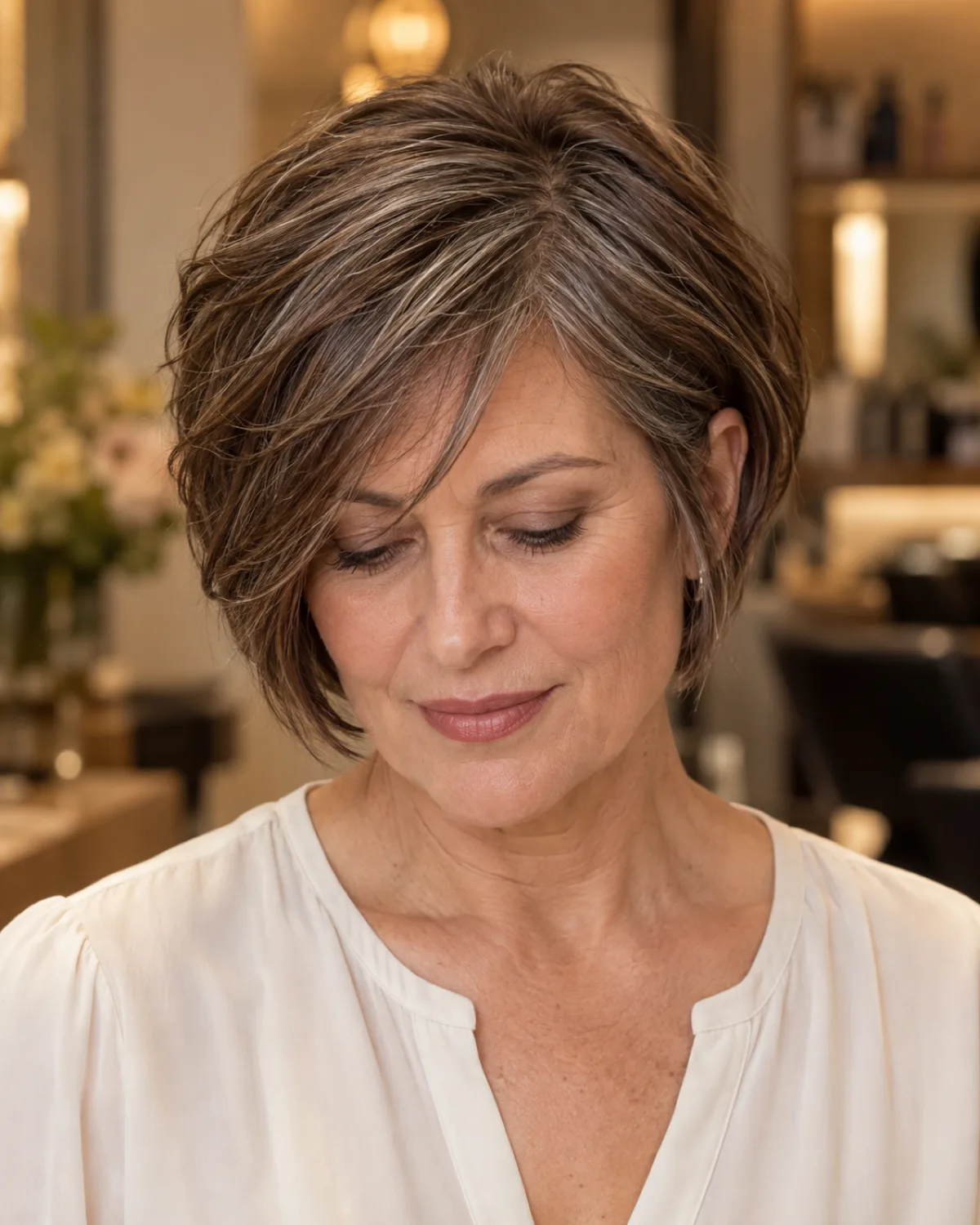
Longer than a pixie, shorter than a bob: ear to jaw length at the longest point. The safest entry into very-short territory. It leaves enough length to style differently if the silhouette does not work. On very round faces, the extra side length can add width, so check your face shape first.
- Tell your stylist this is a test cut; they can leave strategic length for options next time
- If you have a round face, ask for the sides to sit above the jaw rather than at it
- This cut grows out more gracefully than a true pixie; you can stretch trims to six weeks
- Style with a side part for maximum face-framing effect
10. Choppy Pixie With Piece-y Bangs
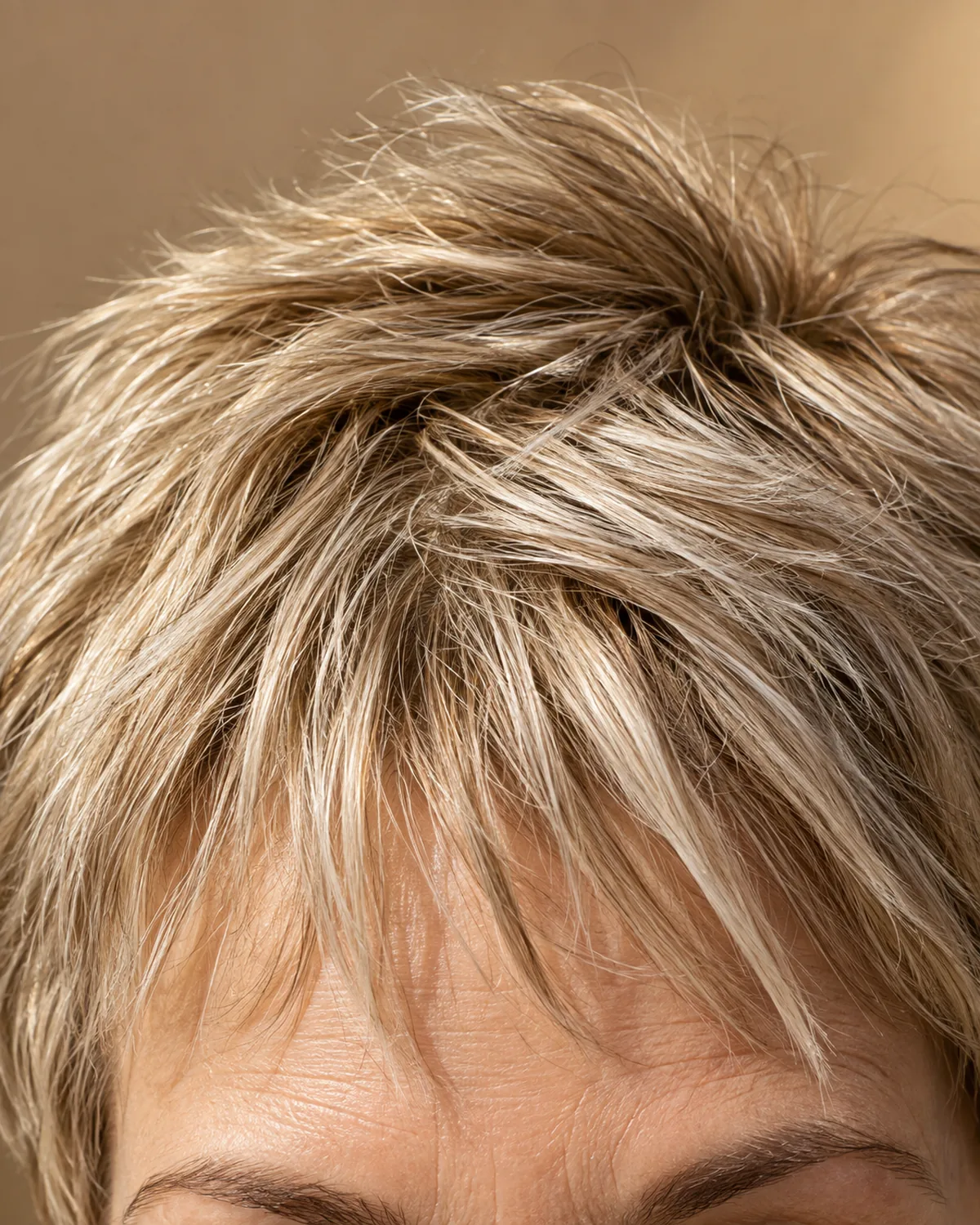
Heavily textured layers and separated bangs that read as individual pieces rather than a solid fringe. Works well on wavy and curly hair because the natural texture separates the pieces. On very straight, fine hair, the pieces lie flat and look sparse rather than intentional.
- Ask for razor-cutting or point-cutting to create the separated texture
- If your hair is wavy, let it air-dry and the pieces will separate naturally
- A matte texturizing paste worked through dry hair keeps pieces defined
- Straight, fine hair does better with the textured crop instead (idea 2)
11. Very Short Curly Crop
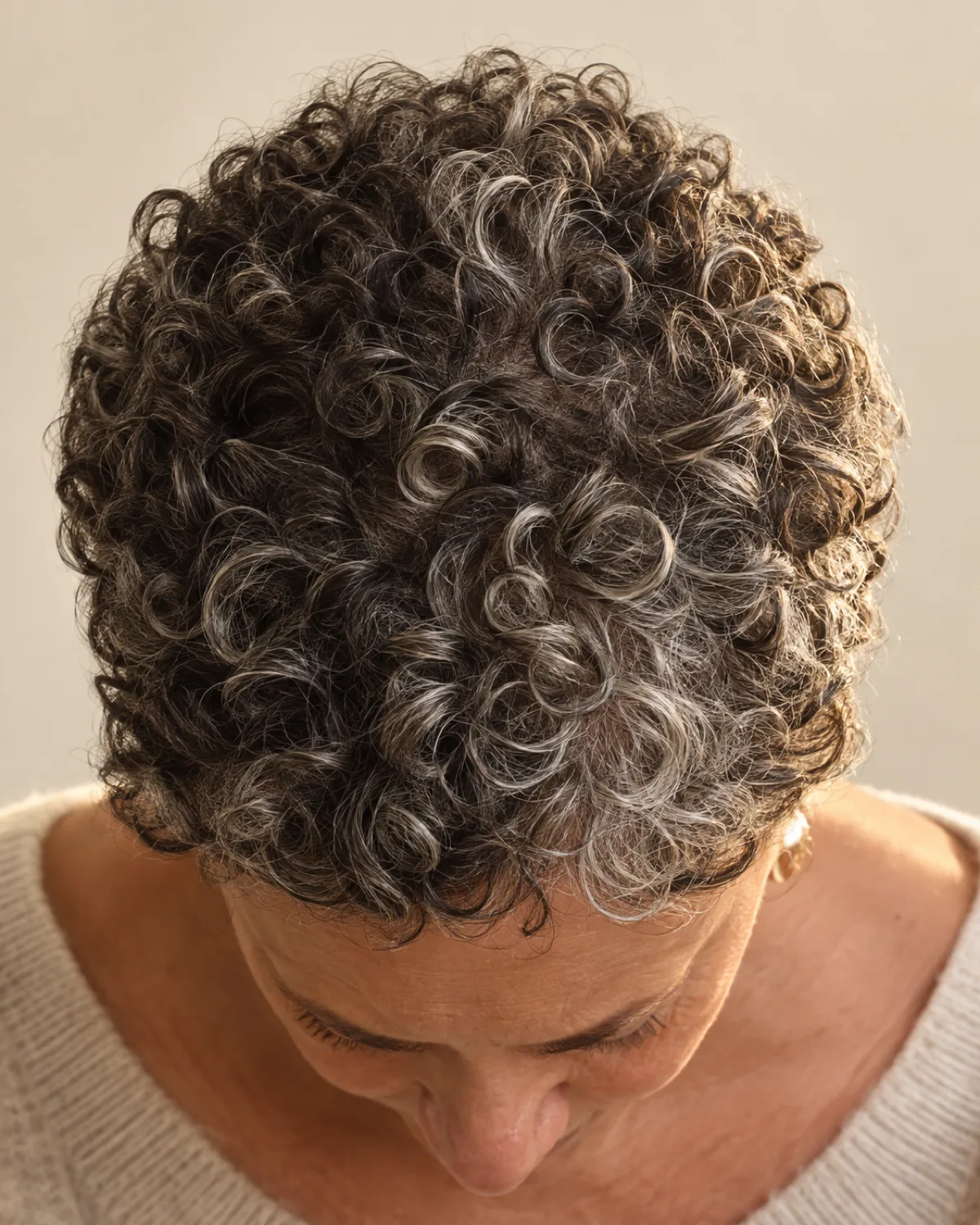
Natural curls cut to two to three inches, shaped to follow the curl pattern. The most wash-and-wear cut on the list because curl provides its own structure. When the curl loosens at the crown, the top goes flat while the sides stay full. The fix is not more product; it is a different cut.
- Find a stylist who cuts curly hair dry; wet-cutting produces unpredictable results
- If your curl loosens at the crown, ask about slightly more length on top to compensate
- Do not blow-dry this cut; a diffuser on low heat is the only tool you need
- Refresh between washes by wetting your hands and scrunching the curls back
12. Asymmetric Pixie With One Long Side
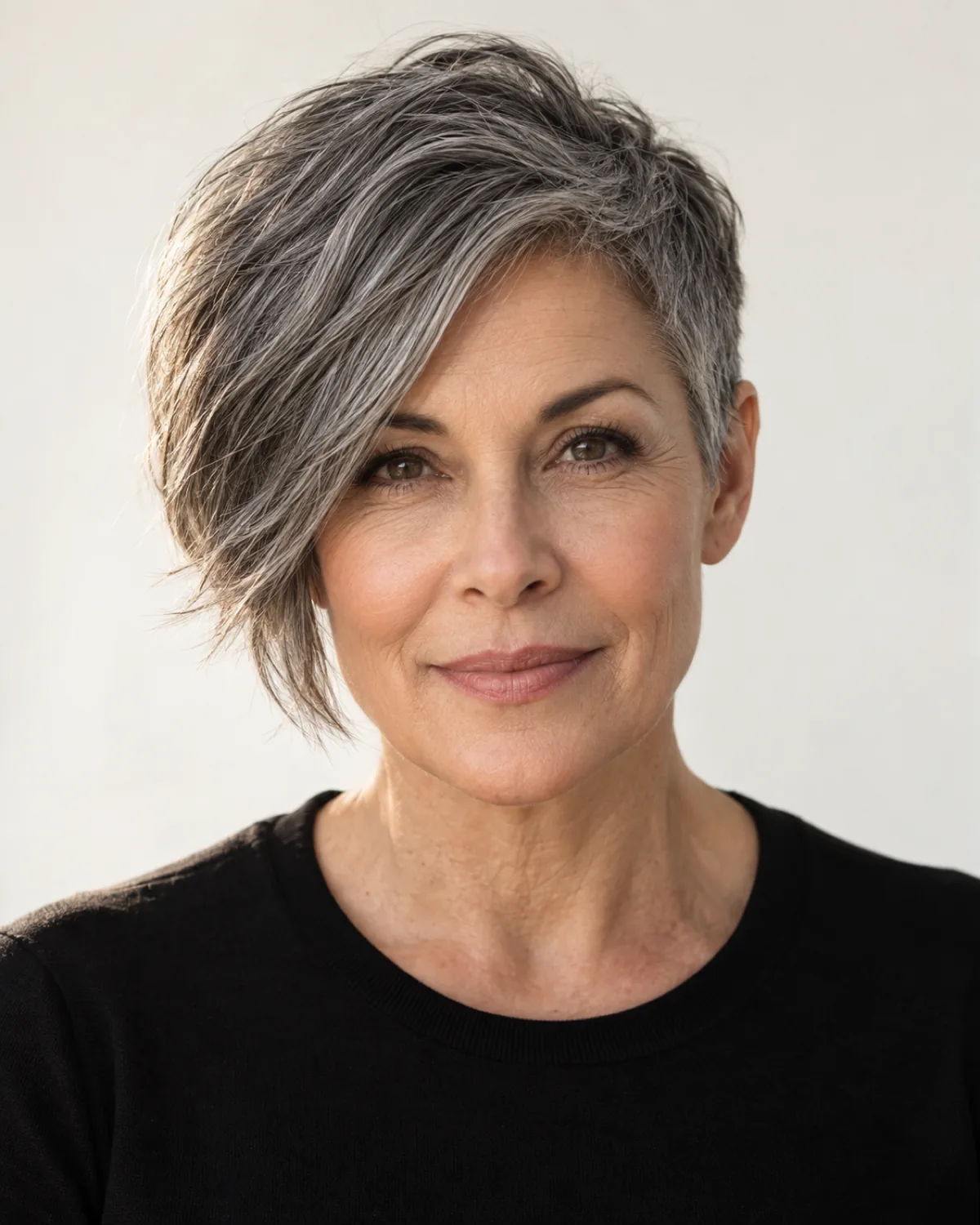
One side extends to the cheekbone, the other is cropped close. The most face-shape-forgiving very-short cut because the long side balances any feature: at the jaw for round faces, at the temple for long faces. The asymmetry grows out unevenly within five weeks, so regular trims are part of the commitment.
- Ask which side to leave long based on your face shape and natural parting
- The long side should sweep toward the face, not away from it
- Budget for trims every four to five weeks; at six weeks it looks grown out
- The length difference should be at least two inches to read clearly
13. Silver or White Pixie

Any of the above shapes worn in natural silver or white without colour treatment. Very short length and natural grey read deliberate because there is no grow-out line. The question is tone: warm silver and bright white read clean, yellowish grey may need toning.
- Ask your stylist about purple shampoo frequency; overtoning turns grey purple
- If transitioning from colour, a very short cut removes the most old colour in one sitting
- A clear gloss treatment adds shine without colour
- Bright white shows scalp more readily, so crown density matters even more at this colour
A stylist who can see your hair in person outranks anything written here. Bring two photos and one question: at this length, where will my hair need the most help?
Where the checkable claims come from
- How to Choose the Best Hairstyle for Your Face Shape — American Academy of Dermatology
- Understanding Hair Layering Techniques — Pivot Point International
- Short Hair Cutting Fundamentals — Precision and Texture — Sam Villa
- How to Care for Gray Hair — Cleveland Clinic
Keep this one
Save it for the appointment
Pin the image above to the board you actually open before a salon visit. This guide is written to be re-read, not read once.
Tonight, before you close this tab
- Run your hand over your skull and note any flat spots, bumps, or asymmetries — these become visible at very short lengths
- Check your crown by parting your hair flat: if scalp shows through in bright light, discuss coverage strategies with your stylist before going very short
- Look at your nape in a hand mirror — if the hair grows in multiple directions or whorls, mention it because it affects how often you need trims
- Write down the shortest length you have ever worn and how long it took to grow back — this is your reversibility timeline